Jacksonville's First Food Plan: 32 Actions to Fight Hunger as 147,780 Residents Face Food Insecurity
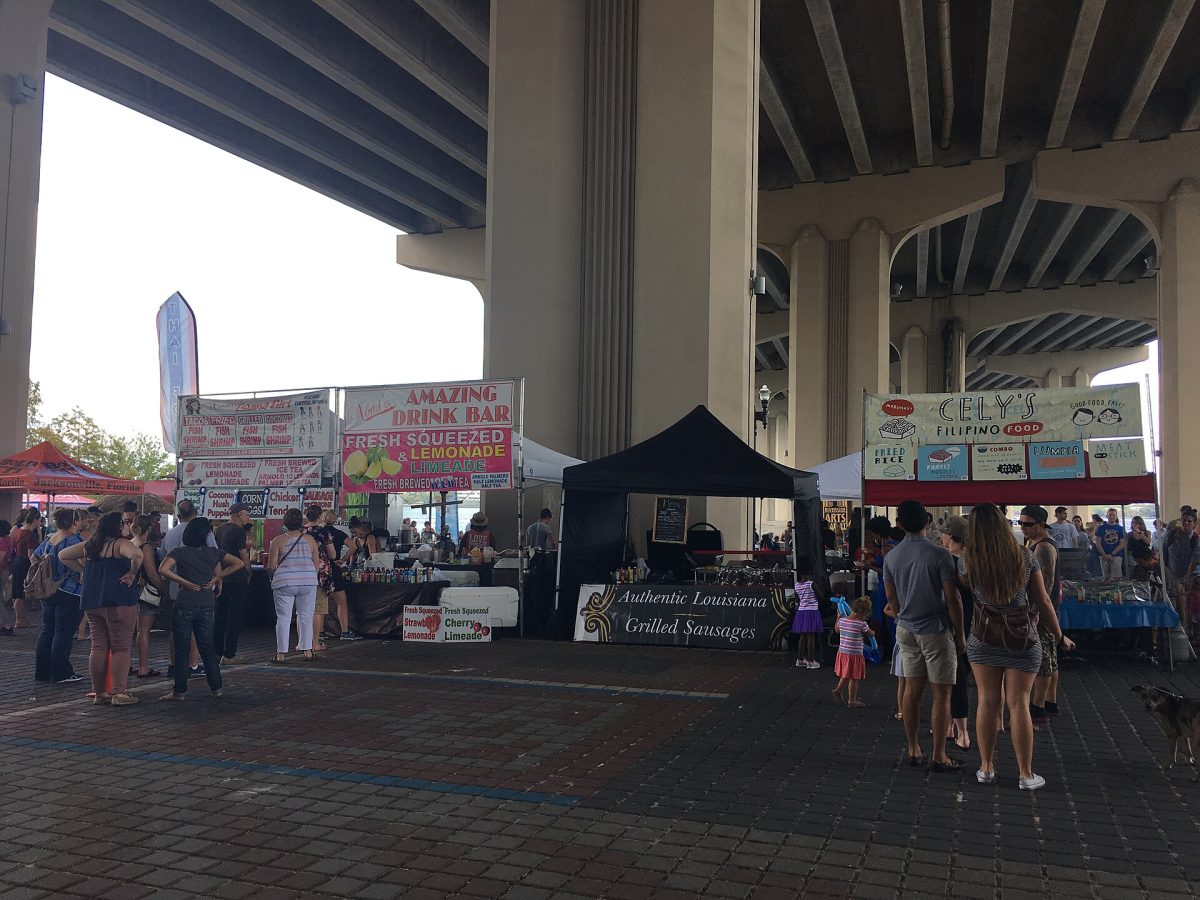
Food vendors at the Riverside Arts Market under the Fuller Warren Bridge in Jacksonville (file photo). Photo: Riley Madison / Wikimedia Commons (CC BY-SA 4.0)
JACKSONVILLE, Fla. - Jacksonville has its first citywide food plan, a roadmap that lists 32 actions the city and its partners could take to help residents get fresh, affordable food. Mayor Donna Deegan presented the plan Monday, Oct. 26, at Feeding Northeast Florida's headquarters in North Jacksonville, according to Jacksonville Today. The report is posted on the website of the Planning Department's Office of Resilience.
The plan says nearly 1 in 7 Jacksonville residents experiences food insecurity, meaning they lack reliable access to enough nutritious food. It is a guide for future policies and partnerships rather than a set of binding rules. The city says it will publish yearly updates on what has been done and revise the plan as conditions change.
Why the City Wrote a Food Plan
"Every resident deserves reliable access to nutritious, affordable food," Deegan wrote in a letter at the front of the plan, dated Oct. 26. The plan says recent disruptions, including the COVID-19 pandemic and a cyclospora outbreak, showed how quickly the food supply can be affected. It also says the city's past approach to food issues has been "piecemeal and fragmented," and that this is the first comprehensive strategy developed across the City of Jacksonville.
At Monday's event, Deegan said "our local growers really didn't have a great pathway toward being able to sell the things that they grow," Jacksonville Today reported. The effort grew in part out of years of work by grassroots organizers pushing for clear urban farming rules. The city applied for a U.S. Department of Agriculture grant for the plan in March 2024, according to the report.
Jacksonville's Food System by the Numbers
The figures below come from the plan itself. Some are drawn from the city's own data collection, which the plan describes as a first step toward better reporting.
| Measure | Figure |
|---|---|
| Residents experiencing food insecurity | 147,780 |
| Children experiencing food insecurity | 59,920 |
| Seniors experiencing food insecurity | 16,764 |
| Duval families enrolled in SNAP | Roughly 1 in 5 |
| Average monthly SNAP benefit | About $190 |
| Grocery stores in Jacksonville | More than 300 |
| Convenience stores | 791 |
| Farmers markets | 12 |
| Farms registered with the USDA in Duval County | 314 |
| Farmland in Duval County, 1982 vs. 2022 | More than 71,000 acres vs. 20,593 acres |
| Average Duval farm size | 66 acres |
| Backyard hen permits in use | 1,348 |
The plan says food insecurity in Duval County is higher than the U.S. average of 13.7% and the state average of 11.4%. It also says 53% of Duval farms generate less than $2,500 in annual sales, and 90% net less than $5,000 a year. Backyard hens permitted in the city produce an estimated 140,000 dozen eggs a year, worth about $840,000, according to the report.
The 4 Pillars and 32 Actions
The plan is built around four parts of the food system: production, distribution, access and recovery. Its 32 "opportunities for action" are broken into 79 smaller steps. The city says each one is something it can realistically commit to, lead or meaningfully influence.
Production (11 actions). These include updating local laws to make urban agriculture easier, helping new farmers navigate the business and regulatory side of starting a farm, and increasing the number of community gardens. The plan also calls for expanding the agricultural workforce, exploring ways to make land available for farming beyond the zoning code and working with utilities to reduce costs for growers. One step would set standard definitions for terms such as urban agriculture, community garden and market garden across city codes.
Distribution (5 actions). The plan calls for assessing how vulnerable local food supply chains are to disruptions and understanding distributors' role in disaster recovery. It also recommends encouraging regional food aggregation and distribution operations, often called food hubs. Another action would bring more regional suppliers into public and private food purchasing.
Access (8 actions). These actions focus on lowering the cost of healthy food, expanding emergency food assistance and reducing transportation barriers to grocery shopping. The plan says some neighborhoods lack a traditional grocery store and rely on corner stores that often have few fresh options. It also lists Jacksonville's culinary scene as an economic driver worth supporting.
Recovery (8 actions). These aim to cut food waste, increase participation in food donation programs and clarify zoning for community composting. One action calls for studying the feasibility and cost of a municipal composting program. The plan cites USDA estimates that up to 40% of the U.S. food supply goes uneaten and EPA estimates that food makes up 24% of the material in municipal landfills.
How It Was Made
Planning began with scoping in 2025, and a community kickoff was held in January 2026, according to the plan's timeline. Stakeholder meetings, outreach and data collection ran from January through July 2026, with working groups for each of the four pillars. The city held public meetings at the Dallas Graham Branch Library, Highlands Regional Library and Southeast Regional Library before the plan went through peer review.
The plan also notes Jacksonville's long agricultural history, from Timucua farming to the timber industry. In 2022, Jacksonville was Florida's largest producer of forest products, an industry the plan says contributes $1.37 billion a year to the local economy and sustains almost 12,000 jobs. Wainwright Dairy and Diamond D Beef have raised cattle in Jacksonville since the early 1900s, according to the report.
What Comes Next
The plan calls for a dedicated staff member to oversee its implementation, working closely with UF/IFAS, city departments and outside partners. It also proposes a central online resource hub for program information, permitting guidance and annual progress reports. The plan lists funding, staff capacity and regulatory hurdles as the main challenges.
A related proposal is already before the City Council. The mayor's office rewrote a community-drafted urban agriculture ordinance over the summer, and the new version was presented to the council Oct. 13, with a vote possible as soon as November, Jacksonville Today reported. Advocates have objected to parts of it, including a limit of 12 market days a year on urban farms, compared with 70 in the community's draft.
"A plan is only as good as its implementation," said Nathan Ballentine, owner of Overalls Farm, who led the community drafting process, according to Jacksonville Today. The plan itself says many recommendations will require new or sustained investment in staffing, infrastructure and programs. It describes funding constraints as "a central barrier."
More Information
The full Jacksonville Food Plan, a printable version and a text-only version are available on the city's Food Plan page. The page is part of the Planning Department's Office of Resilience. Residents can also find the plan's action matrix, glossary and references in the appendix of the full document.
Sources: City of Jacksonville, Jacksonville Food Plan (Oct. 26, 2026); Jacksonville Today (Oct. 26, 2026)
News organizations may republish this story with credit. See our guidelines.
Know someone who'd want to read this? Email it to a friend.
Own a Jacksonville business? Introductory ad rates from $125/month. See ad options Follow Jax Times on FacebookLocal news, events and people, in your feed every day.Most read this week
- Florida's 3 Constitutional Amendments on the Nov. 3 Ballot, Explained in Plain English
- Clay County Voter Guide: 7 Early Voting Sites, Key Races and What to Know Before Nov. 3
- Jacksonville Fair 2026 Guide: Dates, Gate Times, Ticket Prices, Free Days and Every Concert (Nov. 5-15)
- Early Voting in Jacksonville Starts Tuesday: All 24 Sites, the Hours, What to Bring and What's on Your Ballot
- Coastal Flood Warning for Jacksonville: Water Peaks Sunday and Monday Mornings in 5 Flood-Prone Areas
More stories
 Local Amelia Island Lighthouse by the Numbers: 188 Years, 64 Feet and $10 Tours Twice a Month
 Local 630-CITY in 6 Steps: How to Report Potholes, Broken Signals and Other Problems in Jacksonville
 Local Camp Blanding at 87: How a 1939 Clay County Guard Camp Trained 9 Infantry Divisions in World War II
 Local How to Get a Florida Saltwater Fishing License in 6 Steps: $17 for Residents, $47 for Visitors
Comments
Be respectful. No personal attacks, hate speech, spam or anyone's private information. Every comment is reviewed before it appears. Comment rules
No comments yet. Be the first to share your thoughts.