Treaty Oak: The 250-Year-Old Live Oak on Jacksonville's Southbank and the Made-Up Story Behind Its Name
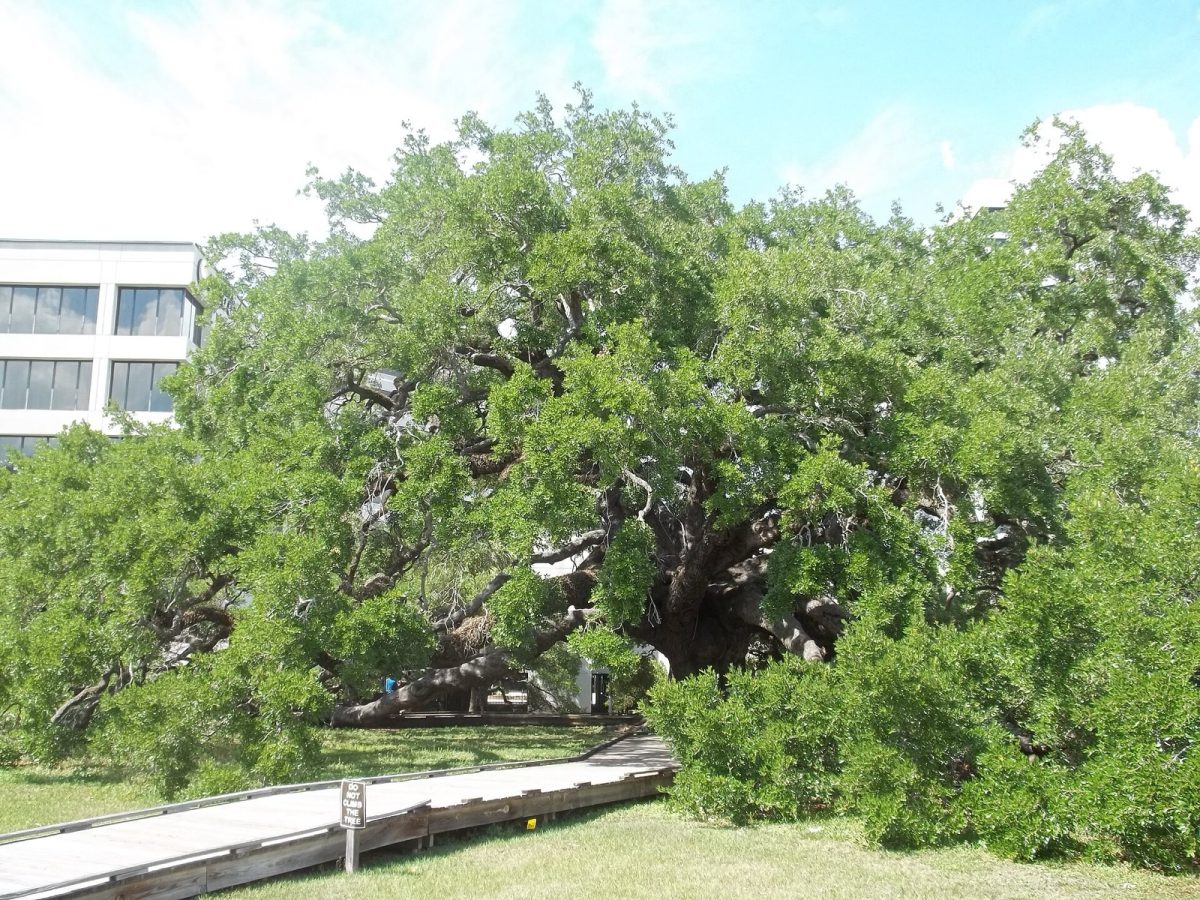
Treaty Oak in Jacksonville. Photo: Ebyabe / Wikimedia Commons (CC BY-SA 4.0)
JACKSONVILLE, Fla. - Jacksonville's Treaty Oak is an enormous southern live oak estimated to be about 250 years old, but the story behind its name is fiction. The name came from a newspaper reporter who invented a tale about settlers and Native Americans signing peace treaties beneath its branches. The tree itself is real, and its history includes an amusement park, a campaign to save it, a donation that protected the land and decades of preservation work.
Today, Treaty Oak stands in Jessie Ball duPont Park at 1123 Prudential Drive on Jacksonville's Southbank. According to Wikipedia, its trunk measures more than 25 feet around, its crown spreads more than 145 feet and its branches shade an area roughly 190 feet across. Those dimensions help explain why the tree became one of Jacksonville's best-known natural landmarks, even though the story that gave it its name never happened.
1770s: A Tree Older Than Jacksonville
According to Wikipedia, Treaty Oak is approximately 250 years old, placing its estimated beginnings around the 1770s. The tree predates Jacksonville's founding by Isaiah Hart in the 1820s and has been described as possibly the oldest living thing in the city. Its exact age remains an estimate rather than a documented planting date.
The tree belongs to the southern live oak species, known scientifically as Quercus virginiana. According to Wikipedia, Treaty Oak stands approximately 70 feet tall, with a trunk circumference exceeding 25 feet and a crown spreading more than 145 feet. Its canopy covers a roughly circular area about 190 feet across, giving the tree a much wider footprint than its height might suggest.
Its size is only part of the story of its longevity. According to Wikipedia, arborists estimated in 2006 that Treaty Oak could survive another 400 years. That estimate points to the tree's potential future, although it does not guarantee how long any individual tree will live.
1907: Dixieland Park Opens Around the Giant Oak
Long before Jacksonville established the present park, the tree stood on land used for entertainment. According to the City of Jacksonville, an amusement complex called Dixieland Park opened in 1907 and covered most of what later became Jessie Ball duPont Park. The large oak was already a prominent feature of the property.
Before acquiring its modern name, the tree was known simply as the "Giant Oak," according to Wikipedia. During the Dixieland Park years, electric lights decorated its branches, connecting the old tree to the amusement complex surrounding it. The tree's presence during this period forms an early chapter in its documented public history.
According to Wikipedia, baseball player Babe Ruth played at Dixieland Park, and bandleader John Philip Sousa performed there. Those accounts connect the former amusement complex with two nationally recognized figures, although they do not establish that either event occurred directly beneath the tree. The city's history identifies Dixieland Park as an important earlier use of the land that eventually became a public park.
1930s: A Reporter Invents the Treaty Oak Story
The name Treaty Oak emerged during efforts to protect the tree in the 1930s. According to the City of Jacksonville, the Garden Club, philanthropist Jessie duPont and Times-Union reporter Pat Moran began working to preserve the giant oak. Their efforts helped transform the property from privately held land into a place that would eventually receive permanent public protection.
Moran supplied the name that remains familiar today. While writing a fictional account, he described settlers and Native Americans meeting beneath the tree to sign peace treaties. The story was invented, but the name "Treaty Oak" endured and became attached to the landmark.
The distinction between the tree's history and the reporter's story is important. The city's account attributes the name to Moran's fictional tale, not to a documented treaty ceremony at the site. Treaty Oak therefore carries a name rooted in a preservation-era story rather than an established historical agreement.
The Garden Club, duPont and Moran also played roles in the broader effort to save the tree. The city identifies their involvement as the beginning of organized preservation activity during the 1930s. The campaign eventually led to a land purchase that helped protect the oak from an uncertain future.
1934: Jessie duPont Helps Protect the Land
Around 1934, Mrs. Jessie duPont and the Alfred I. duPont Foundation purchased the land containing Treaty Oak, according to the City of Jacksonville. The acquisition represented an important step in the preservation effort that had developed during the decade. Rather than relying solely on public appreciation of the tree, the purchase placed its immediate surroundings under the control of people and an organization involved in protecting it.
The city's account identifies both Mrs. duPont and the foundation as purchasers. That version provides the approximate date of 1934 and establishes the connection between the property and the duPont family's philanthropic work. The acquisition also set the stage for the land's eventual transfer to Jacksonville.
Jessie duPont lived from 1884 to 1970 and was a philanthropist and part-time Jacksonville resident. Her involvement in preserving Treaty Oak became part of her lasting connection to the city. The park would eventually bear her name, recognizing the role she played in protecting the property.
1964: The Oak Becomes Part of a Public Park
In 1964, the land containing Treaty Oak was donated to the City of Jacksonville. The donation followed approximately three decades of ownership associated with Jessie duPont and the Alfred I. duPont Foundation. It also established a public purpose for the property surrounding the old tree.
According to Wikipedia, the donation deed required the property to be used "only for a public park, one of the purposes of which is to preserve the ancient oak commonly known as the Treaty Oak." The language explicitly connected public access with preservation of the tree. It established that protecting Treaty Oak was one of the reasons the land was being transferred to the city.
Jacksonville continued assembling the surrounding park property after the donation. According to the city, it acquired the remainder of the land between 1964 and 1971. Those acquisitions helped establish the grounds of the park that surrounds the tree today.
1971: The Park Receives Jessie duPont's Name
In 1971, Jacksonville named the park for Jessie duPont, who had died the previous year. The designation recognized the philanthropist's connection to the tree and the land that became public property. It also gave the park a separate identity from Treaty Oak itself.
According to Wikipedia, Jessie Ball duPont Park covers approximately seven acres. Wikipedia describes it as Jacksonville's smallest nature park with the city's largest tree. The park's relatively small area places its focus on the enormous live oak and the grounds around it.
The name Jessie Ball duPont Park reflects the preservation history of the land, while Treaty Oak preserves the name created by Pat Moran. Together, those names tell two different parts of the site's history. One honors a person involved in protecting the property, and the other recalls a fictional story that helped give the tree its public identity.
1986: Treaty Oak's Acorns Become Part of a Planting Program
Preservation efforts eventually extended beyond caring for the original tree. According to Wikipedia, JEA began growing seedlings from Treaty Oak acorns in 1986 for replanting through Greenscape. The program connected the historic oak with efforts to grow additional trees.
Growing seedlings from the oak's acorns provided a way to use the existing tree as a source for new plantings. The effort also reflected an approach to preservation that included both the original tree and its offspring. Wikipedia identifies 1986 as the beginning of JEA's work with those seedlings.
1995: Jacksonville Completes a Major Preservation Project
Jacksonville completed a major park and tree preservation project in 1995, according to the city. The work marked another significant stage in caring for a tree that had already received organized protection for decades. It demonstrated that preserving Treaty Oak required continued attention after the land became public property.
According to Wikipedia, the 1995 project included installation of support cables and a lightning protection system. Those improvements addressed the physical care of the large tree. The project also formed part of the city's broader work on the surrounding park.
2006: Another Investment in the Tree's Future
In 2006, the Jessie Ball duPont Fund awarded $150,000 to the City of Jacksonville for park repairs and tree care, according to Wikipedia. The award came more than four decades after the original property donation. It continued the longstanding connection between the duPont name and preservation of Treaty Oak.
The same year also appears in accounts of the tree's estimated longevity. According to Wikipedia, citing a 2006 Florida Times-Union report, arborists believed Treaty Oak might live another 400 years. That projection underscores the potential importance of continued care for a living landmark already estimated to be centuries old.
2026: A Seven-Acre Park on Jacksonville's Southbank
Today, Jessie Ball duPont Park remains at 1123 Prudential Drive, Jacksonville, FL 32207. The City of Jacksonville lists benches, car parking, picnic tables, security lighting and trash barrels among its amenities. The public park surrounds the tree whose preservation shaped much of the property's modern history.
According to Wikipedia, Treaty Oak remains approximately 70 feet tall, with a canopy extending more than 145 feet. The tree's estimated age of 250 years makes it older than Jacksonville itself. Its name, however, dates only to the preservation campaign of the 1930s and the fictional account written by Pat Moran.
The park brings together several chapters of Jacksonville history in one location. Its land once hosted Dixieland Park, its tree became the focus of a preservation campaign, and its eventual donation secured a public space intended to protect the ancient oak. The story behind the name may be invented, but the efforts that preserved Treaty Oak are part of the city's documented history.
## How we did this Jax Times prepared this history feature using the City of Jacksonville's Jessie Ball duPont Park information and the Wikipedia article "Treaty Oak (Jacksonville)," reviewed Oct. 27-28, 2026. The city's account provided the chronology of Dixieland Park, the naming story, the duPont land purchase, the 1964 donation, subsequent acquisitions and the 1995 preservation project. Wikipedia supplied the estimated age and dimensions, species, earlier Giant Oak name, deed language, seedling program, 2006 funding and estimates of the tree's possible longevity; those figures and historical details are attributed accordingly.
Sources: City of Jacksonville parks (Jessie Ball duPont Park); Wikipedia (Treaty Oak)
News organizations may republish this story with credit. See our guidelines.
Know someone who'd want to read this? Email it to a friend.
Own a Jacksonville business? Introductory ad rates from $125/month. See ad options Follow Jax Times on FacebookLocal news, events and people, in your feed every day.Most read this week
- Florida's 3 Constitutional Amendments on the Nov. 3 Ballot, Explained in Plain English
- Jacksonville Fair 2026 Guide: Dates, Gate Times, Ticket Prices, Free Days and Every Concert (Nov. 5-15)
- Coastal Flood Warning for Jacksonville: Water Peaks Sunday and Monday Mornings in 5 Flood-Prone Areas
- Florida Is Holding $3 Billion in Unclaimed Money. Here's How Jacksonville and St. Augustine Residents Can Search for Free
- St. Augustine Artist Dara Dodson Paints 'A Land Remembered,' With Shows at the Karpeles Museum and the St. Augustine Art Association
More stories
 Local Clocks Fall Back Sunday: Jacksonville's Sunset Jumps to 5:39 p.m., and 6 Other Things to Know
 Local Where Jacksonville's Tap Water Comes From: 10 Questions About the Floridan Aquifer, 120 Million Gallons and JEA
 Local How to Get Public Records in Jacksonville: 6 Steps, the 15-Cent Copy Rule and Where Requests Go
 Local NAS Jacksonville at 86: From a World War I Army Camp to the East Coast's Aircraft Capital
Comments
Be respectful. No personal attacks, hate speech, spam or anyone's private information. Every comment is reviewed before it appears. Comment rules
No comments yet. Be the first to share your thoughts.