NAS Jacksonville at 86: From a World War I Army Camp to the East Coast's Aircraft Capital
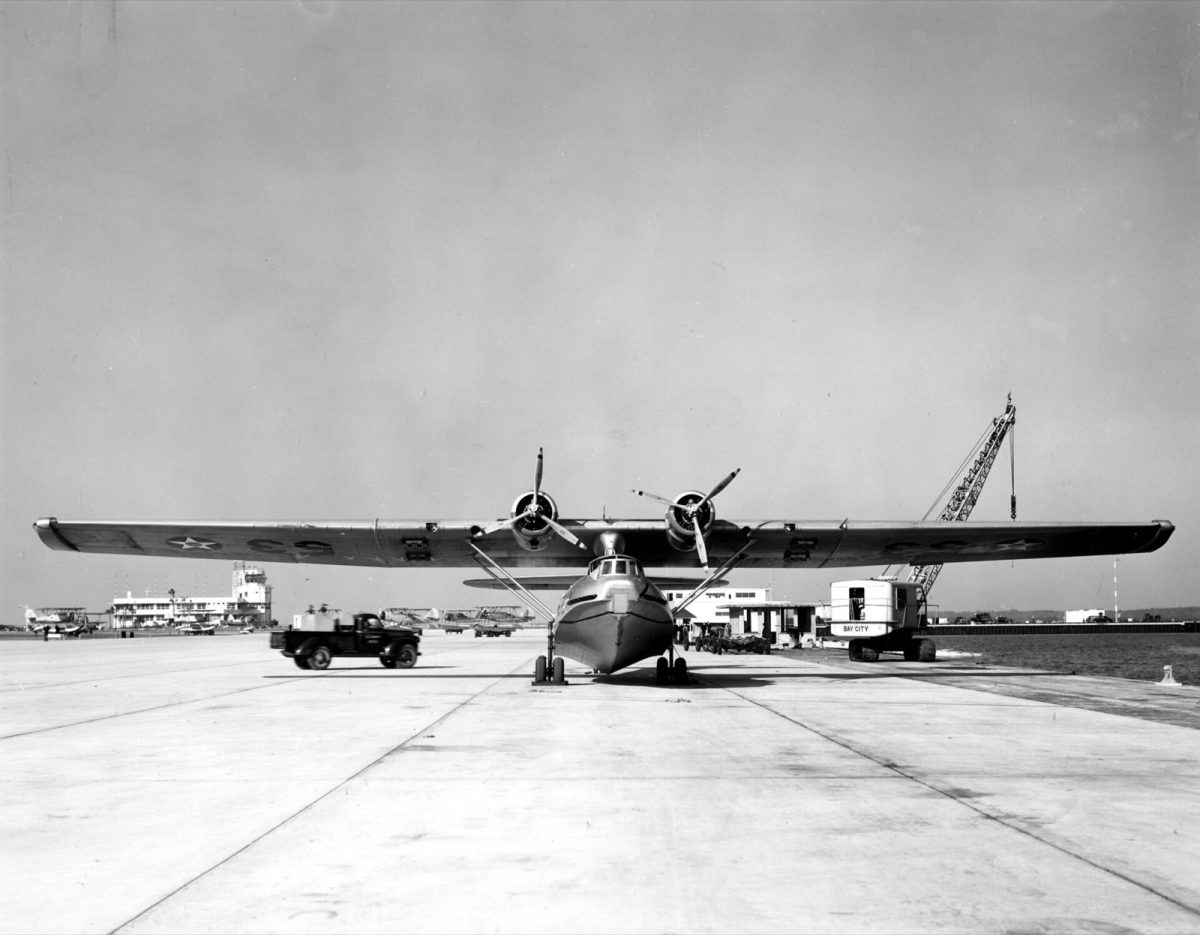
A PBY-2 Catalina flying boat on the seaplane ramp at Naval Air Station Jacksonville in 1942 (U.S. Navy photo). Photo: U.S. Navy / Wikimedia Commons (public domain)
JACKSONVILLE, Fla. - Naval Air Station Jacksonville marks 86 years since its commissioning on Oct. 15, 1940, but the military history of the property began more than two decades earlier. Before becoming one of the Navy's major aviation installations, the site served as a World War I Army training camp and later a Florida National Guard facility. By 1949, NAS Jacksonville had become the East Coast's aircraft capital, housing more naval aircraft than any other base between Nova Scotia and the Caribbean.
Known as NAS Jax, the installation sits about eight miles south of downtown Jacksonville within the city limits of Duval County. Its property occupies land between the St. Johns River and the Ortega River, historically known as Black Point. The station is part of the larger Jacksonville Naval Complex, which also includes Naval Station Mayport, the former NAS Cecil Field, now Cecil Airport, Naval Outlying Landing Field Whitehouse and the Pinecastle Range Complex.
1917-1919: The Army Builds Camp Joseph E. Johnston
The site's military history began during World War I, when the Army established Camp Joseph E. Johnston at Black Point. The camp was commissioned Oct. 15, 1917, exactly 23 years before the Navy would commission its air station on the same property. Rather than training naval aviators, the Army used Camp Johnston to prepare quartermasters for military service.
The installation grew into a substantial military training center with more than 600 buildings. By 1918, Camp Johnston had become the largest of all Quartermaster mobilization and training camps. The Army also constructed what was then the second-largest rifle range in the United States, adding another major training facility to the property.
Camp Johnston's first period of military service ended shortly after World War I. The Army decommissioned the installation on May 16, 1919, closing a chapter that had lasted less than two years. The buildings, training grounds and military use of the property nevertheless established the foundation for its later development.
1928-1939: A National Guard Camp Gets a Second Chance
The property returned to military use in 1928 when the Florida National Guard began operating at the former Army installation. The Guard renamed the site Camp J. Clifford R. Foster, giving the former World War I training grounds a new identity. The property remained associated with military training before the Navy's arrival.
A major turning point came in 1939, when the Navy was searching for a location for a new base. Ten former servicemen traveled to Washington at their own expense to encourage Navy officials to consider the old National Guard property. Their effort helped bring the Jacksonville site to the attention of decision-makers looking for a suitable installation.
Only two members of that group are identified by name in the historical account: Charles Bennett and Ira Lane. The Navy examined the location and liked what it found. That decision opened the way for the transformation of Camp Foster into a naval aviation station.
1940: The First Landing and a New Naval Air Station
The first aircraft landing at the unfinished air station came before the Navy formally commissioned the facility. On Sept. 7, 1940, Cmdr. Jimmy Grant landed an N3N-3 biplane on a runway that construction crews had not yet completed. His arrival marked an early milestone in the property's transition from an Army and National Guard training ground to a naval aviation installation.
The Navy officially commissioned NAS Jacksonville on Oct. 15, 1940. The date was exactly 23 years after the commissioning of Camp Joseph E. Johnston, connecting two chapters of military history on the same property. Capt. Charles P. Mason became the station's first commanding officer.
NAS Jacksonville was the first part of what would become the Jacksonville Navy complex. Its establishment introduced a new mission centered on naval aircraft, aviation training and supporting facilities. The station soon expanded significantly as World War II increased the demand for trained pilots and airmen.
1941-1945: World War II Brings Rapid Expansion
World War II transformed NAS Jacksonville into a major aviation training operation. More than 10,000 pilots and 11,000 airmen earned their "wings of gold" at the installation during the war. Those figures illustrate the scale of aviation training conducted at the station during this period.
The air station operated three runways measuring more than 6,000 feet each. It also had seaplane runways on the St. Johns River, allowing the installation to support different forms of naval aircraft operations. The Navy constructed Overhaul and Repair facilities that later became the Naval Air Rework Facility Jacksonville.
Construction extended well beyond runways and aircraft maintenance buildings. Before V-J Day, more than 700 buildings had gone up at NAS Jacksonville, including an 80-acre hospital. The installation also contained a camp that held more than 1,500 German prisoners of war.
Religious facilities formed another part of the wartime construction and development. On Jan. 17, 1943, Archbishop Francis J. Spellman, who later became a cardinal, dedicated St. Edward's Catholic Chapel. The chapel was among the many facilities associated with the station's rapid expansion.
Some of the buildings constructed during World War II were originally intended to last only 20 years. Those wartime structures remained useful well beyond their planned lifespan, and some are still in use. Their continued presence provides a physical connection between the station's wartime expansion and its later history.
1948-1949: Becoming the East Coast's Aircraft Capital
NAS Jacksonville entered another phase of aviation development in 1948 when the Navy's first jet carrier air groups and squadrons arrived. The introduction of these units added a new dimension to the station's aviation operations. It also preceded a period when Jacksonville held an unusually large share of the Navy's Atlantic aviation strength.
By April 1949, NAS Jacksonville had become known as the East Coast's aircraft capital. The installation held more naval aircraft than any other base stretching from Nova Scotia to the Caribbean. It accounted for 60 percent of the fleet's air striking force in the Atlantic area.
Patrol Squadrons VP-3 and VP-5 also arrived at NAS Jacksonville with Fleet Air Wing Eleven. Their arrival expanded the station's connection to naval patrol aviation alongside its carrier aircraft operations. Together, these developments reflected the installation's growing role within the Navy's aviation structure.
1950: The Blue Angels and the Korean War
The Blue Angels were also part of NAS Jacksonville's early aviation history. The demonstration team had called the station home before relocating to NAS Corpus Christi in the late 1940s. Its connection to Jacksonville continued into 1950 through a final air show at the installation.
On April 29, 1950, the Blue Angels performed their last air show at NAS Jacksonville before becoming the core of fighter squadron VF-191. That squadron subsequently went into combat in Korea. The transition marked a change from aerial demonstrations to combat operations for the personnel involved.
The 1950s: A Large Military and Civilian Workforce
By the middle of the 1950s, NAS Jacksonville had developed into a sizable military and civilian workplace. The station employed or hosted more than 11,000 military personnel and 5,000 civilians. Its annual payroll exceeded $35 million, reflecting the scale of operations at the installation during that period.
The Navy also completed a joint air traffic control center at a cost of $325,000. The project added another operational facility to the station's aviation infrastructure. Along with its personnel and payroll figures, the investment reflected the continued development of NAS Jacksonville after World War II.
1957-1981: Air Defense and Radar Operations
NAS Jacksonville also supported an Air Force radar station for more than two decades. The 679th Radar Squadron operated at the installation beginning in 1957, adding an Air Force mission to the Navy property. The radar station later became part of a larger air defense network.
In 1962, the radar operation joined the Semi-Automatic Ground Environment, known as SAGE, air defense system. The 679th Radar Squadron continued operating at NAS Jacksonville through the following years. The Air Force inactivated the squadron on Sept. 30, 1981, ending that chapter of radar operations at the station.
1970: Naval Air Reserve Squadrons Join the Station
NAS Jacksonville expanded its reserve aviation role in 1970 with the activation of three Naval Air Reserve squadrons. Those units were VA-203, VP-62 and VR-58. Their activation added another chapter to the station's history of supporting different naval aviation missions.
The reserve squadron activations followed decades of changes that included wartime flight training, jet carrier aviation and patrol squadrons. They also came during the years when the Air Force operated its radar installation at NAS Jacksonville. The station's history during this period included both naval aviation organizations and a separate air defense mission.
2026: Looking Back at 86 Years of NAS Jacksonville
The 86th anniversary of NAS Jacksonville's commissioning connects several distinct periods in the property's military history. The site began as Camp Joseph E. Johnston in 1917, became Camp J. Clifford R. Foster in 1928 and entered naval service in 1940. Its later development included World War II aviation training, jet aircraft, patrol squadrons, reserve aviation and radar operations.
The dates also connect two important milestones separated by exactly 23 years. Camp Johnston was commissioned on Oct. 15, 1917, and NAS Jacksonville was commissioned on Oct. 15, 1940. From its original Army training mission to its designation as the East Coast's aircraft capital in 1949, the property underwent a major transformation within little more than three decades.
How we did this
This history feature uses information from the Wikipedia article "Naval Air Station Jacksonville," reviewed Oct. 26, 2026. The account provides historical dates, personnel figures, construction details and information about military units associated with the station. This article focuses on those documented milestones and does not include estimates of current personnel, aircraft inventories or economic activity.
Source: Wikipedia: Naval Air Station Jacksonville
News organizations may republish this story with credit. See our guidelines.
Know someone who'd want to read this? Email it to a friend.
Own a Jacksonville business? Introductory ad rates from $125/month. See ad options Follow Jax Times on FacebookLocal news, events and people, in your feed every day.Most read this week
- Florida's 3 Constitutional Amendments on the Nov. 3 Ballot, Explained in Plain English
- Coastal Flood Warning for Jacksonville: Water Peaks Sunday and Monday Mornings in 5 Flood-Prone Areas
- Florida Is Holding $3 Billion in Unclaimed Money. Here's How Jacksonville and St. Augustine Residents Can Search for Free
- Jacksonville Fair 2026 Guide: Dates, Gate Times, Ticket Prices, Free Days and Every Concert (Nov. 5-15)
- St. Augustine Artist Dara Dodson Paints 'A Land Remembered,' With Shows at the Karpeles Museum and the St. Augustine Art Association
More stories
 Local Florida's Phone-While-Driving Laws: 11 Questions About Texting, School Zones, 3 Points and Fines
 Local Duval Has 82,418 Veterans, While Clay Has Northeast Florida's Highest Share at 1 in 7 Adults
 Local LaVilla, Jacksonville's 'Harlem of the South': A Former Town, the Ritz and a Historic Anthem
 Local Jacksonville Skyway Stops Running Nov. 2: Last Week to Ride and What Changes for JTA Riders
Comments
Be respectful. No personal attacks, hate speech, spam or anyone's private information. Every comment is reviewed before it appears. Comment rules
No comments yet. Be the first to share your thoughts.