The Great Fire of 1901: How a Pile of Spanish Moss Burned Down Jacksonville in 8 Hours, and Built the City We Know
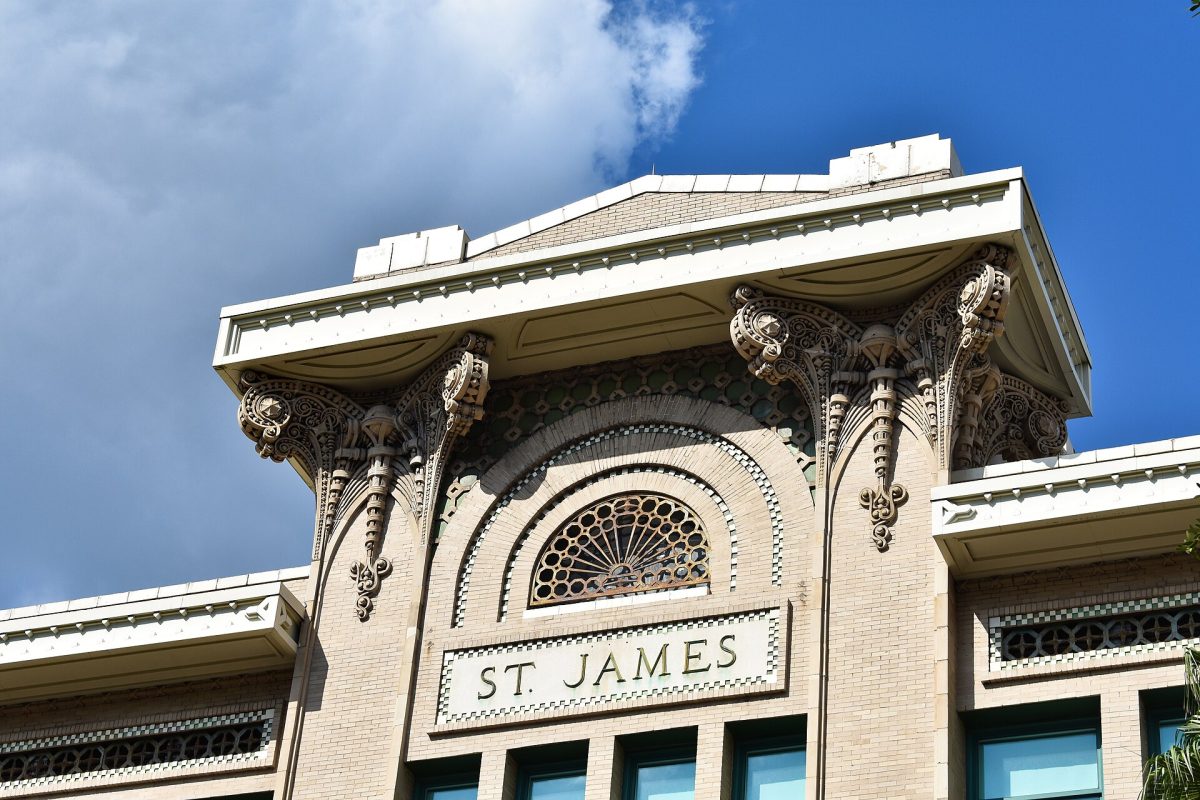
The St. James Building, designed by Henry John Klutho after the Great Fire, is now Jacksonville City Hall. Photo: PicoOrdinalo / Wikimedia Commons (CC BY-SA 4.0)
Jacksonville, Fla. - On May 3, 1901, a spark from a kitchen fire landed on piles of Spanish moss drying at a mattress factory at Davis and Beaver streets. By 8:30 that night, the fire had destroyed 146 city blocks and 2,368 buildings, according to the State Archives of Florida. It left 10,000 people homeless and killed seven residents.
The State Archives calls it the largest metropolitan fire in the American South. Smoke could be seen as far north as Savannah, Ga.
The city that rose from the ashes still shapes downtown today. Here's how it happened, from the moss pile to City Hall.
The fire by the numbers
| Date | Friday, May 3, 1901 |
| Started | Shortly after noon, in moss drying at the Cleaveland Fibre Factory, Davis and Beaver streets |
| Brought under control | About 8:30 p.m. |
| City blocks destroyed | 146 |
| Buildings destroyed | 2,368 |
| People left homeless | 10,000 (the Jacksonville Historical Society says more than 10,000) |
| Deaths | 7 |
| Martial law | Declared by Gov. William S. Jennings; city rule restored May 17, 1901 |
Sources: State Archives of Florida; Jacksonville Historical Society.
A pile of moss at lunchtime
In 1901, Spanish moss pulled from Florida's oak trees was cleaned, dried and used to stuff mattresses and furniture. The Cleaveland Fibre Factory, on the western edge of downtown in what's now LaVilla, laid its moss out to dry.
Shortly after noon, the State Archives says, a spark from a nearby kitchen fire set the moss burning. From the factory, the fire spread across most of downtown in the hours that followed.
Seven dead, 10,000 homeless
For a fire that burned most of a city's downtown in one afternoon, the death toll was low. The State Archives counts seven residents killed.
The Jacksonville Historical Society names one of them: Henry Bounetheau Jr., who lived at Market and Bay streets. His body was found two days after the fire.
Ten thousand people lost their homes.
Martial law
As the city burned, a telegram reached Gov. William S. Jennings in Tallahassee:
> "The city of Jacksonville in flames. Armory destroyed. I think it would be advisable to send four companies to the city at once."
The text is reproduced in the Florida Historical Quarterly. Jennings declared martial law and sent in the state militia to keep order, the State Archives says. City government didn't take back control until May 17, two weeks after the fire.
The architect who rebuilt downtown
The city spent the next decade rebuilding. The State Archives says Prairie School architect Henry John Klutho was brought in to design many of the new buildings. Two of his best-known buildings are on the National Register of Historic Places:
| Building | Address | What the National Register says |
|---|---|---|
| Dyal-Upchurch Building | 4 E. Bay St. | The first building in Florida designed by Klutho, an early post-fire building and the first in the city built on wood pilings. Dedicated in May 1902. |
| St. James Building | 117 W. Duval St. | Completed in 1912 and built to fill an entire city block. It began as the Cohen Brothers department store. Today it's Jacksonville City Hall. |
The State Archives dates the St. James Building's opening to 1911. The National Register lists 1912 as its significant year.
The fire and the city it made
Downtown's oldest buildings date mostly from the decade after 1901, because almost everything older burned. Walk past City Hall or along Bay Street and you're looking at a city rebuilt in a hurry.
Within a decade, the rebuilt city also became a center of the early film business. That story is in Jacksonville's silent film era.
See it for yourself: a short walk
- City Hall (the St. James Building), 117 W. Duval St., facing James Weldon Johnson Park.
- The Dyal-Upchurch Building, 4 E. Bay St., Klutho's first Florida building.
- The fire's starting point, near Davis and Beaver streets in LaVilla, one of Jacksonville's historic Black neighborhoods, a few blocks west of the downtown core.
Quick answers
When was the Great Fire of Jacksonville?
Friday, May 3, 1901. It started shortly after noon and was under control by about 8:30 p.m.
How did it start?
A spark from a kitchen fire landed on Spanish moss drying at a mattress factory at Davis and Beaver streets.
How much burned?
146 city blocks and 2,368 buildings.
How many people died?
Seven, according to the State Archives of Florida. About 10,000 people were left homeless.
Is City Hall from the rebuilding?
Yes. The St. James Building, designed by Henry John Klutho and finished in 1912, has been City Hall since the city restored it.
Did your family live in Jacksonville in 1901? Tell us in the comments if you have stories or photos passed down about the fire or the rebuilding.
How we did this
Jax Times rebuilt this story on Oct. 24, 2026, from these sources:
- The fire's facts and figures: the State Archives of Florida's Florida Memory exhibit on the fire.
- Martial-law telegram: the Florida Historical Quarterly.
- Victim and building counts: the Jacksonville Historical Society.
- Building dates and descriptions: the National Park Service's National Register of Historic Places listings for the St. James Building (No. 76000594) and the Dyal-Upchurch Building (No. 80000947).
Earlier versions of this story relied on Wikipedia. We removed details we couldn't confirm in these records.
Sources: State Archives of Florida, Florida Memory; Florida Historical Quarterly; Jacksonville Historical Society; National Register of Historic Places
News organizations may republish this story with credit. See our guidelines.
Know someone who'd want to read this? Email it to a friend.
Own a Jacksonville business? Introductory ad rates from $125/month. See ad optionsPlan your weekend with Jax Times
Get This Weekend in Jacksonville every Thursday: the best local events, free things to do and family fun, plus each evening's local news. Free, and you can unsubscribe anytime.
Most read this week
- Florida's 3 Constitutional Amendments on the Nov. 3 Ballot, Explained in Plain English
- Florida Is Holding $3 Billion in Unclaimed Money. Here's How Jacksonville and St. Augustine Residents Can Search for Free
- Fire Destroys Golf Carts of St. Augustine Building on U.S. 1: What We Know, What Happens Next and 9 Golf Cart Battery Safety Rules
- St. Augustine Artist Dara Dodson Paints 'A Land Remembered,' With Shows at the Karpeles Museum and the St. Augustine Art Association
- St. Johns Is Florida's Fastest-Growing County, Adding 36 People a Day, as Northeast Florida Passes 2 Million
More stories
 Local St. Johns River by the Numbers: 310 Miles, a Northward Flow and Less Than 30 Feet of Drop
 Local Phase III Water Restrictions: Your 1 Watering Day by Address, the 10 Hours You Can't Water and What's Exempt
 Local Stay Out of the Ocean This Weekend: 7- to 11-Foot Waves and Dangerous Rip Currents at Northeast Florida Beaches
 Local Coastal Flood Warning for Jacksonville: Water Peaks Sunday and Monday Mornings in 5 Flood-Prone Areas
Comments
Be respectful. No personal attacks, hate speech, spam or anyone's private information. Every comment is reviewed before it appears. Comment rules
No comments yet. Be the first to share your thoughts.