Fire Destroys Golf Carts of St. Augustine Building on U.S. 1: What We Know, What Happens Next and 9 Golf Cart Battery Safety Rules
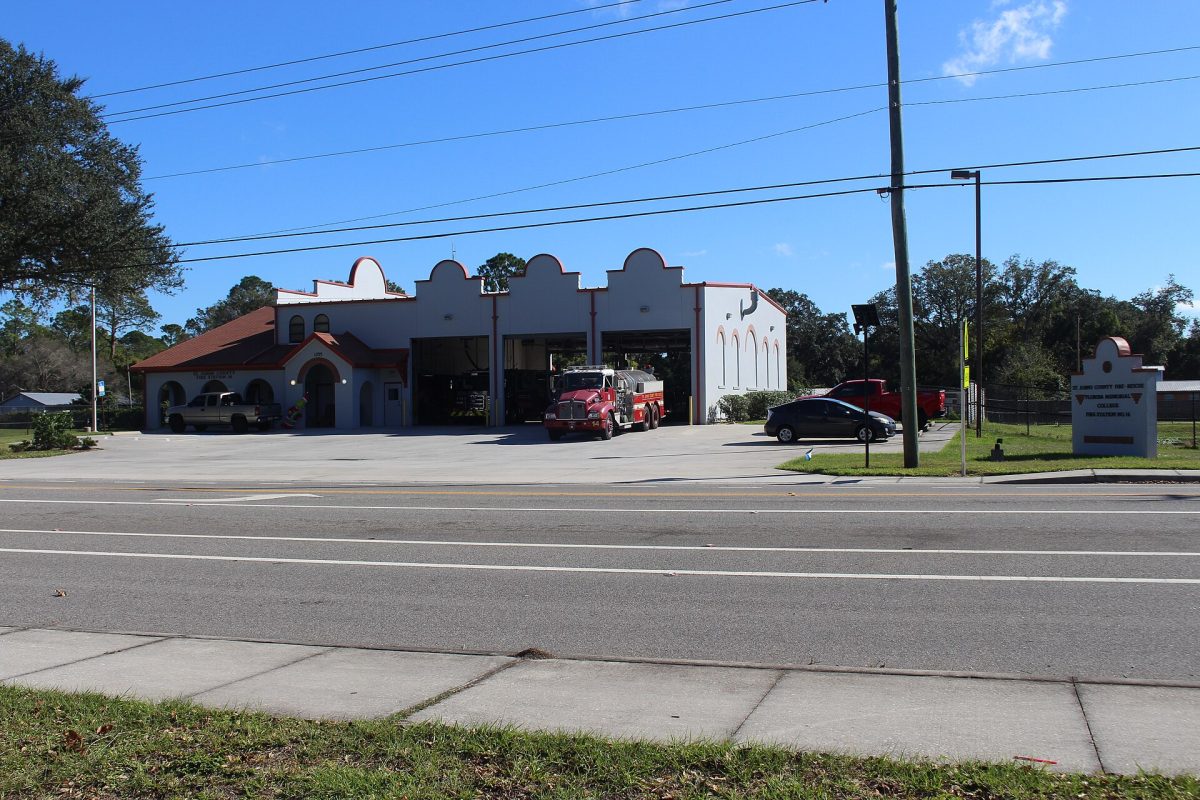
A St. Johns County Fire Rescue station. Fire Rescue crews fought the fire at Golf Carts of St. Augustine on Wednesday night. Photo: Mjrmtg / Wikimedia Commons (CC0)
ST. AUGUSTINE, Fla. — A fire Wednesday night, Oct. 21, destroyed the main building at Golf Carts of St. Augustine, a golf cart dealership and repair shop at 5960 U.S. 1 North, just north of the St. Augustine airport. No one was hurt, and the cause is under investigation by the State Fire Marshal.
St. Johns County Fire Rescue says the building and everything inside it appear to be a total loss. Golf carts parked on a lot behind the building were not damaged, according to Fire Rescue spokesperson Chris Naff.
Here is what we know so far, what is still unknown, what it means for customers, and what officials say every golf cart owner in Northeast Florida should know about battery fires.
What happened Wednesday night
Flames were already coming through the roof of the building when St. Johns County Fire Rescue crews arrived Wednesday evening, News4JAX reported. The St. Augustine Fire Department also responded, and TV crews at the scene counted at least six fire trucks.
A large plume of smoke was visible from U.S. 1. Just before 9 p.m., crews said they had most of the fire contained. Firefighters stayed on scene into the night to put out hot spots and make sure the fire didn't rekindle.
The fire was big enough that crews had to fight it from outside. "We actually had to pull out of the building to do a defensive operation just because of the amount of fire," Naff told Action News Jax.
The Florida Highway Patrol also responded, and part of U.S. 1 was closed while crews worked.
At a glance:
| What | Details |
|---|---|
| Where | Golf Carts of St. Augustine, 5960 U.S. 1 North, St. Augustine (north of the St. Augustine airport) |
| When | Wednesday evening, Oct. 21, 2026; mostly contained just before 9 p.m. |
| Injuries | None reported; no one was taken to a hospital |
| Damage | Main building and contents a total loss, per Fire Rescue; carts on the back lot not damaged |
| Agencies | St. Johns County Fire Rescue, St. Augustine Fire Department, Florida Highway Patrol |
| Cause | Unknown; the State Fire Marshal is investigating |
What does a "defensive operation" mean?
Firefighters generally work in one of two modes. In an offensive attack, crews go inside a burning building to put the fire out at its source. In a defensive operation, they stay outside and pour water on the fire from a distance, usually from hose lines and ladder trucks, because it is no longer safe to be inside.
When a fire chief switches to defensive, it usually means the building can't be saved, and the goal becomes keeping the fire from spreading to anything else. That fits what Fire Rescue said afterward: the building was lost, but the inventory on the back lot survived.
What a neighbor saw and heard
Neighbors gathered to watch as crews worked. One St. Johns County resident, Bradley Dill, told Action News Jax he saw a smoke cloud 200 to 300 feet in the air, and then "we started hearing batteries blowing up."
That is one witness's account. Officials have not said what started the fire or whether batteries played a role. A golf cart dealership and repair shop typically has carts, batteries, chargers, tires and other parts in one building, and any of those can feed a fire once it starts. The State Fire Marshal's investigation is what will determine where and how it began.
About the business
Golf Carts of St. Augustine sells new and used golf carts and offers service, parts, rentals and financing, according to its website. Its Google business profile says it has served North Florida, including Nocatee, Jacksonville, Ponte Vedra, Palm Coast and Anastasia Island, since 1988. Its Facebook page describes 35 years of experience customizing, servicing and reconditioning carts, including making carts street legal.
As of Thursday morning, the business had not posted a public statement about the fire on its website or Facebook page, and its plans for reopening are not known.
If your golf cart was at the shop
This is the question many customers will have, and there isn't a public answer yet. Fire Rescue said the building and its contents appear to be destroyed, but carts on the back lot were not damaged. Which carts were inside and which were outside has not been made public.
If you had a cart there for service, repair or consignment:
- Call the business at (904) 810-1006 once it is able to take calls, and ask where your cart was stored.
- Call your insurance company. Many golf cart owners carry coverage through a homeowners policy or a separate golf cart policy. Your insurer can tell you what applies when your property is damaged while in someone else's care.
- Gather your paperwork: your repair order or receipt, the cart's serial number, photos and any add-ons (lift kit, lithium battery upgrade, seats, lights), which help with any claim.
What we don't know yet
- What started the fire, and where in the building it began
- Whether batteries were involved in starting it, or only burned once it started
- How many golf carts were inside the building, and whether any belonged to customers
- A dollar estimate of the damage
- Whether the business plans to rebuild or keep operating from its back lot in the meantime
- When U.S. 1 fully reopened
We will update this story as St. Johns County Fire Rescue, the State Fire Marshal or the business releases more information.
Why golf cart batteries are on officials' minds this month
Whatever caused Wednesday's fire, golf cart batteries were already a safety concern in Florida this October.
On Oct. 9, ahead of Hurricane Isaias, Florida's Chief Financial Officer and State Fire Marshal Blaise Ingoglia urged Floridians to move lithium-ion-powered devices, "including scooters or golf carts," to higher ground before the storm. His office said that during Hurricanes Helene and Milton in September and October 2024, more than 79 fires involving electric vehicles and lithium-ion batteries were reported in Florida because of storm surge and flooding.
The concern is saltwater. When a lithium-ion battery is flooded or damaged, it can overheat and catch fire days or even weeks later, after the water has gone down. That is why the state's advice is to never charge a battery that has been underwater.
St. Augustine and the beaches dealt with king tides and street flooding earlier this month, and many golf carts in St. Johns County are parked in garages and under homes near the water. If yours sat in floodwater, the guidance below applies to you.
How lithium-ion battery fires start and why they are dangerous
The National Fire Protection Association, the nonprofit that writes many of the country's fire codes, says lithium-ion battery fires start for a handful of reasons:
- Physical damage: a battery that is punctured, crushed or exposed to water
- Electrical damage: overcharging, or using a charger not designed for the battery
- Extreme temperatures
- Product defects
The dangers, according to NFPA, are heat, smoke, toxic gases and the potential for explosions. Damaged batteries often give warning signs first: an unusual smell, excessive heat, popping sounds, swelling or a change in color.
One common myth: some people believe water makes a lithium-ion battery fire worse. NFPA says firefighters should use water, because the lithium inside these batteries is a lithium salt, not the pure lithium metal that reacts with water.
9 golf cart battery safety rules from fire officials
These come from the National Fire Protection Association and the Florida State Fire Marshal. They apply whether your cart runs on a lithium-ion battery pack or you have lithium-powered accessories.
- Charge outdoors when you can. NFPA says the safest place to charge electric vehicles, e-bikes and e-scooters is outdoors, away from any structure or enclosure, and not in direct sunlight.
- Use the right charger. Use only charging equipment made for your battery, ideally the charger that came with it.
- Don't overcharge. Stop charging once the battery is full.
- Buy listed batteries. NFPA recommends batteries listed by a nationally recognized testing laboratory and labeled that way. Be careful with cheap replacement packs.
- Watch for warning signs. Stop using a battery that smells odd, runs hot, pops, swells or changes color.
- Leave repairs to a professional. Don't open, modify or repair a battery or charger yourself.
- Never charge a flooded battery. If your cart sat in water, the State Fire Marshal says don't charge it and don't try to repair it.
- Look and listen first. If you see smoke or gas, or hear popping or hissing, move away. If you see fire, call 911.
- Isolate a damaged battery safely. If it's safe, move the cart or battery outside to a dry, ventilated spot away from anything flammable. If it can't be moved, keep the garage door open. Wear gloves and eye protection if you must handle it. Recycle it under local rules; never put it in the regular trash.
A quick refresher on Florida golf cart rules
Golf carts are everywhere in St. Johns County, from St. Augustine Beach to Nocatee. Under Florida law (section 316.212 of the Florida Statutes, last amended in 2023):
- Under 18: a driver needs a valid learner's license or driver's license to drive a golf cart on a public road.
- 18 and older: a driver needs a valid government-issued photo ID.
- Daylight only: golf carts may be driven on public roads only between sunrise and sunset, unless the local government allows nighttime use and the cart has headlights, brake lights, turn signals and a windshield.
- Where: golf carts can only use roads that the county or city has designated for them, and can cross state highways only at approved crossings.
Resources
- Golf Carts of St. Augustine: 5960 U.S. 1 North, St. Augustine, FL 32095; (904) 810-1006
- Florida State Fire Marshal, lithium-ion battery safety after storms: myfloridacfo.com
- NFPA lithium-ion battery safety tip sheet: nfpa.org/lithium-ion-batteries
- Emergencies: call 911
This story will be updated as more information becomes available.
Source: St. Johns County Fire Rescue (via Action News Jax and News4JAX); Florida State Fire Marshal; National Fire Protection Association
News organizations may republish this story with credit. See our guidelines.
Know someone who'd want to read this? Email it to a friend.
Own a Jacksonville business? Introductory ad rates from $125/month. See ad optionsPlan your weekend with Jax Times
Get This Weekend in Jacksonville every Thursday: the best local events, free things to do and family fun, plus each evening's local news. Free, and you can unsubscribe anytime.
Most read this week
- Florida's 3 Constitutional Amendments on the Nov. 3 Ballot, Explained in Plain English
- Duval and St. Johns School Calendars 2026-27: Every Day Off Left This School Year, Side by Side
- Florida Is Holding $3 Billion in Unclaimed Money. Here's How Jacksonville and St. Augustine Residents Can Search for Free
- Early Voting in Jacksonville Starts Tuesday: All 24 Sites, the Hours, What to Bring and What's on Your Ballot
- Rent in Jacksonville and St. Johns County by ZIP Code: From $1,216 to $2,897 a Month
More stories
 Local JAXPORT by the Numbers: Jacksonville Port's Last 5 Years Ranked, From 9.96 Million to 10.35 Million Tons
 Local St. Augustine's 2 Spanish Stone Forts: 1672 Groundbreaking, a 1742 Watchtower and the Sieges That Shaped Florida
 Local Jacksonville Is Overdue for Its First 50-Degree Night: 35 Years of Data on When the Cold Arrives
 Local Jacksonville vs. Tampa, Orlando and Miami: 14 Questions Answered on Pay, Rent and Home Prices
Comments
Be respectful. No personal attacks, hate speech, spam or anyone's private information. Every comment is reviewed before it appears. Comment rules
No comments yet. Be the first to share your thoughts.