Florida Telemedicine Owner Gets 20 Years in $46.2 Million Medicare Fraud Case
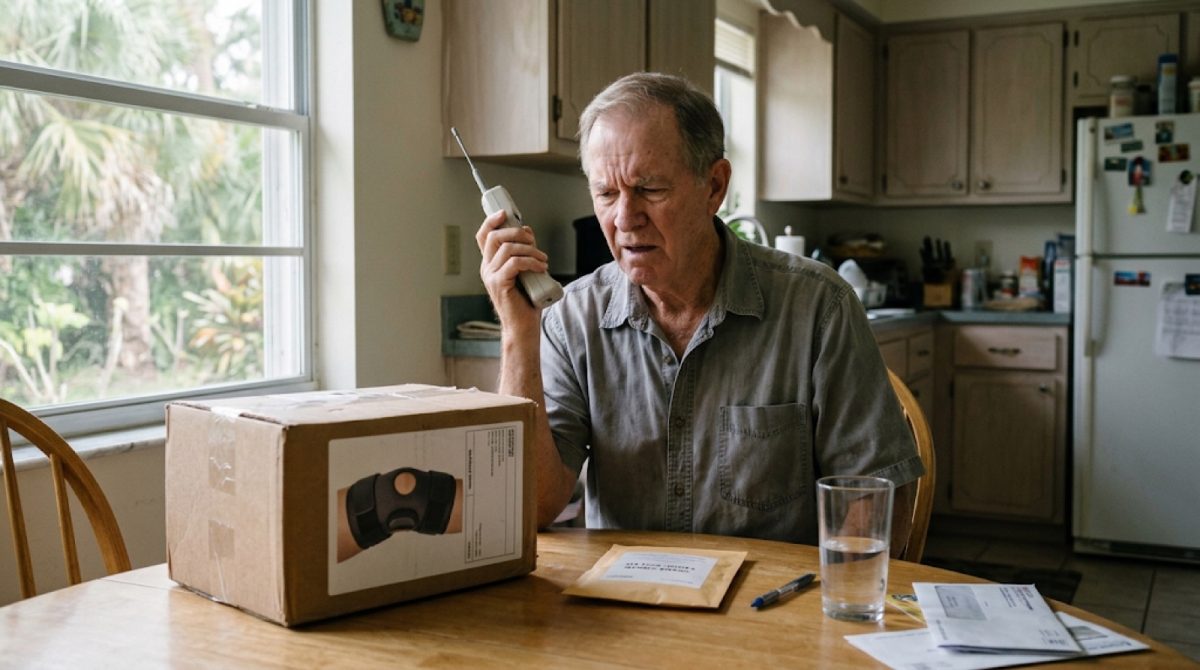
Prosecutors said telemarketers pushed Medicare patients to accept braces and genetic tests they did not need. Illustration: AI-generated
Jacksonville, Fla. — A Fort Lauderdale telemedicine company owner was sentenced Friday, Oct. 23, to 20 years in prison for leading a $46.2 million Medicare fraud conspiracy involving braces and genetic tests. Medicare paid $17.9 million on the claims, and the defendant personally profited more than $10.4 million, according to the U.S. Department of Justice.
Christopher Harwood, 44, owned and operated TelevisitMD. The South Florida case offers Northeast Florida seniors and their families a reason to recognize unsolicited medical offers, review Medicare claims and know where to report suspicious activity. The Justice Department did not identify where the patients lived, and the case does not establish that any were in Jacksonville.
The case by the numbers
| Measure | Figure |
|---|---|
| Prison sentence | 20 years |
| Fraudulent Medicare claims | $46.2 million |
| Amount Medicare paid | $17.9 million |
| Restitution ordered to Medicare | $17,942,402 |
| Forfeiture ordered | $10,431,463 |
| Harwood's personal profit | More than $10.4 million |
| Length of conspiracy | More than six years |
| Harwood's age | 44 |
The $46.2 million is the total in false and fraudulent claims caused by the scheme, not the amount Medicare actually paid.
How the scheme worked
The Justice Department described a process that moved from unsolicited marketing to signed medical orders and Medicare billing.
1. Patients were contacted. Harwood and his co-conspirators used aggressive telemarketing campaigns to target Medicare patients and induce them to accept orthotic braces and genetic tests they did not need.
2. Doctors approved orders. Harwood paid doctors to sign orders for braces and tests. The doctors did not follow Medicare's telemedicine-visit rules, lacked real medical relationships with the patients and often signed without meaningful patient interaction.
3. The orders were sold. Harwood sold the signed orders to durable medical equipment supply companies, laboratories and marketers participating in the scheme.
4. Medicare was billed. Harwood also owned and operated multiple Florida-based medical equipment supply companies. He used them to bill Medicare millions of dollars for braces patients did not want or need.
A short timeline
| When | What happened |
|---|---|
| More than six years | The fraud conspiracy operated |
| March 2026 | Harwood pleaded guilty to conspiracy to commit health care fraud and wire fraud |
| April 7, 2026 | The Justice Department announced creation of its Fraud Division |
| Oct. 23, 2026 | Harwood was sentenced to 20 years in prison |
Warning signs of brace and genetic-test scams
The HHS Office of Inspector General warns that genetic testing fraud can involve billing Medicare for a test that was not medically necessary or was not ordered by a patient's treating physician. Scammers may seek personal information through calls, booths at public events, health fairs or door-to-door visits.
Pay attention to unsolicited offers of "free" genetic testing that end with a request for a Medicare number. In the Harwood case, aggressive calls also pushed braces that patients did not need.
HHS-OIG says patients could owe thousands of dollars if Medicare denies claims for unnecessary genetic tests. A free offer is therefore not necessarily free for the person receiving it.
How to protect your Medicare number
Medicare says it "will never call you to sell you anything or visit you at your home."
Keep your Medicare card and Medicare number private, along with your Social Security card and number. Share those details only with your doctor or other people you know should have them. Do not exchange Medicare information for promises of free care, money or gifts.
Check receipts and provider statements for mistakes. People with Original Medicare can create a secure Medicare.gov account to view claims. Compare the dates and services listed there with your own calendar and Medicare statements so unexpected entries are easier to spot.
For genetic testing, HHS-OIG advises refusing kits your doctor did not order and accepting only testing approved by a doctor you know and trust. Do not provide Medicare information to callers outside your doctor's office simply because they offer a test.
Where to report it
| Concern or assistance | Contact |
|---|---|
| Suspected Medicare fraud | 1-800-MEDICARE (1-800-633-4227) |
| Medicare Advantage or drug plan fraud | 1-877-7SAFERX (1-877-772-3379) |
| HHS-OIG fraud hotline | 1-800-HHS-TIPS (1-800-447-8477) |
| HHS-OIG online reporting | tips.hhs.gov |
| Senior Medicare Patrol | 877-808-2468 |
The Senior Medicare Patrol Resource Center also offers a "Find Help in Your State" locator at smpresource.org.
Questions Northeast Florida seniors may have
Does this case mean Jacksonville patients were targeted? No such conclusion can be drawn from the announcement. The Justice Department did not say where the patients lived.
Is an offer of free genetic testing automatically safe? No. HHS-OIG specifically warns about unsolicited free-test offers tied to requests for Medicare numbers and says testing should be approved by a trusted doctor.
What if a kit arrives that my doctor never ordered? HHS-OIG advises refusing genetic testing kits that were not ordered by your doctor. Review your Medicare information for unfamiliar claims and use the reporting contacts above for suspected fraud.
What if I see a medical service I don't recognize? Medicare recommends checking statements and receipts for mistakes and comparing claim dates and services with your calendar. Suspected fraud can be reported to 1-800-MEDICARE.
The bigger crackdown
The FBI and HHS-OIG investigated Harwood's case. Trial Attorney Owen Dunn of the Justice Department's Fraud Division Health Care Fraud Section prosecuted it. The sentence was announced by federal officials from the National Fraud Enforcement Division, the Southern District of Florida, the FBI Miami Field Office and HHS-OIG.
The Justice Department announced its Fraud Division on April 7. Its Health Care Fraud Strike Force Program currently has nine strike forces across federal districts nationwide. Since 2007, the program has charged more than 6,200 defendants who collectively billed federal health programs and private insurers more than $45 billion.
For local readers, the immediate lesson from the South Florida case is practical: verify medical orders with a trusted doctor, protect identifying numbers and check claims rather than assuming a signed order makes an unsolicited offer legitimate.
How we did this
This report uses the U.S. Department of Justice's Oct. 23, 2026, announcement of Harwood's sentence for the case facts and national enforcement figures. Consumer guidance and reporting contacts come from Medicare.gov's "Reporting Medicare fraud & abuse," the HHS Office of Inspector General's genetic testing fraud alert and "Report Fraud" page, and the Senior Medicare Patrol Resource Center at smpresource.org. The Justice Department release did not identify the patients' locations.
Source: U.S. Department of Justice release, Oct. 23, 2026 (as provided); Medicare.gov; HHS-OIG; Senior Medicare Patrol

News organizations may republish this story with credit. See our guidelines.
Know someone who'd want to read this? Email it to a friend.
Own a Jacksonville business? Introductory ad rates from $125/month. See ad optionsPlan your weekend with Jax Times
Get This Weekend in Jacksonville every Thursday: the best local events, free things to do and family fun, plus each evening's local news. Free, and you can unsubscribe anytime.
Most read this week
- Florida's 3 Constitutional Amendments on the Nov. 3 Ballot, Explained in Plain English
- Florida Is Holding $3 Billion in Unclaimed Money. Here's How Jacksonville and St. Augustine Residents Can Search for Free
- Fire Destroys Golf Carts of St. Augustine Building on U.S. 1: What We Know, What Happens Next and 9 Golf Cart Battery Safety Rules
- St. Augustine Artist Dara Dodson Paints 'A Land Remembered,' With Shows at the Karpeles Museum and the St. Augustine Art Association
- Duval and St. Johns School Calendars 2026-27: Every Day Off Left This School Year, Side by Side
More stories
 Local Jacksonville Jury Duty in 2026: 10 Questions About $15 Pay, $30 Days and Who Can Be Excused
 Finance Jacksonville Car Registration in 2026: 7 Fees From $2.95 to $225 Drivers Should Know
 Finance Jacksonville vs. St. Augustine Sales Tax in 2026: 4 Counties Compared, From 6.5% to 7.5%
 Business St. Augustine and Jacksonville's Crypto Scene: Local Meetups, a Bitcoin Beach Race and New Florida Crypto Laws
Comments
Be respectful. No personal attacks, hate speech, spam or anyone's private information. Every comment is reviewed before it appears. Comment rules
No comments yet. Be the first to share your thoughts.