Jacksonville Diesel Tops $6.15, Up $2.57 in a Year, as Fuel Prices Become Trucking's No. 1 Worry
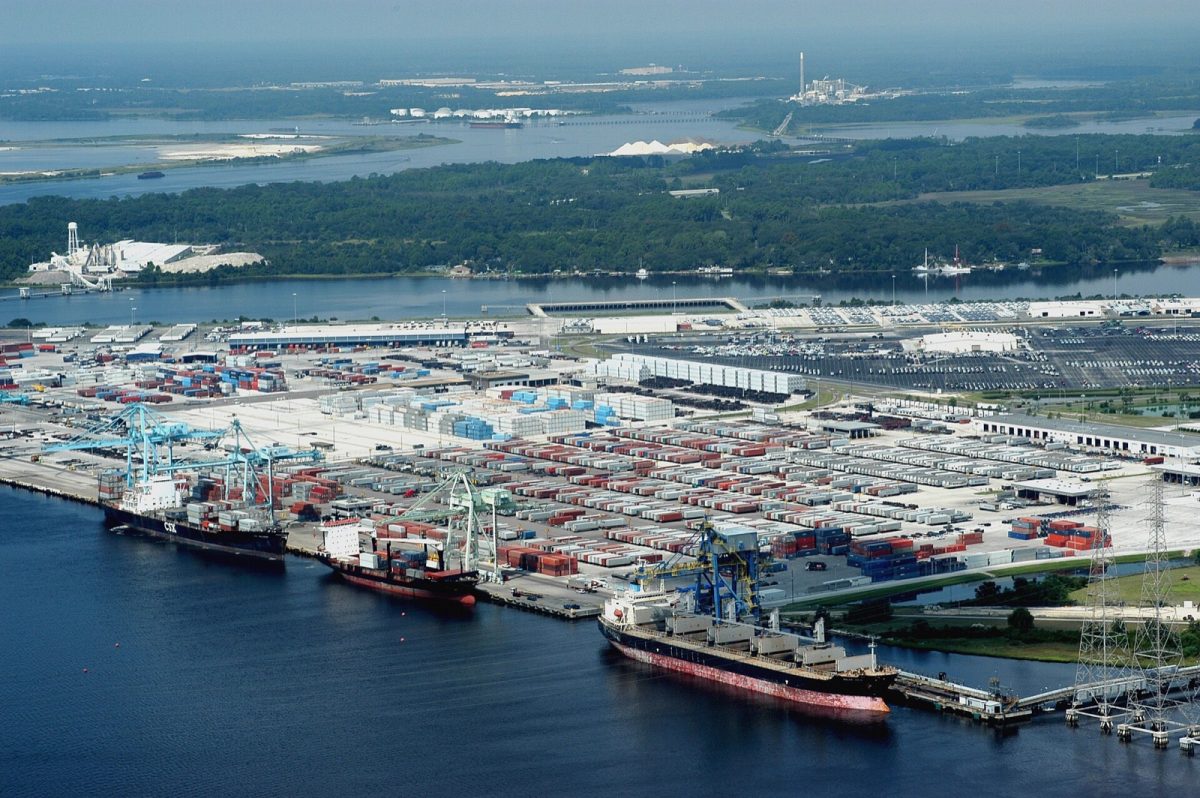
JAXPORT in Jacksonville (file photo). The port says more than 150 trucking firms serve it. Photo: Kcida10 / Wikimedia Commons (public domain)
JACKSONVILLE, Fla. - Diesel fuel in Jacksonville now averages $6.158 per gallon, up $2.572 from a year ago, as a new national trucking industry report identifies fuel prices as the industry's No. 1 concern. The local price represents an increase of about 72% over the $3.586 average recorded one year earlier, according to AAA figures for Saturday, Oct. 24. The increase comes as trucking companies and drivers face higher operating costs, even though diesel prices have retreated from September's record highs.
The American Transportation Research Institute (ATRI) released its 22nd annual Top Industry Issues report on Oct. 18, placing Fuel Prices at the top of the industry's concerns. The Economy, which had occupied the No. 1 position for three consecutive years, dropped to sixth place. The findings come from nearly 3,100 trucking industry stakeholders, including motor carrier personnel, professional drivers and other freight industry participants.
Jacksonville Diesel Prices: What Drivers Pay Now
Jacksonville's average diesel price has fallen slightly from a month ago but remains substantially higher than last year. AAA reports that the current $6.158 average is 20.6 cents below the city's record high of $6.364, reached Sept. 14. However, diesel has increased about 6 cents over the past week, rising from $6.094 to $6.158 per gallon.
| Diesel price comparison | Jacksonville | Florida | National |
|---|---|---|---|
| Oct. 24, 2026 | $6.158 | $6.134 | $6.337 |
| One month ago | $6.172 | $6.194 | $6.514 |
| One year ago | $3.586 | $3.563 | $3.640 |
| Record high | $6.364 | $6.349 | $6.528 |
| Record date | Sept. 14, 2026 | Sept. 18, 2026 | Sept. 22, 2026 |
Jacksonville's current diesel average is slightly above Florida's statewide price of $6.134 but remains 17.9 cents below the national average of $6.337. The national average has declined from $6.514 a month ago and from its Sept. 22 record of $6.528. Those declines provide some relief, but the year-over-year figures show that diesel remains much more expensive than it was in October 2025.
What Higher Diesel Prices Could Cost One Truck
For a trucking company, even a modest increase in diesel prices can produce a substantial annual expense because of the amount of fuel a commercial truck consumes. Jacksonville's $2.572-per-gallon increase over the past year illustrates how quickly those additional costs can accumulate. The actual impact depends on each truck's mileage, fuel efficiency and the prices paid when purchasing fuel.
Example based on assumptions: If a tractor-trailer averages 6.5 miles per gallon and travels 100,000 miles annually, it would consume approximately 15,385 gallons of diesel each year. At Jacksonville's year-over-year price increase of $2.572 per gallon, that truck would face approximately $39,600 in additional annual fuel expenses if the higher price applied to all its annual fuel purchases. This is an illustrative calculation, not a reported expense for an actual Jacksonville trucking company.
The American Transportation Research Institute's findings show why those fuel expenses have attracted so much attention across the trucking industry. Ben Banks, president of TCW, described the financial pressure in a statement accompanying the report. "Just as we started to see some positive signs in the freight economy, the cost of diesel topped $6.50 per gallon. With operating costs continuing to climb overall, this spike in fuel costs is particularly painful for small- to mid-size fleets."
Jacksonville Car Owners Are Also Paying More
Higher fuel prices are not limited to diesel-powered commercial vehicles. Jacksonville's average price for regular gasoline reached $4.149 per gallon Saturday, compared with $2.962 a year earlier. That represents an increase of $1.187 per gallon for motorists who purchase regular gasoline.
For a driver filling a 15-gallon tank, the difference amounts to approximately $17.80 more than the same amount of gasoline cost a year ago. Jacksonville's regular gasoline average has declined from $4.413 a month earlier, but it remains well above last October's price. The current average is also slightly higher than Florida's $4.131 statewide figure, while the national regular gasoline average stands at $4.296.
Fuel Prices Replace the Economy as Trucking's Top Concern
ATRI's annual report tracks the issues that trucking industry participants consider most important. This year's rankings show fuel costs moving ahead of broader economic concerns, while questions about finding, paying and retaining drivers also remain prominent. Several regulatory and insurance-related issues appear on the industry's list.
ATRI's announcement gave exact ranks for five of the top 10 issues. Fuel prices hold the top spot, and three of the other ranked issues involve the driver workforce. The ranked issues are shown below.
| National rank | Trucking industry issue |
|---|---|
| No. 1 | Fuel Prices |
| No. 5 | Driver Shortage |
| No. 6 | Economy |
| No. 9 | Driver Compensation |
| No. 10 | Driver Retention |
Other concerns identified in the report include Lawsuit Abuse Reform, Insurance Cost/Availability and the federal Compliance, Safety, Accountability program, known as CSA. Artificial Intelligence in Trucking and Diesel Emissions Regulations also remained among the top 10 issues after first appearing on the list in 2025. ATRI's release did not specify the individual ranking positions for those five issues.
The Economy's decline from first to sixth place was one of the notable changes in the survey. ATRI said the change reflected "some cautious optimism on the part of motor carriers." Even with that shift, the return of Driver Shortage and Driver Retention to the top 10 indicates that workforce concerns continue to compete with fuel costs for the industry's attention.
Truck Drivers and Trucking Companies Have Different Priorities
Although fuel prices concern both drivers and trucking companies, their rankings differ in several areas. Truck drivers, including owner-operators and company drivers, placed Fuel Prices, Truck Parking and Driver Compensation as their three leading concerns. Motor carriers identified Lawsuit Abuse Reform, Fuel Prices and Driver Shortage as their top three issues.
Those differences show how the same industry can face competing pressures depending on a respondent's role. Drivers emphasized fuel expenses, parking and compensation, while companies placed greater emphasis on legal concerns, fuel costs and staffing. Both groups included fuel prices among their three highest priorities, making the issue a shared concern across the survey.
The survey included nearly 3,100 respondents from different parts of the freight industry. More than 48% were motor carrier executives and personnel, while truck drivers accounted for 26%. Another 26% represented other freight stakeholders, including suppliers, driver trainers, law enforcement personnel and others.
Law Enforcement Raises Concerns About Logging Device Fraud
The report also identified a different leading issue among law enforcement respondents. Their top concern was Electronic Logging Device fraud, commonly referred to as ELD fraud. The finding places that issue alongside the financial, operational and workforce concerns raised by other trucking industry participants.
ATRI gathered responses from enough participants in some states to develop state-specific analyses. However, the available national release does not provide the Florida or Georgia findings. The rankings described here therefore represent the national survey and should not be interpreted as a separate ranking of Jacksonville or Florida trucking concerns.
Why Trucking Matters to Jacksonville
Jacksonville has a substantial freight transportation connection through JAXPORT, which identifies itself as Florida's largest container port and one of the nation's largest vehicle-handling ports. According to the port, more than 150 trucking firms serve its operations, along with 40 daily trains and access to three interstates. JAXPORT also says its transportation connections can reach more than 98 million consumers within one day.
Those figures illustrate why transportation costs have local relevance beyond individual truck drivers. The port's operations involve a network of trucking businesses and other freight transportation services that connect Jacksonville to a much larger market. The national findings do not establish how much additional diesel expenses have cost those specific companies, but Jacksonville's AAA prices show the fuel environment in which local operators are working.
Census Bureau figures also indicate that transportation represents a meaningful share of Duval County's workforce. The American Community Survey's 2020-2024 five-year estimates counted approximately 20,817 employed Duval County residents working in transportation occupations, out of 499,366 employed residents overall. That represents approximately 4.2% of the county's employed residents, matching Florida's statewide share of about 4.2%, or 437,978 transportation workers out of 10,484,998 employed residents.
The Census occupation category is broader than truck driving alone. It includes bus drivers, delivery drivers and other transportation occupations, so the 20,817 figure should not be interpreted as the number of truck drivers in Duval County. It nevertheless provides a measure of the local workforce involved in transportation-related jobs.
What to Watch as Diesel Prices Remain Elevated
Jacksonville's fuel prices present two different trends heading into the final week of October. Diesel has declined from its September record and is slightly cheaper than it was a month ago, but the average has risen during the past week. Most significantly, drivers and fleets continue to face prices approximately 72% higher than a year earlier.
The latest ATRI findings put those local price changes into a national industry context. Fuel prices now lead the industry's concerns, ahead of an economy that had held the top position for three straight years. For Jacksonville's trucking businesses and motorists, the immediate question is whether recent declines from September's highs will continue or whether prices will remain substantially above last year's levels.
How We Did This
Jax Times used the American Transportation Research Institute's Oct. 18, 2026, release of its 22nd annual Top Industry Issues report for the national trucking rankings, survey findings and industry statements. Local, statewide and national fuel prices came from AAA's daily averages as of Oct. 24, 2026, while port information came from JAXPORT. Workforce figures came from the U.S. Census Bureau's American Community Survey 2020-2024 five-year estimates, table C24010, and the per-truck fuel cost calculation is an example based on explicitly stated assumptions rather than an actual fleet's reported expenses.
Sources: American Transportation Research Institute (Oct. 18, 2026); AAA (prices as of Oct. 24, 2026); JAXPORT; U.S. Census Bureau ACS

News organizations may republish this story with credit. See our guidelines.
Know someone who'd want to read this? Email it to a friend.
Own a Jacksonville business? Introductory ad rates from $125/month. See ad optionsPlan your weekend with Jax Times
Get This Weekend in Jacksonville every Thursday: the best local events, free things to do and family fun, plus each evening's local news. Free, and you can unsubscribe anytime.
Most read this week
- Florida Is Holding $3 Billion in Unclaimed Money. Here's How Jacksonville and St. Augustine Residents Can Search for Free
- Fire Destroys Golf Carts of St. Augustine Building on U.S. 1: What We Know, What Happens Next and 9 Golf Cart Battery Safety Rules
- St. Augustine Artist Dara Dodson Paints 'A Land Remembered,' With Shows at the Karpeles Museum and the St. Augustine Art Association
- Jacksonville Fair 2026 Guide: Dates, Gate Times, Ticket Prices, Free Days and Every Concert (Nov. 5-15)
- St. Johns Is Florida's Fastest-Growing County, Adding 36 People a Day, as Northeast Florida Passes 2 Million
More stories
 Business Jacksonville Airport's 11 Airlines Ranked: Allegiant Leads With 14 Nonstop Destinations, Breeze Has 11
 Business Born in Jacksonville: Firehouse Subs, Fanatics, Jax Beer and Other Brands That Started Here
 Cars Tesla Roadster: Modern-Day Back to the Future, Because I'm 10 Again!
 Local St. Johns County Under Coastal Flood Warning Through Monday: What Residents Need to Know
Comments
Be respectful. No personal attacks, hate speech, spam or anyone's private information. Every comment is reviewed before it appears. Comment rules
No comments yet. Be the first to share your thoughts.