St. Johns County's $191.8 Million SR 207 Water Plant Is Running, Built to Save 13 Billion Gallons
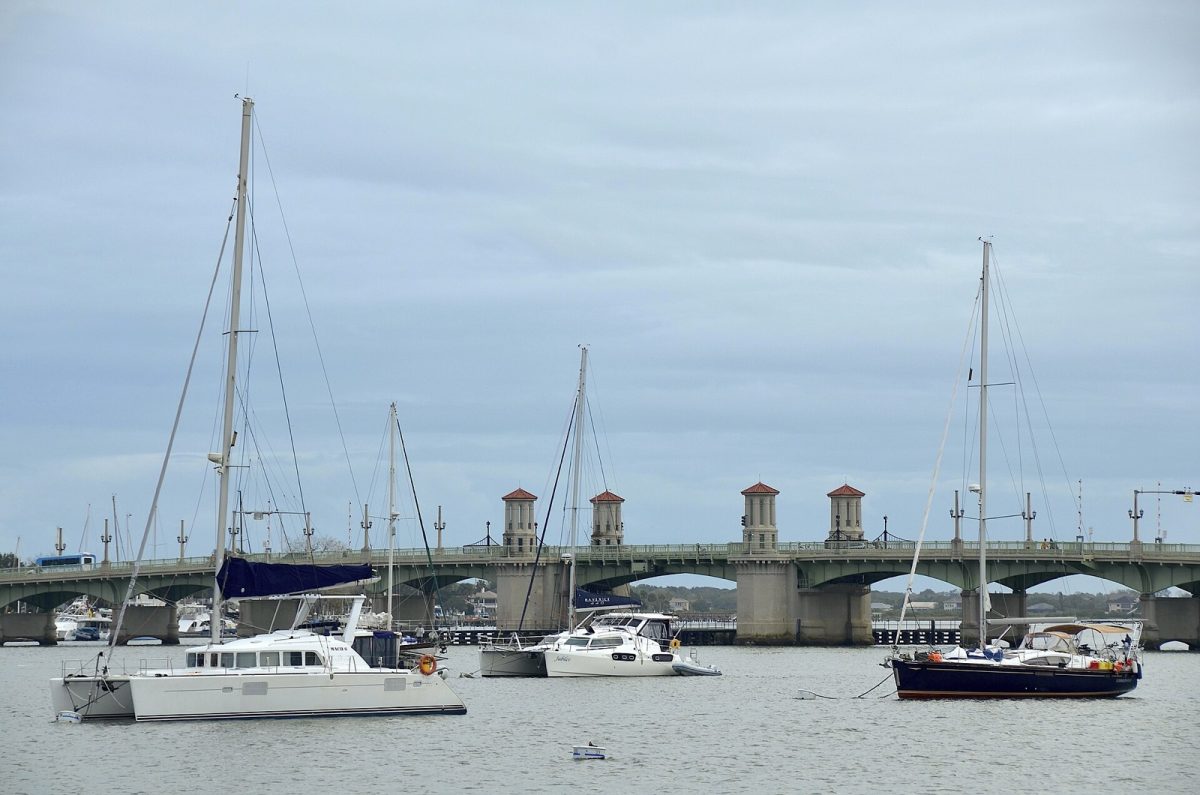
The Matanzas River and the Bridge of Lions in St. Augustine (file photo). Photo: Olga Ernst / Wikimedia Commons (CC BY-SA 4.0)
ST. AUGUSTINE, Fla. - St. Johns County's $191.8 million State Road 207 Water Reclamation Facility is operating, with the county expecting it to conserve 13 billion gallons of water over the next 20 years. The plant, located at 3055 State Road 207 in Elkton, began operating May 11, 2026, and can treat up to 3.25 million gallons of wastewater daily. County officials and project partners celebrated the completed facility with a ribbon-cutting ceremony Oct. 15.
The project represents the largest capital improvement project in St. Johns County history, according to an Oct. 27 county news release. It treats wastewater and produces reclaimed water for irrigation, reducing demand on the Floridan Aquifer, the region's primary source of drinking water. The county also expects the facility to prevent more than one million pounds of nutrients, including nitrogen and phosphorus, from entering the Matanzas River over 20 years.
By the Numbers
The county's Oct. 27 announcement outlines the facility's construction cost, treatment capacity, conservation goals and supporting infrastructure. The figures describe a project designed to serve the county's utility system while addressing long-term water conservation. Jax Times calculated the annual average conservation figure from the county's 20-year projection.
- $191.8 million: Total project cost.
- May 11, 2026: Date the facility began operating.
- 3.25 million gallons: Initial daily wastewater treatment capacity.
- 6.5 million gallons: Potential daily treatment capacity after expansion.
- 13 billion gallons: Projected water conservation over 20 years.
- 650 million gallons: Average annual conservation over 20 years, calculated by Jax Times.
- More than 1 million pounds: Nutrients expected to be kept out of the Matanzas River over 20 years.
- About 15 miles: Wastewater and reclaimed water pipelines connecting project facilities to the county utility system.
- Oct. 15, 2026: Date of the ribbon-cutting ceremony.
How Reclaimed Water Helps Protect the Floridan Aquifer
The State Road 207 facility treats wastewater and produces reclaimed water that can be used for irrigation. This process provides water for irrigation while reducing the amount of water needed from the Floridan Aquifer. The county identifies that aquifer as the region's primary drinking water source and considers reducing demand on it an important purpose of the project.
The county projects that the facility will conserve 13 billion gallons of water over 20 years. Dividing that total by 20 produces an average of 650 million gallons annually, according to Jax Times math. That figure represents the annual average of the county's long-term projection, not a reported measurement of water already conserved.
The facility's initial capacity allows it to treat up to 3.25 million gallons of wastewater each day. Its design also provides the ability to expand treatment capacity to 6.5 million gallons daily, or twice the initial amount. That expansion capability gives the county a way to increase treatment capacity beyond the level available when the facility began operating.
Waterway Protection Is Another Goal
The county expects the project to keep more than one million pounds of nutrients, including nitrogen and phosphorus, out of the Matanzas River over the next 20 years. That projection makes waterway protection another stated benefit of the facility, alongside reducing demand on the Floridan Aquifer. Both goals are part of the county's long-term expectations for the investment.
The water conservation and nutrient reduction projections address different environmental goals. The 13-billion-gallon figure describes water the county expects to conserve, while the nutrient figure describes material it expects to prevent from reaching the river. Both estimates cover a 20-year period, according to the county's Oct. 27 announcement.
The county says the project advances its Strategic Plan through investments in resilient infrastructure, natural resource protection and quality of life for current and future residents. The facility connects those priorities through wastewater treatment, reclaimed water production and water conservation. County officials presented the project as an investment intended to address needs extending beyond its first year of operation.
A $191.8 Million Project With Supporting Infrastructure
The State Road 207 Water Reclamation Facility carries a total project cost of $191.8 million. St. Johns County describes it as the largest capital improvement project in county history. The investment includes supporting infrastructure that connects the new facility with the county's existing utility system.
That related infrastructure includes the Watson Road Master Wastewater Pump Station and the Tillman Ridge Reclaimed Water Booster Pump Station. The project also includes approximately 15 miles of wastewater and reclaimed water pipelines connecting the facilities to the county's utility system. These components form part of the broader project rather than leaving the treatment facility as a separate, unconnected installation.
Jacobs delivered the project through a progressive design-build contract. The county identified the contractor and delivery method in its announcement about the ribbon-cutting ceremony. The facility began operating May 11, approximately five months before officials held the Oct. 15 celebration.
Who Pays for the Facility
St. Johns County funded the $191.8 million project through its Utilities enterprise fund. According to the county, that fund is supported by utility revenues rather than property taxes. The distinction identifies the source of project funding without assigning the cost to county property tax revenue.
The county described the investment as part of its approach to infrastructure, environmental protection and long-term community needs. Its funding explanation places the project within the county utility system and the revenues that support it. The Oct. 27 announcement identifies the enterprise fund as the funding source for the project.
The cost covers a facility designed to provide wastewater treatment and reclaimed water for irrigation, along with the infrastructure needed to connect it to the utility system. The county's stated conservation goals extend over 20 years, while the facility's expansion capability provides for additional treatment capacity. Those features are central to the county's explanation of the investment.
What County Officials Said
Clay Murphy, chair of the St. Johns County Board of County Commissioners and District 3 commissioner, emphasized long-term planning during the project celebration. He described the facility as an example of preparing for future community needs. Murphy said, "We have to consider what our community needs will be years into the future and make decisions that put us in a position to meet those needs responsibly. This facility is a good example of that kind of long-term planning."
Ann Taylor, vice chair of the board and District 5 commissioner, connected the project to the county's strategic planning and public services. Her remarks recognized the professionals responsible for planning, designing, building and operating the facility. Taylor said, "This facility and the professionals who planned it, designed it, built it and who will operate it are a testament to our strategic plan, which in part states to serve and invest in our community through innovative leadership and high-quality services."
Neal Shinkre, director of St. Johns County Utilities, discussed the relationship between utility services, environmental stewardship and water conservation. He also encouraged residents to consider their individual roles in conserving water. Shinkre asked, "What can you do individually to help the cause of water conservation?"
Facility Operating as County Looks Ahead
The State Road 207 Water Reclamation Facility has been operating since May 11, giving St. Johns County an initial wastewater treatment capacity of 3.25 million gallons daily at the site. The county's projected benefits extend over two decades and include conserving water from the Floridan Aquifer and reducing nutrients entering the Matanzas River. The facility also has the capability to double its treatment capacity through future expansion.
The Oct. 15 ribbon-cutting recognized a project already in operation rather than announcing the start of treatment. St. Johns County's Office of Public Affairs produced a video of the ceremony, which the county included with its Oct. 27 news release. County officials presented the facility as part of their long-term approach to utility services, water conservation and environmental protection.
## How we did this Jax Times based this report on the St. Johns County news release titled "State Road 207 Water Reclamation Facility Celebrated with Ribbon-Cutting Ceremony," published Oct. 27, 2026, on the county's official website, sjcfl.us. The release provided the project cost, funding source, operating date, treatment capacity, infrastructure details, conservation projections and statements from county officials. Jax Times independently calculated the average projected annual water savings of 650 million gallons by dividing the county's 13-billion-gallon, 20-year estimate by 20, and calculated that the proposed 6.5-million-gallon daily capacity would double the facility's initial 3.25-million-gallon capacity.
Source: St. Johns County news release, Oct. 27, 2026 (SR 207 Water Reclamation Facility ribbon-cutting)
News organizations may republish this story with credit. See our guidelines.
Know someone who'd want to read this? Email it to a friend.
Own a Jacksonville business? Introductory ad rates from $125/month. See ad options Follow Jax Times on FacebookLocal news, events and people, in your feed every day.Most read this week
- Florida's 3 Constitutional Amendments on the Nov. 3 Ballot, Explained in Plain English
- Coastal Flood Warning for Jacksonville: Water Peaks Sunday and Monday Mornings in 5 Flood-Prone Areas
- Jacksonville Fair 2026 Guide: Dates, Gate Times, Ticket Prices, Free Days and Every Concert (Nov. 5-15)
- Early Voting in Jacksonville Starts Tuesday: All 24 Sites, the Hours, What to Bring and What's on Your Ballot
- St. Augustine Artist Dara Dodson Paints 'A Land Remembered,' With Shows at the Karpeles Museum and the St. Augustine Art Association
More stories
 Local Northeast Florida Coastal Flood Warning Extended to Wednesday: High Tide Times for Mayport, Fernandina and St. Augustine
 Local Jacksonville-Area Beaches Compared: Dog Rules, Parking and Fees at 7 Beaches From Hanna Park to St. Augustine Beach
 Local The St. Augustine Alligator Farm at 133: 24 Crocodilian Species, 7 Acres and a Famous Bird Rookery
 Local St. Johns County Under Coastal Flood Warning Through Monday: What Residents Need to Know
Comments
Be respectful. No personal attacks, hate speech, spam or anyone's private information. Every comment is reviewed before it appears. Comment rules
No comments yet. Be the first to share your thoughts.