Duval vs. St. Johns County: Homes Cost $185,700 More South of the Line, and Incomes Are $38,500 Higher. 13 Questions, Answered
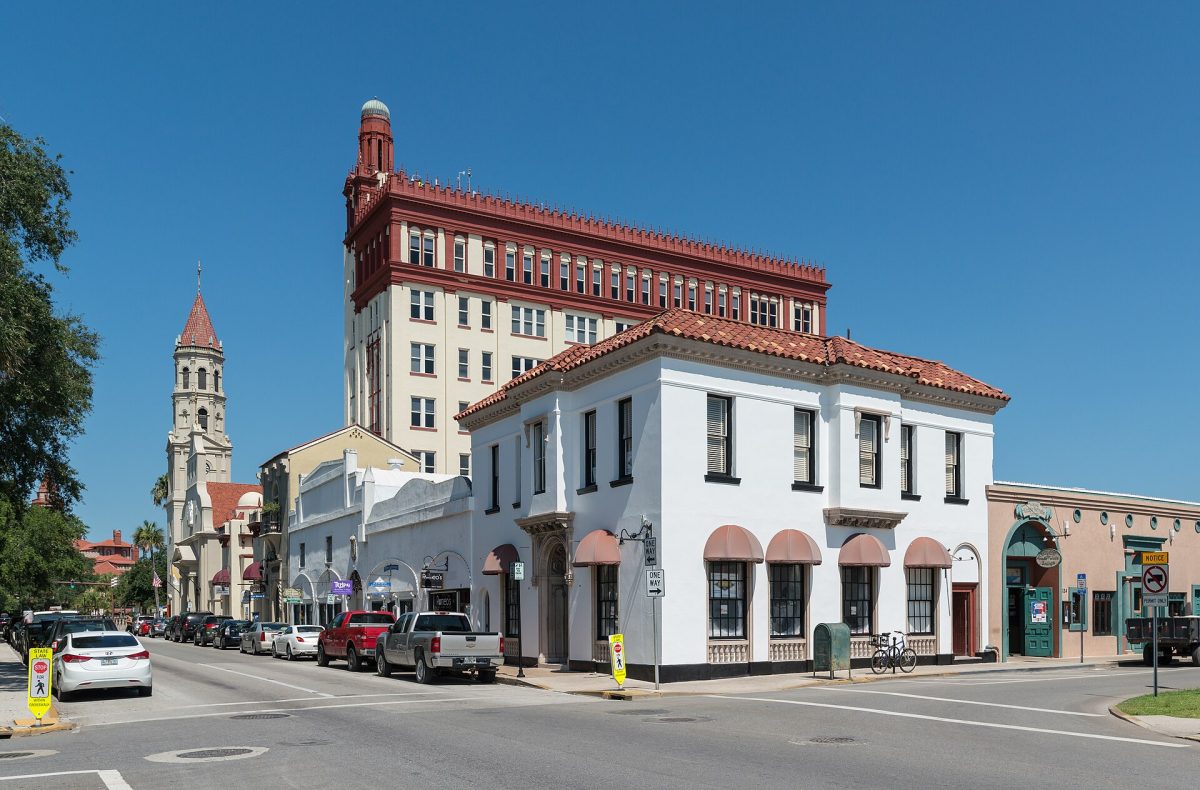
Downtown St. Augustine, the St. Johns County seat. Photo: DXR / Wikimedia Commons (CC BY-SA 4.0)
St. Johns County is the more expensive place to live: the typical home is worth about $185,700 more than in Duval County, rent runs about $447 a month higher, and property tax bills are about $1,450 a year bigger. But St. Johns households also earn far more, about $38,500 a year more than Duval households.
The two counties sit side by side, and many families weigh one against the other when they move or buy. St. Johns is Florida's fastest-growing county, adding about 36 people a day, while Duval, home to the city of Jacksonville, is still more than three times bigger.
Here are 13 questions about how Duval and St. Johns compare, answered with the latest U.S. Census Bureau figures and the MIT Living Wage Calculator.
The quick comparison
| Duval County | St. Johns County | Difference | |
|---|---|---|---|
| Population (2025 estimate) | 1,062,963 | 346,328 | Duval about 3x bigger |
| Growth since 2020 | +6.8% | +26.7% | St. Johns growing 4x as fast |
| Median household income | $71,277 | $109,839 | St. Johns $38,562 more |
| Median home value | $303,500 | $489,200 | St. Johns $185,700 more |
| Median rent (incl. utilities) | $1,475/mo. | $1,922/mo. | St. Johns $447 more |
| Median property tax paid | $2,264/yr. | $3,721/yr. | St. Johns $1,457 more |
| Combined sales tax | 7.5% | 6.5% | St. Johns 1 point less |
| Poverty rate | 14.1% | 6.5% | St. Johns less than half |
| Homeowners | 58.2% | 82.2% | St. Johns much higher |
| Median age | 36.9 | 44.2 | St. Johns older |
| Average commute | 24.1 min. | 26.9 min. | St. Johns about 3 min. longer |
| Bachelor's degree or higher | 34.4% | 50.9% | St. Johns higher |
Census figures are 2020–2024 averages unless noted. Population figures are 2025 Census Bureau estimates.
1. Which county is cheaper to live in?
Duval, by a wide margin. Homes, rent and property taxes are all lower. The typical Duval homeowner with a mortgage pays $1,753 a month for the mortgage, taxes, insurance and utilities, according to the Census Bureau, compared with $2,351 in St. Johns. That's about $598 a month, or roughly $7,200 a year, more in St. Johns.
The one thing that's cheaper in St. Johns: sales tax.
2. How much more do homes cost in St. Johns?
The median value of an owner-occupied home is $489,200 in St. Johns and $303,500 in Duval, according to the Census Bureau. That's about 61% more in St. Johns.
Both are pricier than the U.S. median of $332,700. Duval is below Florida's median of $359,000, and St. Johns is well above it.
These are what owners estimate their homes are worth, averaged over 2020 to 2024. Current asking prices in both counties are higher.
3. What about rent?
Median gross rent, which includes utilities, is $1,922 a month in St. Johns and $1,475 in Duval. Over a year, that's about $5,364 more in St. Johns.
Renters are a minority in St. Johns: only about 18% of households rent, compared with about 42% in Duval. For ZIP-by-ZIP rents, see our story on rent in every Jacksonville and St. Johns County ZIP code.
4. Are property taxes higher in St. Johns?
Yes, mainly because homes are worth more. The typical St. Johns homeowner pays $3,721 a year in property taxes, compared with $2,264 in Duval, according to the Census Bureau.
| Median property tax paid | Per year |
|---|---|
| St. Johns County | $3,721 |
| United States | $3,119 |
| Florida | $2,730 |
| Duval County | $2,264 |
Florida's homestead exemption takes up to $50,000 off the taxable value of a primary home, and Save Our Homes caps how much a homesteaded property's assessed value can rise each year, so long-time owners in both counties often pay much less than new buyers.
5. Which county has the higher sales tax?
Duval. The combined rate is 7.5% in Duval (Florida's 6% plus a 1.5% county surtax) and 6.5% in St. Johns (6% plus 0.5%), according to Avalara's 2026 rates.
At the register: On a $1,000 purchase, you'd pay $75 in Duval and $65 in St. Johns. Many St. Johns residents shop in Duval anyway, at the St. Johns Town Center (which, despite its name, is in Duval) and elsewhere.
6. How much more do St. Johns households earn?
A lot more. The median household income is $109,839 in St. Johns and $71,277 in Duval, about 54% higher in St. Johns.
| Income measure | Duval | St. Johns |
|---|---|---|
| Median household income | $71,277 | $109,839 |
| Median family income | $87,532 | $134,118 |
| Per capita income | $40,568 | $57,346 |
| Households earning $100,000+ | 34.4% | 54.2% |
| Poverty rate | 14.1% | 6.5% |
More than half of St. Johns households earn $100,000 or more. In Duval, it's about 1 in 3.
7. How much do you need to earn to live in each county?
The MIT Living Wage Calculator estimates the bare-bones cost of living in each county: housing, food, child care, health care, transportation, phone and internet, and taxes, with nothing left over for savings, vacations or eating out. Here's what a household needs to earn before taxes, according to its February 2026 update:
| Household | Duval County | St. Johns County | Florida |
|---|---|---|---|
| 1 adult, no children | $46,251 | $53,826 | $50,117 |
| 1 adult, 1 child | $77,524 | $91,524 | $82,929 |
| 2 adults (1 working), 2 children | $79,931 | $91,323 | $86,016 |
| 2 adults (both working), 2 children | $105,795 | $127,012 | $111,714 |
In hourly terms, a single adult with no kids needs to earn about $22.24 an hour full time in Duval, and $25.88 in St. Johns. Florida's minimum wage rose to $15 an hour on Sept. 30, 2026, or about $31,200 a year for full-time work.
The biggest differences are housing and child care. MIT estimates a single adult's housing costs at about $15,400 a year in Duval and $19,800 in St. Johns. Child care for two children runs about $20,800 a year in Duval and $28,700 in St. Johns.
8. So, is St. Johns "worth it"?
It depends on what you're buying. St. Johns costs more, but its residents, on average, earn enough to cover it: the typical St. Johns household earns about twice MIT's living wage for a single adult there, and the typical Duval household earns about 1.5 times Duval's.
What families say they're paying for in St. Johns, newer neighborhoods, lower poverty and the county's school system, are things this data can't put a price on. But on pure cost, Duval stretches a paycheck further.
9. How long is the commute?
The average one-way commute is 26.9 minutes in St. Johns and 24.1 minutes in Duval, according to the Census Bureau. Both are shorter than the Florida average (28.0 minutes).
St. Johns residents who work in Duval know the rush-hour traffic on I-95, the Interstate 295 East Beltway, U.S. 1 and State Road 9B.
10. Who lives in each county?
St. Johns is older, more educated and much more likely to own a home:
- Median age: 44.2 in St. Johns vs. 36.9 in Duval
- Bachelor's degree or higher: 50.9% of adults in St. Johns vs. 34.4% in Duval
- Homeowners: 82.2% of households in St. Johns vs. 58.2% in Duval
Duval is younger and more of a renter's market, with Navy bases, colleges and a big downtown job base.
11. Which county is growing faster?
St. Johns, by far. It's Florida's fastest-growing county: it added about 13,000 people in a single year, about 36 a day, according to Census Bureau estimates. Since 2020, St. Johns has grown 26.7%, compared with 6.8% in Duval.
Duval still added more people in total, about 67,400 since 2020, because it's so much bigger. Together, the seven counties of Northeast Florida have now passed 2 million people.
12. Where are the highest-income areas in each county?
According to the Census Bureau:
- St. Johns: the 32259 ZIP code (St. Johns, Fruit Cove and Julington Creek) has the highest median household income in the area, $150,736, followed by 32095 (Palencia and the north St. Augustine area, $136,038), 32081 (Nocatee, $131,624) and 32092 (World Golf Village area, $131,020).
- Duval: the beach communities lead. Neptune Beach (32266, $119,294) and Jacksonville Beach (32250, $117,724) top the list, followed by 32226 on the Northside ($110,179) and Bartram Park (32258, $102,204).
For every ZIP code, see our story on income in every Jacksonville and St. Johns County ZIP code.
13. Which county should I choose?
| If you care most about... | Duval | St. Johns |
|---|---|---|
| Lower home prices and rent | ✔ | |
| Lower property taxes | ✔ | |
| Lower sales tax | ✔ | |
| Higher incomes, lower poverty | ✔ | |
| Shorter commute | ✔ (slightly) | |
| City amenities, nightlife, jobs | ✔ | |
| Newer suburbs, room to grow | ✔ |
The bottom line: Duval is the value pick, with housing that costs far less and a bigger, more varied job market. St. Johns is the premium pick, with higher prices, higher incomes and the fastest growth in Florida. For many families, the choice comes down to whether the extra $500 to $600 a month in housing costs buys what they want.
Which side of the county line do you live on, and would you switch? Tell us in the comments.
Source: U.S. Census Bureau (ACS 2020-2024, 2025 estimates); MIT Living Wage Calculator; Avalara

News organizations may republish this story with credit. See our guidelines.
Know someone who'd want to read this? Email it to a friend.
Own a Jacksonville business? Introductory ad rates from $125/month. See ad optionsPlan your weekend with Jax Times
Get This Weekend in Jacksonville every Thursday: the best local events, free things to do and family fun, plus each evening's local news. Free, and you can unsubscribe anytime.
Most read this week
- Florida's 3 Constitutional Amendments on the Nov. 3 Ballot, Explained in Plain English
- Early Voting in Jacksonville Starts Tuesday: All 24 Sites, the Hours, What to Bring and What's on Your Ballot
- Florida Is Holding $3 Billion in Unclaimed Money. Here's How Jacksonville and St. Augustine Residents Can Search for Free
- Jacksonville and St. Augustine High School Football: Where Every Team Stands, and the Games to Watch Friday
- Duval and St. Johns School Calendars 2026-27: Every Day Off Left This School Year, Side by Side
More stories
 Finance What Jacksonville Earns: Median Household Income in Every Duval and St. Johns ZIP Code, From $30,514 to $150,736
 Entertainment 12 Free Things to Do in Jacksonville, From a 250-Year-Old Oak to a French Fort and Free Museum Saturdays
 Local 15 Famous People From Jacksonville: The Song Behind the Black National Anthem, King Kong, Lynyrd Skynyrd, Twilight and More
 Jobs Jacksonville's 25 Biggest Employers in 2026: Baptist Health Tops the List, and the Navy Employs More Than 30,000
Comments
Be respectful. No personal attacks, hate speech, spam or anyone's private information. Every comment is reviewed before it appears. Comment rules
No comments yet. Be the first to share your thoughts.