Hurricane Dora Hit St. Augustine With 110 MPH Winds in 1964 and Left Jacksonville Without Power for Days
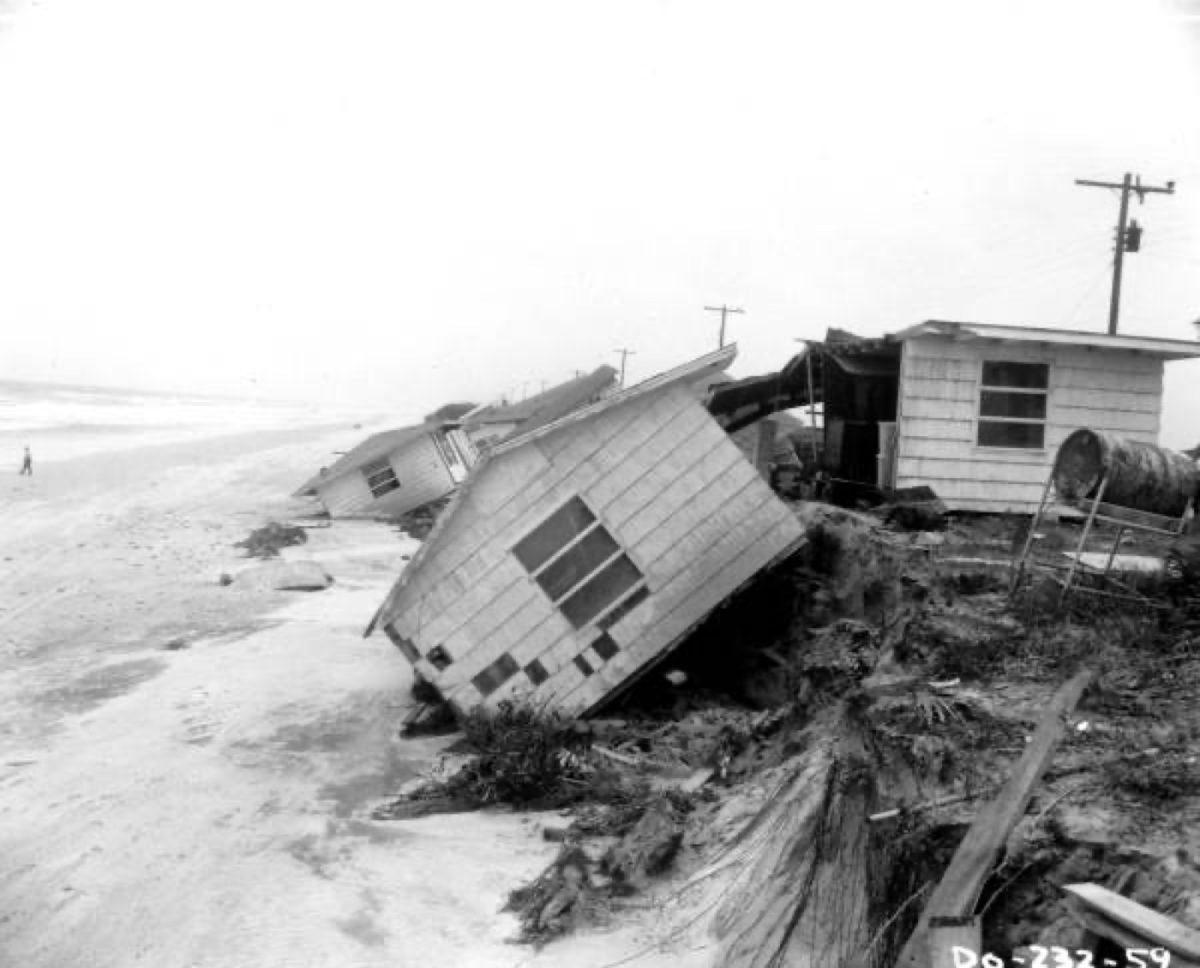
Damage in Jacksonville after Hurricane Dora in 1964. Photo: Florida Memory / Wikimedia Commons (no known restrictions)
Jacksonville, Fla. — Hurricane Dora struck near St. Augustine on Sept. 10, 1964, as a Category 2 hurricane with sustained winds of 110 mph, becoming the first tropical cyclone on record to make landfall along North Florida's Atlantic coast at hurricane intensity. The storm devastated parts of Northeast Florida, leaving approximately 156,000 Jacksonville customers without electricity and causing extensive flooding and property damage.
Dora became the only hurricane to strike the First Coast directly during the 20th century. Its effects reached from the beaches of St. Johns County to Jacksonville's neighborhoods along the St. Johns River, with some communities experiencing the worst conditions for nearly 24 hours.
Across the United States, the hurricane caused five deaths and approximately $280 million in damage, equivalent to about $2.6 billion in 2022 dollars.
How Hurricane Dora reached Northeast Florida
Dora began as a tropical disturbance near the western coast of Africa on Aug. 28, 1964. It strengthened into a tropical storm Aug. 31 and became a hurricane Sept. 2.
By Sept. 6, Dora had reached Category 4 intensity, with maximum sustained winds estimated at 130 mph.
Meteorologists initially expected the hurricane to remain on a more northwesterly track over open water. Instead, Dora gradually turned westward toward Florida.
The hurricane's movement became particularly unpredictable as it approached the coast. On Sept. 9, it made three cyclonic loops while continuing generally westward.
Early Sept. 10, Dora came ashore near St. Augustine as a strong Category 2 hurricane.
Hurricane Dora timeline: August-September 1964
| Date | What happened |
|---|---|
| Aug. 28 | Tropical disturbance developed near Africa |
| Aug. 31 | System strengthened into Tropical Storm Dora |
| Sept. 2 | Dora became a Category 1 hurricane |
| Sept. 5 | Dora reached Category 3 intensity |
| Sept. 6 | Hurricane peaked at Category 4 intensity with 130 mph winds |
| Sept. 9 | Dora made three loops while approaching Northeast Florida |
| Sept. 10 | Hurricane made landfall near St. Augustine with 110 mph winds |
| Sept. 11 | Dora weakened to a tropical storm over land |
| Sept. 13 | System became extratropical over coastal South Carolina |
| Sept. 15 | Remnants reached Newfoundland before being absorbed |
The hurricane weakened after landfall but continued producing heavy rainfall and flooding across the Southeast.
Jacksonville lost electricity and telephone service
Jacksonville experienced some of Dora's most severe consequences.
Approximately 156,000 customers lost electricity, while about 19% of telephone service in Duval County was disrupted. Electricity was unavailable in Jacksonville and surrounding communities for six days.
Older buildings and coastal properties suffered significant damage. Strong winds also pushed water into areas along the St. Johns River, producing flooding away from the Atlantic shoreline.
Throughout Duval County, three homes were destroyed and 3,992 others damaged.
Five mobile homes were demolished, while another 25 sustained damage.
The combination of structural damage, flooding and widespread service interruptions created problems extending well beyond the hurricane's passage.
Jacksonville Beach and Atlantic Beach suffered severe flooding
Dora's coastal impact was especially destructive at Jacksonville Beach and Atlantic Beach.
Storm surge flooded low-lying communities, sweeping away houses and damaging roads. One street in Jacksonville Beach was covered by approximately six feet of water.
Across Northeast Florida, coastal tides reached as much as 10 feet above mean sea level.
The effects were not confined to beachfront buildings. Wind-driven water also caused flooding along Jacksonville's riverfront, demonstrating how a coastal hurricane could affect areas connected to inland waterways.
The extended duration of hurricane conditions added to the damage, particularly where wind and water repeatedly affected vulnerable structures.
St. Augustine experienced extreme winds and flooding
St. Augustine was near Dora's landfall point and recorded some of the storm's strongest conditions.
A sustained wind observation of 125 mph was reported in the city, exceeding the hurricane's estimated 110 mph sustained winds at landfall.
Waves pushed water into parts of historic St. Augustine, with flooding ranging from several inches to several feet.
The bayfront, Davis Shores and neighborhoods along the San Sebastian River experienced particularly severe flooding.
At Slave Market Square, water reportedly reached hip depth. Flooding outside the Monson Motor Lodge was described as reaching automobile hubcaps.
The St. Augustine Record's office was submerged, while several motel lobbies along the Matanzas River experienced flooding as deep as 30 inches.
Water surrounded Castillo de San Marcos.
Strong winds damaged roofs, uprooted large, centuries-old oak trees and disrupted electricity across much of the city.
Damage in St. Augustine totaled approximately $5 million.
St. Johns County beaches lost homes and roads
The damage extended beyond St. Augustine's historic center.
Between Vilano Beach and southern Ponte Vedra Beach, coastal erosion destroyed 14 beach homes and two garages.
Other residential properties also sustained damage.
At St. Augustine Beach, the pier and boardwalk suffered major destruction. Part of State Road A1A was damaged, forcing a traffic closure.
The hurricane demonstrated how erosion, high water and wind could combine to damage coastal infrastructure.
Across the county, the storm affected residences and businesses, with some buildings destroyed and others sustaining extensive damage.
Amelia Island and Nassau County were also hit
North of Jacksonville, Dora caused substantial destruction in Nassau County.
American Beach, the historic African American beach community established by Abraham Lincoln Lewis, lost or sustained damage to numerous historic buildings.
Some houses were swept away at Fernandina Beach, while other properties faced threatened foundations.
At Fort Clinch, severe erosion damaged the fort's exterior.
Across Nassau County, approximately 50 homes were destroyed and 500 others damaged. Another 25 small businesses were destroyed or sustained major damage.
Dora's consequences reached communities throughout the First Coast, not only the area surrounding its landfall.
The Beatles concert almost became another casualty
Hurricane Dora also threatened a major Jacksonville entertainment event.
The Beatles were scheduled to perform at Gator Bowl Stadium on Sept. 11, 1964, just one day after landfall.
The storm forced their aircraft to divert to Key West before they eventually arrived at Jacksonville's Imeson Field only hours before the concert.
More than 20,000 fans attended, although thousands of others could not because of widespread power outages.
Winds were still gusting up to 45 mph, prompting organizers to nail Ringo Starr's drums to the stage.
Despite the disruptions, the concert proceeded.
What Dora's destruction tells Northeast Florida today
Across Florida, Dora destroyed 74 homes and damaged 9,374 others. The statewide damage total reached at least $230 million, with three reported deaths.
President Lyndon Johnson later toured devastated areas with Florida Gov. Farris Bryant and other officials.
Dora's history illustrates several risks that affected Northeast Florida simultaneously: damaging winds, coastal flooding, river flooding, erosion, electrical outages and interrupted communications.
The storm's name was subsequently retired from Atlantic hurricane lists and replaced by Dolly for the 1968 season.
More than six decades later, Dora remains a defining historical example of a hurricane striking Jacksonville and St. Augustine directly.
How we did this
Jax Times compiled this historical account using information from the Wikipedia article "Hurricane Dora (1964)," reviewed Oct. 23, 2026. The report focuses on the storm's documented track, September 1964 landfall, damage across Northeast Florida and aftermath. All damage figures and historical observations reflect the information in that source.
Source: Wikipedia, "Hurricane Dora (1964)" (read Oct. 23, 2026)
News organizations may republish this story with credit. See our guidelines.
Know someone who'd want to read this? Email it to a friend.
Own a Jacksonville business? Introductory ad rates from $125/month. See ad optionsPlan your weekend with Jax Times
Get This Weekend in Jacksonville every Thursday: the best local events, free things to do and family fun, plus each evening's local news. Free, and you can unsubscribe anytime.
Most read this week
- Florida's 3 Constitutional Amendments on the Nov. 3 Ballot, Explained in Plain English
- Florida Is Holding $3 Billion in Unclaimed Money. Here's How Jacksonville and St. Augustine Residents Can Search for Free
- Fire Destroys Golf Carts of St. Augustine Building on U.S. 1: What We Know, What Happens Next and 9 Golf Cart Battery Safety Rules
- St. Augustine Artist Dara Dodson Paints 'A Land Remembered,' With Shows at the Karpeles Museum and the St. Augustine Art Association
- St. Augustine Parking in 2026: 12 Questions About the $20 Garage, $3 Resident Rate and Cheaper Options
More stories
 Local Jacksonville's 228-Year-Old Plantation House: Anna Kingsley's Remarkable Life and the 25 Surviving Slave Cabins
 Local Jacksonville Area's 10 Biggest Cities in 2025: 1 Million in Jacksonville, Palm Coast Up 23% and 4 Cities Shrinking
 Local Jacksonville's St. Johns River Ferry: 152 Years of History, $7 Car Crossings and Higher Fares Coming in 2027
 Local Fire Destroys Golf Carts of St. Augustine Building on U.S. 1: What We Know, What Happens Next and 9 Golf Cart Battery Safety Rules
Comments
Be respectful. No personal attacks, hate speech, spam or anyone's private information. Every comment is reviewed before it appears. Comment rules
No comments yet. Be the first to share your thoughts.