Jacksonville's St. Johns River Ferry: 152 Years of History, $7 Car Crossings and Higher Fares Coming in 2027
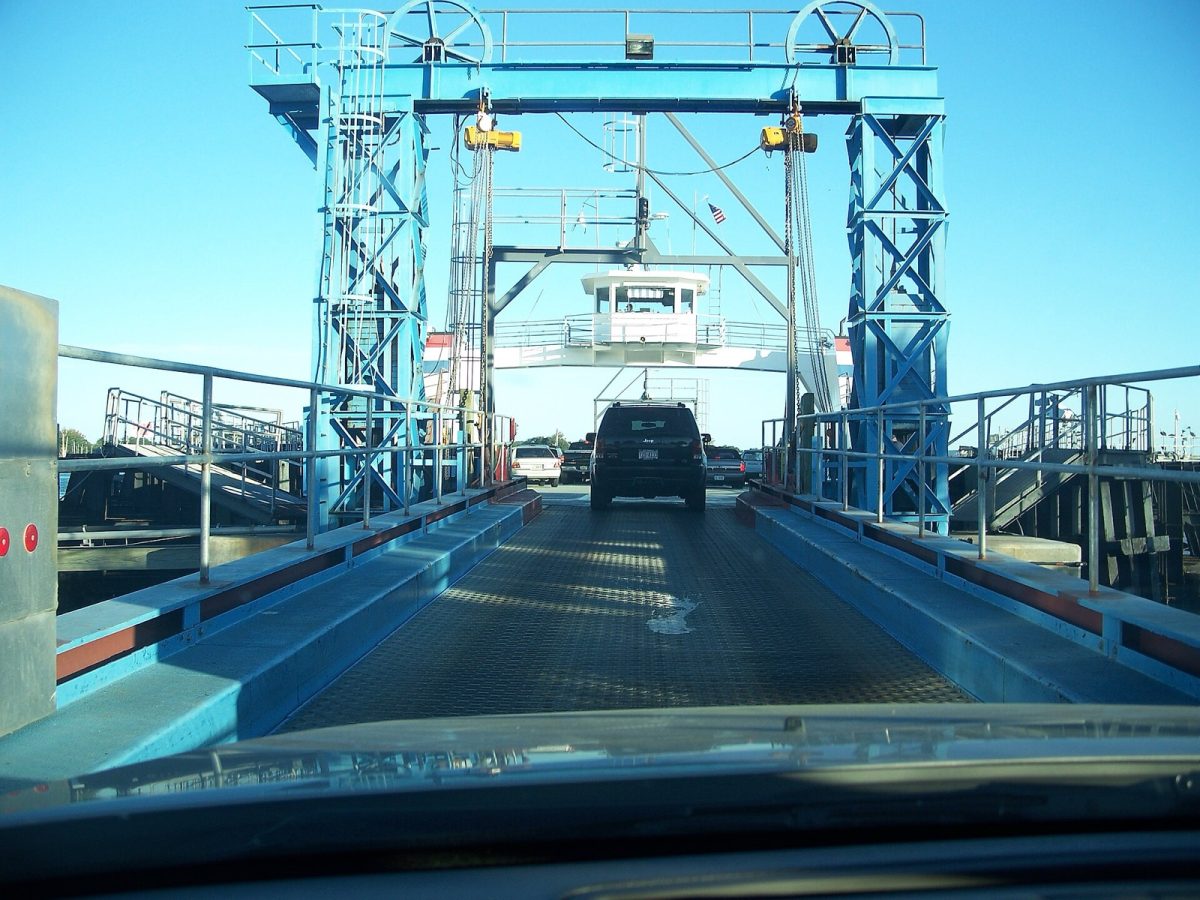
The St. Johns River Ferry carries cars and riders between Mayport Village and Fort George Island. Photo: Ebyabe / Wikimedia Commons (CC BY-SA 3.0)
Jacksonville's St. Johns River Ferry has roots dating to 1874, and the crossing between Mayport Village and Fort George Island remains part of Florida's State Road A1A. Today, the Jacksonville Transportation Authority operates the five-minute service, charging $7 for a standard car on weekdays and $8 on weekends, with higher fares scheduled to begin Jan. 1, 2027.
The ferry has changed operators several times over its long history, passing through state, city and port authority management before JTA assumed responsibility on March 31, 2016. Its current vessel, the Jean Ribault, was built in 1995 and continues to carry vehicles, pedestrians and cyclists across the mouth of the St. Johns River.
For drivers traveling along A1A, the ferry serves a practical transportation purpose. It connects two sections of the coastal highway that otherwise require a much longer road trip to reach each other.
But the crossing also has an unusual history. It survived changes in public funding, periods of uncertainty over its future, major maintenance projects and repeated debates over how to keep it operating.
Now, as JTA plans a replacement vessel and prepares to increase fares, the ferry is entering another chapter.
Before 1948: A River Crossing With 19th-Century Roots
The history of ferry transportation near Mayport extends into the late 1800s. News4JAX reported in 2016 that a ferry has operated on the route since 1874.
The early service preceded the modern highway system and the vehicle ferry used today. Its development reflected the importance of transportation across a river that separated communities along Northeast Florida's coastline.
WJCT News reported in 2018 that the first public ferries began running the roughly one-mile course between Mayport and Fort George Island in 1948. Since then, the service has passed between the state, the port authority and the city before JTA took it over.
The transportation purpose remained consistent. The ferry provided a direct way to cross the river between Mayport on the south bank and Fort George Island on the north.
Why the Ferry Matters to State Road A1A
Florida's State Road A1A follows sections of the state's Atlantic coast, but the St. Johns River interrupts the roadway near Mayport. The ferry connects those separated sections without requiring travelers to drive inland to another bridge.
JTA describes the voyage as approximately 0.9 mile, taking about five minutes. Departures are generally scheduled every half-hour, with one vessel traveling between the two terminals.
The short crossing has a much larger effect on the surrounding road network. JTA's current replacement-vessel project page says that when ferry service is suspended, motorists face an approximately 24-mile detour using Interstate 295 and the Dames Point Bridge.
That figure describes the alternate driving route, not the distance across the river.
For someone traveling between Mayport and Fort George Island, the ferry can therefore eliminate a substantial amount of additional driving. The actual time saved depends on road conditions, ferry waiting time and the driver's starting point and destination.
The route also provides an alternative for people traveling by bicycle or on foot. JTA sells separate pedestrian and bicycle fares, allowing passengers to cross without a motor vehicle.
The Ferry Changes Operators Over the Years
The service's operating history includes several different public agencies.
According to a March 30, 2016, News4JAX report, the Florida Department of Transportation previously operated the ferry before its funding was eliminated in 2007. Jacksonville subsequently assumed responsibility, followed by management through the Jacksonville Port Authority.
The report described financial challenges under those arrangements. Jacksonville's ferry operation reportedly lost as much as $1 million in one year, while the port authority's operation incurred annual losses of approximately $500,000.
Those figures were reported at the time of the 2016 transition and should not be interpreted as the ferry's current operating deficit.
The Jacksonville Port Authority used port revenue to support the service. It also reduced expenses, including selling the Blackbeard, which had served as a backup vessel.
That decision left the Jean Ribault as the operating ferry. When it required maintenance, there was no second ferry available to maintain service.
The arrangements changed again in 2016, when the Jacksonville City Council and JTA Board of Directors approved transferring ownership and operation to the regional transportation authority.
March 31, 2016: JTA Takes Over
The Jacksonville Transportation Authority officially assumed operation of the St. Johns River Ferry on March 31, 2016. JTA confirms that date on its current ferry information page and includes the transfer in its official agency history.
The change followed approval by Jacksonville City Council and JTA's board. A formal signing ceremony took place March 30, according to News4JAX's contemporaneous report.
Before the transfer, the ferry had undergone a $1.8 million overhaul that included engine maintenance and repainting. The vehicle deck was also restriped from five lanes to four to provide additional space between vehicles.
JTA took responsibility not only for ferry operations but also for maintaining and improving the service's supporting facilities.
The agency's official historical timeline records additional ferry infrastructure projects in 2017. Those included new slip walls and fender systems, components associated with safely bringing the vessel into its landings.
The takeover placed the ferry within an organization already responsible for Jacksonville's public transportation network.
By October 2026, JTA had operated the ferry for more than 10 years.
The Jean Ribault: A 1995 Vessel Still Working Today
The current ferry vessel is named the Jean Ribault. JTA's official replacement project page identifies it as having been constructed in 1995.
That makes the vessel approximately 31 years old in 2026. JTA says a ferry of this type has an expected useful life of 30 to 40 years.
The agency identifies the absence of a backup ferry as a central operating challenge. When the Jean Ribault must be removed from service for maintenance or inspection, ferry operations must stop.
This is different from a system with multiple vessels, where one can continue operating while another receives maintenance.
The replacement project is intended to address that limitation. Under JTA's stated plan, the Jean Ribault would remain available as a relief vessel after a new ferry enters service.
The proposal would provide an opportunity to maintain crossings during some future maintenance periods. However, the project remains in planning, and JTA has not established a verified date when a replacement vessel will begin carrying passengers.
A Timeline of Major Ferry Milestones
| Year | Historical development |
|---|---|
| 1874 | Historical ferry activity in the Mayport crossing area dates to this year |
| 1948 | First public ferries run between Mayport and Fort George Island |
| 1995 | Jean Ribault ferry vessel is constructed |
| 2007 | State operating funding ends, leading to subsequent local arrangements |
| 2016 | JTA assumes ownership and operation March 31 |
| 2017 | JTA completes early phases of landing infrastructure improvements |
| 2024 | JTA completes another phase of landing upgrades and receives a federal ferry grant |
| 2025 | JTA begins design work on a replacement vessel |
| 2026 | Current ferry continues operating while replacement planning progresses |
| 2027 | Announced fare increases scheduled for Jan. 1 |
Sources: JTA historical timeline, ferry project and service pages, News4JAX and WJCT News reporting.
The timeline shows how a transportation service originating before the modern road network became part of Jacksonville's current public transit system.
It also explains why the ferry's story cannot be reduced to one founding year. Different dates mark early crossings, permanent state service, development of the A1A route and the current JTA operation.
What Does the St. Johns River Ferry Cost in 2026?
JTA publishes different fares for weekdays and weekends, with the vehicle's length determining its fare category.
A standard car is defined as a vehicle shorter than 20 feet. Vehicles measuring 20 feet or longer fall into the truck, bus and RV category.
| Fare category | Weekday | Weekend |
|---|---|---|
| Pedestrian or bicycle | $1 | $1 |
| Motorcycle | $6 | $6 |
| Car under 20 feet | $7 | $8 |
| Truck, bus or RV 20 feet or longer | $14 | $16 |
| Semitrailer | Not permitted | Not permitted |
The pedestrian and bicycle fare is unchanged between weekdays and weekends. Eligible riders holding a valid Senior or Reduced Fare ID STAR Card, or a Paratransit E-STAR Card, pay 50 cents.
Passengers using a qualifying reduced-fare card must present it to the toll collector before boarding.
JTA allows ferry fares to be purchased through the MyJTA mobile app. Its main fares page also states that mobile fare discounts ended Oct. 1, 2026.
An older ferry webpage still displays discounted mobile-app prices. Those figures conflict with the newer fare information and should not be treated as currently available discounts.
How Much Can Frequent Ferry Riders Save?
JTA sells books containing 20 ferry crossings. These tickets can be used any day of the week, regardless of whether the crossing takes place on a weekday or weekend.
In 2026, a 20-trip car ticket book costs $120. That works out to $6 per crossing, compared with the normal $7 weekday fare or $8 weekend fare.
For someone making 20 weekday car crossings, the book saves $20 compared with purchasing individual fares. For 20 weekend crossings, the savings total $40.
| Car fare comparison | Cost for 20 crossings |
|---|---|
| Weekday fares purchased individually | $140 |
| Weekend fares purchased individually | $160 |
| Current 20-trip ticket book | $120 |
| Savings compared with weekday fares | $20 |
| Savings compared with weekend fares | $40 |
Calculations by Jax Times using JTA's published 2026 fare schedule.
The truck, bus and RV ticket book costs $240 for 20 crossings. That equals $12 per trip, compared with ordinary fares of $14 on weekdays and $16 on weekends.
These savings depend on using all 20 tickets. The published ferry page does not establish every condition governing refunds or unused tickets, so passengers should review purchase terms before buying.
Ferry Fares Are Going Up Jan. 1, 2027
JTA has published a new ferry fare schedule that takes effect Jan. 1, 2027.
The changes affect motorcycles, cars and larger vehicles. The standard pedestrian and bicycle fare remains $1, while the qualifying reduced pedestrian and bicycle fare is not listed among the announced increases.
| Fare category | Current 2026 fare | Starting Jan. 1, 2027 |
|---|---|---|
| Motorcycle | $6 | $7 |
| Weekday car | $7 | $8 |
| Weekend car | $8 | $10 |
| Weekday truck, bus or RV | $14 | $16 |
| Weekend truck, bus or RV | $16 | $19 |
| 20-trip car ticket book | $120 | $140 |
| 20-trip large-vehicle book | $240 | $280 |
For weekday car passengers, the increase is $1 per crossing, or approximately 14.3%. Weekend car passengers will pay $2 more, a 25% increase.
A person making 20 weekday car crossings would spend $160 at the new individual rate, compared with $140 today. Twenty weekend crossings would rise from $160 to $200.
The new car ticket book price of $140 works out to $7 per crossing. It will still provide savings for someone using all 20 trips, particularly on weekends.
JTA presented fare changes during public meetings in July 2026 as part of its budget and service planning process. The ferry's updated official webpage now identifies the January 2027 amounts as its new fares.
What Is the Ferry Schedule?
JTA's main ferry page lists service seven days a week, with departures every half-hour. Boats leave Mayport Village on the hour and half-hour, while departures from Fort George Island occur at 15 and 45 minutes past the hour.
The newer main page publishes the following departure periods:
| Departure side | Weekdays | Weekends |
|---|---|---|
| Mayport Village | 6 a.m.–6:30 p.m. | 8 a.m.–8:30 p.m. |
| Fort George Island | 6:15 a.m.–6:45 p.m. | 8:15 a.m.–8:45 p.m. |
There is an important schedule conflict on JTA's own websites.
An older JTA ferry page, which references a June 13, 2025, service resumption, lists different hours: Monday through Thursday service beginning at 6 a.m., longer Friday evening service and weekend service beginning at 7 a.m.
The newer main ferry page lists weekend service beginning at 8 a.m. and a different weekday closing schedule.
Because both pages remain publicly accessible, passengers should not assume that either webpage guarantees a departure on a particular day. Before traveling, check the current ferry service information or MyJTA for operational updates.
The scheduled half-hour frequency also does not eliminate possible interruptions from maintenance, weather or other operating conditions.
Where Are the Mayport and Fort George Ferry Terminals?
The ferry connects Mayport Village on the south side of the St. Johns River with Fort George Island on the north side.
JTA's main webpage lists the following terminal locations:
| Terminal | Listed address |
|---|---|
| Mayport Village | 4680 Ocean St., Atlantic Beach, FL 32233 |
| Fort George Island | 9618 Heckscher Drive, Jacksonville, FL 32226 |
There is a minor address inconsistency on the main JTA page. Its directions section refers to 4780 Ocean St. for the Mayport entrance, while its terminal address listing says 4680 Ocean St.
Passengers using GPS should therefore verify the correct ferry entrance through JTA's current directions rather than relying solely on a street-number entry.
Travelers approaching from the Jacksonville Beaches follow A1A north toward Mayport. Those approaching from Fernandina Beach or northern Duval County generally reach the Fort George terminal using A1A and Heckscher Drive.
The ferry provides the connection between those two parts of the coastal route.
What Improvements Has JTA Made Since 2016?
JTA documents a series of improvements to the ferry and its terminals after taking over operations.
At the Mayport landing, work has included fencing around fuel tanks, painting buildings and signs, removing obsolete structures, landscaping and improving pedestrian access.
On the Fort George Island side, JTA lists restroom renovations, pavement striping, landscaping and the removal of an obsolete building.
Additional work took place in 2024. JTA announced that the ferry would resume service Feb. 27 after approximately three weeks of planned maintenance and infrastructure improvements.
That project included new or upgraded access equipment, mooring bollards, bridge gantry preservation, signage and replacement of an approach slab.
Another interruption occurred in 2025 after the ferry contacted a boarding ramp while departing Mayport on May 4. JTA announced that service would resume June 13, following repairs and maintenance work.
These projects demonstrate the continuing maintenance needs of a service involving both a vessel and specialized landing infrastructure.
A New $16 Million Ferry Is Being Planned
JTA is preparing to replace the Jean Ribault with a new ferry.
The agency's project page lists an estimated cost of $16,186,500. In 2024, JTA received a $15.6 million Federal Transit Administration grant to support the purchase of a new diesel hybrid-electric vessel.
JTA says design work began in 2025 and is continuing through 2026.
The replacement is intended to be similar in size and capacity to the existing ferry while incorporating technology that supports the agency's transportation and emissions goals.
The proposed arrangement would keep the Jean Ribault available as a backup. That could reduce the need for complete service suspensions whenever the primary ferry requires maintenance.
However, the project is still listed in the planning stage. JTA has not confirmed a delivery date or a date when the replacement vessel will begin regular passenger service.
Why the Ferry Remains Part of Jacksonville's Identity
The ferry's value extends beyond the short crossing itself.
It links Mayport Village with Fort George Island and the Timucuan Ecological and Historic Preserve, an area protected within the National Park System.
JTA also works with Friends of the Ferry, whose weekend ambassadors provide information about the surrounding area.
The ferry is part of a coastal transportation route used by motorists, pedestrians and cyclists. It also provides access to communities and recreational destinations on opposite sides of the St. Johns River.
Its continued operation reflects more than a century of transportation history, along with decades of public decisions about funding, ownership and infrastructure.
That history continues in 2026 as JTA prepares new fares and works toward a replacement vessel. For today's passengers, the practical questions remain the same: what the crossing costs, when the next ferry departs and whether it is operating.
What Riders Should Know Before Boarding
JTA's posted ferry rules require drivers to turn off their engines, set their parking brakes and follow crew directions. Vehicles must travel no faster than 3 mph while boarding or exiting.
Smoking, fishing, swimming and diving are prohibited aboard the ferry. Motorcycle riders must remain with their motorcycles, and small children must be accompanied by a parent or guardian.
The agency also restricts where animals may be taken aboard. Service dogs are permitted under the posted rules, while pedestrians with leashed dogs have a designated arrangement subject to available space.
Passengers should follow safety announcements and crew instructions. JTA advises remaining inside vehicles, with additional restrictions during severe weather.
For trip planning, the official ferry website remains the primary source for fares, schedules, terminal information and announcements.
How We Did This
Jax Times reviewed the Jacksonville Transportation Authority's current ferry page, JTA's historical timeline, its replacement-vessel project information and official ferry maintenance announcements.
Historical reporting from News4JAX and WJCT was used to explain earlier operators and the crossing's significance to Mayport. Fare comparisons and percentage increases were calculated from JTA's published 2026 and January 2027 fare tables.
The article distinguishes historical service from the modern ferry operation. It also identifies conflicts between JTA's current and older schedule pages and does not assume the replacement ferry is complete or operating.
Source: Jacksonville Transportation Authority; JTA MobilityWorks; News4JAX; WJCT News
News organizations may republish this story with credit. See our guidelines.
Know someone who'd want to read this? Email it to a friend.
Own a Jacksonville business? Introductory ad rates from $125/month. See ad optionsPlan your weekend with Jax Times
Get This Weekend in Jacksonville every Thursday: the best local events, free things to do and family fun, plus each evening's local news. Free, and you can unsubscribe anytime.
Most read this week
- Florida's 3 Constitutional Amendments on the Nov. 3 Ballot, Explained in Plain English
- Florida Is Holding $3 Billion in Unclaimed Money. Here's How Jacksonville and St. Augustine Residents Can Search for Free
- Duval and St. Johns School Calendars 2026-27: Every Day Off Left This School Year, Side by Side
- Early Voting in Jacksonville Starts Tuesday: All 24 Sites, the Hours, What to Bring and What's on Your Ballot
- New Restaurants in Jacksonville and St. Augustine: Places That Got a State License Since July (October Update)
More stories
 Local Jacksonville and St. Augustine State Parks: 10 Questions About $3–$8 Admission, Annual Passes and Savings
 Local JAXPORT by the Numbers: Jacksonville Port's Last 5 Years Ranked, From 9.96 Million to 10.35 Million Tons
 Local St. Augustine's 2 Spanish Stone Forts: 1672 Groundbreaking, a 1742 Watchtower and the Sieges That Shaped Florida
 Local Jacksonville Is Overdue for Its First 50-Degree Night: 35 Years of Data on When the Cold Arrives
Comments
Be respectful. No personal attacks, hate speech, spam or anyone's private information. Every comment is reviewed before it appears. Comment rules
No comments yet. Be the first to share your thoughts.