Jacksonville and St. Augustine State Parks: 10 Questions About $3–$8 Admission, Annual Passes and Savings
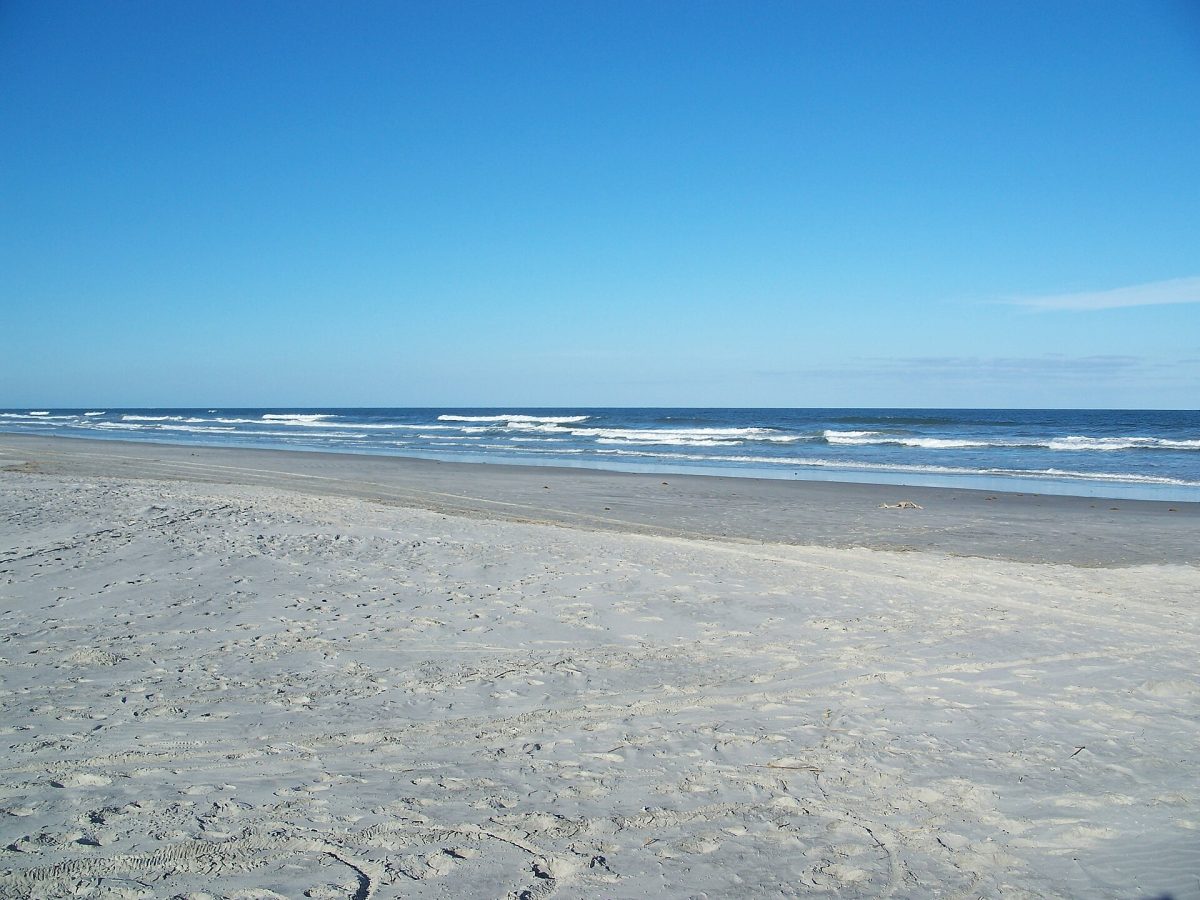
Little Talbot Island State Park charges $5 per vehicle for up to eight people. Photo: Ebyabe / Wikimedia Commons (CC BY-SA 3.0)
Jacksonville and St. Augustine residents can visit several Northeast Florida state parks for $3 to $8 per vehicle, while Florida's annual entrance passes cost $60 for one person or $120 for a group of up to eight. Whether a pass saves money depends on which parks you visit, how many people accompany you and how often you return.
A family visiting Anastasia State Park in St. Augustine would pay $8 per vehicle for regular admission. At that price, a $120 family annual pass would equal the cost of 15 visits, while a $60 individual pass could pay for itself sooner for someone who visits alone.
But the calculations change at parks with lower entrance fees. Little Talbot Island costs $5 per vehicle, Big Talbot Island costs $3, and some activities carry charges that an annual entrance pass does not cover.
Here are answers to 10 questions about Northeast Florida state park admission, including what it costs to visit, how annual passes work and when buying one makes financial sense.
1. How much does it cost to visit state parks near Jacksonville and St. Augustine?
Florida State Parks sets entrance fees separately for each park. For five popular destinations from Jacksonville to the Palm Coast area, the official fee pages list vehicle admission ranging from $3 to $8.
The table below uses the published day-use entrance fees, rather than estimates or charges for optional activities.
| State park | Regular vehicle admission | Single-occupant vehicle |
|---|---|---|
| Anastasia State Park, St. Augustine | $8 | $4 |
| Fort Clinch State Park, Fernandina Beach | $6 | $4 |
| Little Talbot Island State Park, Jacksonville | $5 | $4 |
| Washington Oaks Gardens State Park, Palm Coast | $5 | $4 |
| Big Talbot Island State Park, Jacksonville | $3 | See park's admission instructions |
Source: Individual Florida State Parks Hours & Fees pages. Regular vehicle rates at Anastasia, Fort Clinch, Little Talbot and Washington Oaks apply to vehicles with two to eight occupants. Big Talbot lists a $3 per-vehicle charge.
The differences may seem small for a single trip, but repeated visits can add up. Someone who goes to the same beach park regularly may spend more on entrance fees over a year than someone who visits several different parks occasionally.
These are also state park admission charges, not general fees for every beach, city park or county park in Northeast Florida.
2. Which park offers the lowest published vehicle admission?
Among the five parks compared here, Big Talbot Island State Park has the lowest standard vehicle entrance fee at $3. Its official fee page says the payment covers all four of the park's parking areas for the day.
Florida State Parks describes Big Talbot as primarily a natural preserve and a premier spot for nature study, bird-watching and photography. Visitors can hike Blackrock Trail to the shoreline, Big Pine Trail to the marsh, or Old Kings Highway and Jones Cut through the maritime forest.
The park is open from 8 a.m. until sundown throughout the year, according to its Hours & Fees page.
At $3 per vehicle, repeated visits are relatively inexpensive compared with the higher-priced parks in the table. Twenty visits at the regular rate, for example, would total $60.
That is equal to the base price of an individual annual entrance pass, though the individual pass covers only the named holder and is not equivalent to a group vehicle ticket.
Visitors should also distinguish Big Talbot's general entrance fee from charges for particular facilities or activities. An annual pass covers eligible day-use admission but does not automatically eliminate every other charge at a state park.
3. How much does a day at Anastasia State Park cost?
Anastasia State Park, at 300 Anastasia Park Road in St. Augustine, charges $8 per vehicle carrying up to eight people. A single-occupant vehicle costs $4, while pedestrians and bicyclists pay $2 per person.
That makes the park's admission straightforward for a family traveling together. Two adults and two children arriving in one regular passenger vehicle would pay the $8 vehicle fee, rather than $8 per person.
The park includes Atlantic beaches, dunes, tidal marshes and other coastal habitats. Its official description identifies more than 1,600 acres of protected landscape.
Anastasia is open from 8 a.m. until sundown every day of the year. The park also offers camping, but a campsite reservation is a separate expense from ordinary day-use admission.
The official camping page lists a base campsite price of $28 per night, plus applicable tax and a nonrefundable $6.70 reservation charge. A $7 nightly utility fee applies to specified accommodation types, but not tent camping.
Those camping charges are important when comparing savings. Buying an annual entrance pass does not turn campsite reservations into free overnight stays.
For a family interested only in beaches, walking and other included day-use activities, the $8 regular admission is the more useful starting point.
4. What do Little Talbot Island and Fort Clinch charge?
Little Talbot Island State Park charges $5 per vehicle for up to eight occupants, while single-occupant vehicles cost $4. Pedestrians, bicyclists and extra passengers pay $2 under the official fee schedule.
The park's published hours are 8 a.m. until sunset, every day of the year.
Fort Clinch State Park in Fernandina Beach charges $6 per vehicle with two to eight occupants and $4 for a single-occupant vehicle.
Fort Clinch offers an additional historic attraction: the fort itself. Florida State Parks lists a $2.50 per-person admission charge for entering the historic fort, separate from the general park admission.
The park's museum is free with paid park admission, according to its official visitor information. Entering the fort itself requires the extra $2.50 ticket. The fort is open 9 a.m. to 5 p.m. daily.
This creates an important distinction for passholders. A family annual entrance pass may cover the family's general admission to Fort Clinch, but it does not automatically waive the separate fort-tour fee.
Visitors comparing the parks should therefore decide whether they want ordinary outdoor access or additional historic-site experiences.
5. How much do Florida's annual state park passes cost?
Florida offers two standard annual entrance pass options. The Individual Annual Entrance Pass costs $60, while the Family Annual Entrance Pass costs $120.
| Pass | Base price | Who it covers |
|---|---|---|
| Individual | $60 | One named passholder |
| Family | $120 | Up to eight people entering together under the pass rules |
The individual pass permits the named person to enter participating state parks without paying the regular day-use entrance fee. Additional people accompanying that passholder generally pay $2 each, with specified exceptions at certain Florida parks.
The family pass covers up to eight people entering as a group. That can mean the occupants of one vehicle, up to two motorcycles or a group arriving on foot or bicycles, within the published limits.
A family pass can also name a secondary passholder. Either named passholder can use it, subject to the rules, but the pass cannot simply be given to anyone who wants to visit.
Both passes are valid for one year from the month of purchase. They provide unlimited qualifying day-use admissions during that period, not unlimited camping or free access to separately priced activities.
6. How many visits does it take for a family pass to pay for itself?
This is the most useful calculation for households considering a $120 family annual entrance pass. Divide the pass price by the regular per-vehicle admission charge at the park you expect to visit.
For a qualifying family traveling together in one vehicle, the break-even numbers are:
| Park | Normal vehicle fee | Visits equaling $120 |
|---|---|---|
| Anastasia | $8 | 15 |
| Fort Clinch | $6 | 20 |
| Little Talbot | $5 | 24 |
| Washington Oaks Gardens | $5 | 24 |
| Big Talbot | $3 | 40 |
At Anastasia, the arithmetic is $120 ÷ $8 = 15 visits. The pass matches the regular cumulative admission cost on the 15th visit, and the family begins spending less on admission with the 16th visit.
At Little Talbot, it takes 24 visits to equal $120. At Big Talbot, it takes 40 visits at the published $3 rate.
These calculations assume an in-person purchase at the stated base pass price, the same normal admission charge each visit, and a qualifying group that would otherwise pay the listed vehicle rate.
They exclude optional activities, online purchasing fees and any discounted daily admissions.
A family that visits several parks can calculate its potential savings by adding up the admission fees for its planned visits rather than assuming it will return to only one location.
7. Does a $60 individual pass save money faster?
For someone who visits state parks alone, the individual annual pass can be more economical than the family pass. The correct comparison is with the single-occupant vehicle price, not necessarily the regular family vehicle rate.
At Anastasia, Little Talbot, Fort Clinch and Washington Oaks, the published single-occupant vehicle rate is $4.
The calculation is:
$60 individual pass ÷ $4 single-driver admission = 15 visits.
A solo driver who visits one of those parks 15 times would otherwise pay $60 in admission. Starting with the 16th identical visit, the annual pass would provide admission savings.
For someone walking or bicycling into a park with a $2 per-person charge, the calculation changes to $60 ÷ $2 = 30 visits.
The individual pass is less straightforward for someone who often travels with a companion. Florida's standard rule generally requires an additional $2 admission for each accompanying person.
For example, an individual passholder visiting Anastasia with one companion would generally pay $2 for the companion. Fifteen such visits would involve $60 for the pass plus $30 in companion charges, or $90 in total.
The equivalent 15 visits at Anastasia's regular $8 vehicle rate would total $120. That still represents a $30 admission saving, but not the $60 saving a reader might incorrectly assume.
8. Does buying an annual pass online cost more?
Yes. Florida State Parks currently lists a $6 online convenience fee plus a $10 shipping charge for each annual pass purchased online.
That changes the amount a buyer pays:
| Pass | Base price | Online fees | Total online cost |
|---|---|---|---|
| Individual | $60 | $16 | $76 |
| Family | $120 | $16 | $136 |
The $16 consists of the published $6 convenience fee and $10 shipping charge. These totals do not include any additional charges not specified in the standard online purchasing instructions.
For a family that buys online and repeatedly visits Anastasia at the regular $8 vehicle rate, the break-even point changes.
$136 ÷ $8 = 17 visits. The family matches its online pass cost after 17 visits and begins saving on the 18th.
Florida State Parks allows passes to be purchased at staffed park ranger stations and museums during regular business hours. Visitors should call ahead to confirm availability.
For residents primarily interested in saving money, purchasing in person may be preferable because it avoids the published online convenience and shipping charges.
Online buyers receive a temporary pass valid for 14 days after purchase. The state says a regular online confirmation page or photograph of a pass is not acceptable as a substitute for the required pass.
9. Are camping, boat rentals and special activities included?
No. Florida's annual entrance pass covers qualifying day-use admission, but the state explicitly excludes separately priced activities and services.
Examples include campsite and cabin reservations, equipment rentals, boat tours, special events and certain historic or recreational attractions. Local surcharges may also apply in areas where the state imposes them.
The Fort Clinch admission policy provides a practical example. An annual pass covers qualifying regular entrance, but visitors who want to enter the fort still face the separate $2.50-per-person charge.
Camping offers another example. Little Talbot Island lists a $24 nightly base camping rate, while Anastasia lists $28, with reservation charges and applicable utility fees detailed separately.
An annual pass does not reduce those base campsite costs simply because its owner can enter the park for day use.
Florida also publishes a separate camping discount for eligible Florida residents who are at least 65 or who meet specified disability documentation requirements. The discount applies to eligible base campsite fees, not reservation fees or utility fees.
That is different from an annual entrance pass discount and should not be confused with one.
10. Are there discounts, free admission or other ways to save?
Florida State Parks lists discounted annual passes for eligible active-duty and honorably discharged military members, including certain National Guard and reserve members. Its published benefits document lists a 25% reduction.
Under that schedule, a discounted individual pass costs $45, while a discounted family pass costs $90. Applicants must present satisfactory documentation, and discounted or free passes must be obtained in person.
Certain eligible veterans with service-connected disabilities and specified surviving family members qualify for free lifetime entrance passes. The state also identifies free annual family-pass programs for eligible licensed foster families and families adopting qualifying children.
The state does not offer a general annual entrance pass discount simply for being a senior citizen. It also does not offer a general annual pass discount solely for having a civilian disability, although separate overnight accommodation discounts may apply.
Keep in mind that a daily admission is for one park. A visitor going from Anastasia to another state park the same day would ordinarily pay that park's entrance charge too, unless covered by an annual pass.
Visitors who already know they will make only a handful of trips may therefore save money by paying individual admission fees rather than purchasing an annual pass.
Which pass makes the most sense for Northeast Florida families?
The answer depends less on the number of people in the household than on how they use the parks. A family that frequently visits Anastasia at $8 per vehicle has a substantially lower break-even threshold than a family that mostly visits Big Talbot at $3.
A solo visitor has a different calculation because the $60 individual pass applies only to the named holder. If additional people frequently accompany that visitor, their $2 charges should be included in any savings estimate.
For an in-person family pass, the basic rule is to compare the expected year's admission charges against $120. For an individual pass, compare the named visitor's expected admission charges against $60, plus any fees for accompanying guests.
Residents should also consider whether they are likely to use the pass throughout its one-year validity period. Buying a pass near the end of October does not mean it expires at the end of December.
The state says passes are valid for one year from the month of purchase, allowing qualifying visits across seasons. However, an annual pass does not guarantee entry when a park reaches capacity.
Where to check before leaving home
Florida State Parks publishes individual Hours & Fees pages for Anastasia, Little Talbot, Big Talbot, Fort Clinch and Washington Oaks Gardens. Those pages are the best sources for each park's standard charges and operating hours.
Most state parks are open from 8 a.m. until sunset, but museums, historic attractions and special facilities can have different schedules. Some parks can also restrict admission when visitor capacity is reached.
The state encourages visitors to review park-specific conditions before traveling. Entrance fees are subject to change, and not every activity is covered by the general vehicle admission.
For Jacksonville and St. Augustine residents, the main financial lesson is simple: Compare the total cost of the visits you realistically expect to make against the annual pass price. A $120 family pass can be a worthwhile purchase for frequent visitors, but paying $3, $5 or $8 as needed may be cheaper for occasional trips.
How we did this
Jax Times reviewed Florida State Parks' published Annual Entrance Pass rules and official Hours & Fees listings for Anastasia, Little Talbot Island, Big Talbot Island, Fort Clinch and Washington Oaks Gardens state parks. We also reviewed the statewide fee schedule and frequently asked questions for payment methods, admission restrictions, pass exclusions and discounted-pass eligibility.
The visit counts are calculations using the state's published fees, not estimates of actual household spending. They assume the same admission rate on every visit and distinguish between single-occupant vehicles, groups and online purchasing costs.
Every fee in this story was checked against the parks' official Hours & Fees pages in October 2026. Fees can change, so check the park's page before you go.
Source: Florida State Parks (Florida Department of Environmental Protection) official Hours & Fees and Annual Pass pages
News organizations may republish this story with credit. See our guidelines.
Know someone who'd want to read this? Email it to a friend.
Own a Jacksonville business? Introductory ad rates from $125/month. See ad optionsPlan your weekend with Jax Times
Get This Weekend in Jacksonville every Thursday: the best local events, free things to do and family fun, plus each evening's local news. Free, and you can unsubscribe anytime.
Most read this week
- Florida's 3 Constitutional Amendments on the Nov. 3 Ballot, Explained in Plain English
- Duval and St. Johns School Calendars 2026-27: Every Day Off Left This School Year, Side by Side
- Florida Is Holding $3 Billion in Unclaimed Money. Here's How Jacksonville and St. Augustine Residents Can Search for Free
- Early Voting in Jacksonville Starts Tuesday: All 24 Sites, the Hours, What to Bring and What's on Your Ballot
- Rent in Jacksonville and St. Johns County by ZIP Code: From $1,216 to $2,897 a Month
More stories
 Local JAXPORT by the Numbers: Jacksonville Port's Last 5 Years Ranked, From 9.96 Million to 10.35 Million Tons
 Local St. Augustine's 2 Spanish Stone Forts: 1672 Groundbreaking, a 1742 Watchtower and the Sieges That Shaped Florida
 Local Jacksonville Is Overdue for Its First 50-Degree Night: 35 Years of Data on When the Cold Arrives
 Local Jacksonville vs. Tampa, Orlando and Miami: 14 Questions Answered on Pay, Rent and Home Prices
Comments
Be respectful. No personal attacks, hate speech, spam or anyone's private information. Every comment is reviewed before it appears. Comment rules
No comments yet. Be the first to share your thoughts.