Duval Voters Renew the 1-Mill School Tax With 75.9% of the Vote: What the $126 Million a Year Pays For and What It Costs a Homeowner
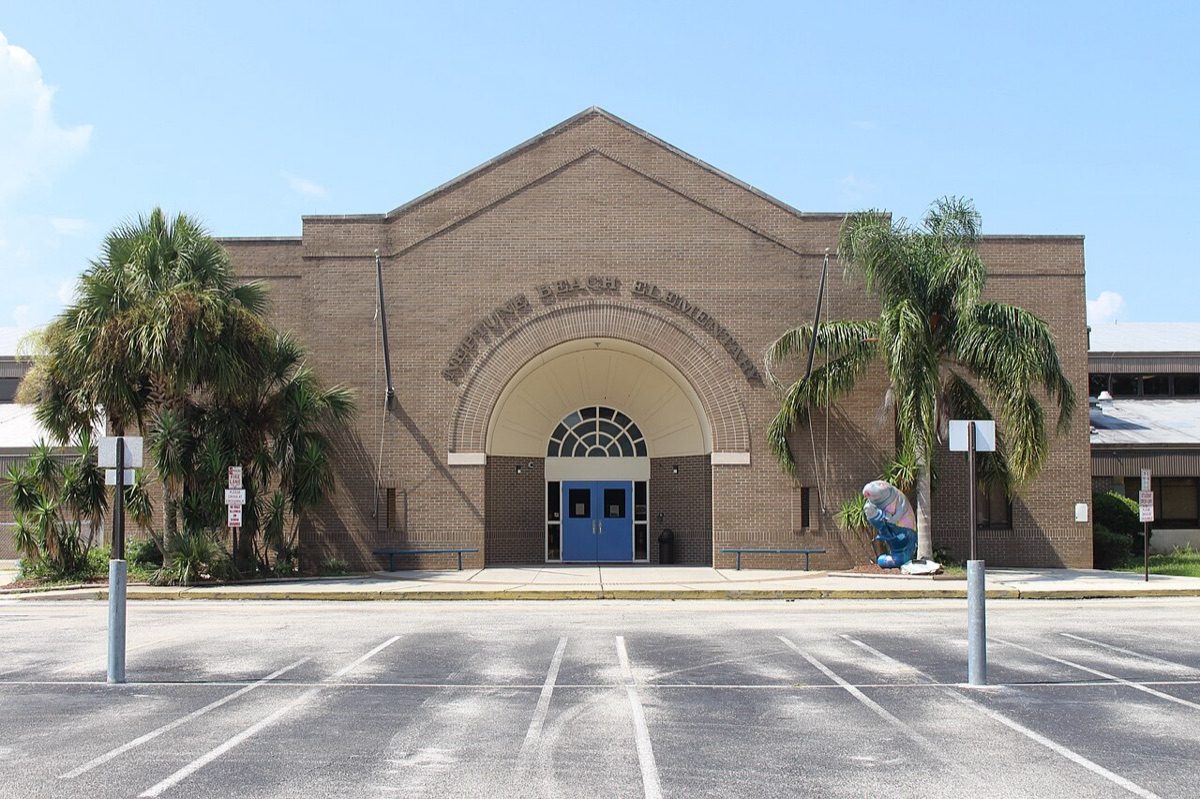
Neptune Beach Elementary School in Neptune Beach, Duval County. Photo: Michael Rivera / Wikimedia Commons (CC BY-SA 4.0)
JACKSONVILLE, Fla. - Duval County voters renewed the school district's 1-mill property tax on Nov. 3 by a wide margin. The measure received 257,483 yes votes, or 75.93%, to 81,629 no votes, or 24.07%, according to unofficial results from the Duval County Supervisor of Elections updated Nov. 6. The renewal continues a tax voters first approved in 2022 and does not add a new one.
The Supervisor of Elections results page labels the count unofficial and says it includes vote-by-mail cures and provisional ballots but only partially includes overseas ballots that can arrive up to 10 days after Election Day. All 159 precincts have reported. Results remain unofficial until the county canvassing board certifies them.
How the vote compares with 2022
The 2026 margin was far wider than the first vote four years ago. In the August 2022 primary, 94,736 voters, or 53.5%, approved the tax and 82,395, or 46.5%, voted against it, according to Jacksonville Today. This year's referendum was on the general election ballot, where turnout was 55.1% of 655,219 registered voters, according to the Supervisor of Elections.
| Vote | Yes | No |
|---|---|---|
| 2026 general election (unofficial) | 257,483 (75.93%) | 81,629 (24.07%) |
| 2022 primary | 94,736 (53.5%) | 82,395 (46.5%) |
What the ballot said
The question asked whether the district should continue the current 1-mill levy for operating expenses, shared proportionately with charter schools. The ballot listed pay for teachers, security and support staff, academic programs, and arts, athletics and student activities as uses, according to the district's published ballot language. The renewed tax begins July 1, 2027, and ends June 30, 2031, with annual reporting required.
What the money pays for


The district estimates the renewal will bring in about $126 million a year, according to its referendum FAQ. About 88% of the district's share goes to salary supplements to recruit and retain teachers, school police and other staff, and about 12% goes to arts and athletics. By state law the money is split with charter schools, so about 81% goes to district-managed schools and 19% is divided among charter schools based on enrollment.
DCPS teachers recently received an average salary supplement of $8,668 from the 1-mill money, the district says. Board members, the superintendent and cabinet-level administrators are excluded from any raises paid by the tax, according to the FAQ. All pay must still be negotiated with the employee unions, and the district says the renewal is expected to sustain the current supplement level.
| Use of the money | Share, according to DCPS |
|---|---|
| Salary supplements for teachers, school police and staff | About 88% of district share |
| Arts and athletics | About 12% of district share |
| District-managed schools vs. charter schools | About 81% / 19% |
What it costs a homeowner
One mill equals $1 for every $1,000 of taxable value. School taxes still get only the standard $25,000 homestead exemption, so the district's example of a $300,000 home with $275,000 in taxable value pays $275 a year, or about $23 a month. Amendment 3, which voters also approved, does not apply to school taxes, so it does not shrink this cost.
| Assessed value (homestead) | School taxable value | Yearly cost of 1 mill |
|---|---|---|
| $150,000 | $125,000 | $125 |
| $200,000 | $175,000 | $175 |
| $300,000 | $275,000 | $275 |
| $400,000 | $375,000 | $375 |
Calculated with the district's formula: taxable value divided by 1,000. Non-homestead property does not get the $25,000 exemption.
Because this is a renewal, homeowners already pay the tax and should not see a new line on their bill. The state-required school millage fell from 5.057 mills in 2015 to 3.092 in 2025, according to the FAQ. The district says the voter-approved mill helps restore some of the money lost to that decline.
What the district says it has shown
The district says its teacher vacancy rate has fallen from more than 6.5% four years ago to an average of 4.4%. It says teacher retention rose from 87% to 91%, and its graduation rate reached 97.6%. The FAQ also notes that St. Johns, Clay and Nassau each have a voter-approved local millage, and that 28 of Florida's 67 districts have one.
Superintendent Christopher Bernier said in a statement that he was "overwhelmed with gratitude to Duval voters," according to News4JAX. Voters in Clay and Nassau counties also approved renewals of their own school taxes, News4JAX reported. The district's independent Audit Advisory Committee reviews how the money is spent and reports annually to the School Board.
What happens next
The renewed levy takes effect July 1, 2027, when the current four-year period ends. Without another vote, the tax will end in 2031, and the district says voters would decide on another renewal in 2030. Three newly elected School Board members, Donovan Bradley, Rhodesia Butler and Lindsey Denmark, told News4JAX they would like to move the pay supplements into the regular budget so a future referendum is not needed.
Sources: Duval County Supervisor of Elections unofficial results (enr.electionsfl.org, updated Nov. 6, 2026); Duval County Public Schools District Referendum FAQ 2026; News4JAX (Nov. 3 and Nov. 5, 2026); Jacksonville Today (Nov. 3, 2026; Aug. 23, 2022)
News organizations may republish this story with credit. See our guidelines.
Know someone who'd want to read this? Email it to a friend.
Know which restaurants passed inspection
Get the week's restaurant inspection results every Sunday, This Weekend in Jacksonville every Thursday and each evening's local stories. Free, and you can unsubscribe anytime.
By signing up you agree to get the Jax Times email newsletter. Unsubscribe anytime with one click.