Florida's Lemon Law in 5 Steps: The 24-Month Window, 3 Repair Tries and How Drivers Get a Refund or New Car
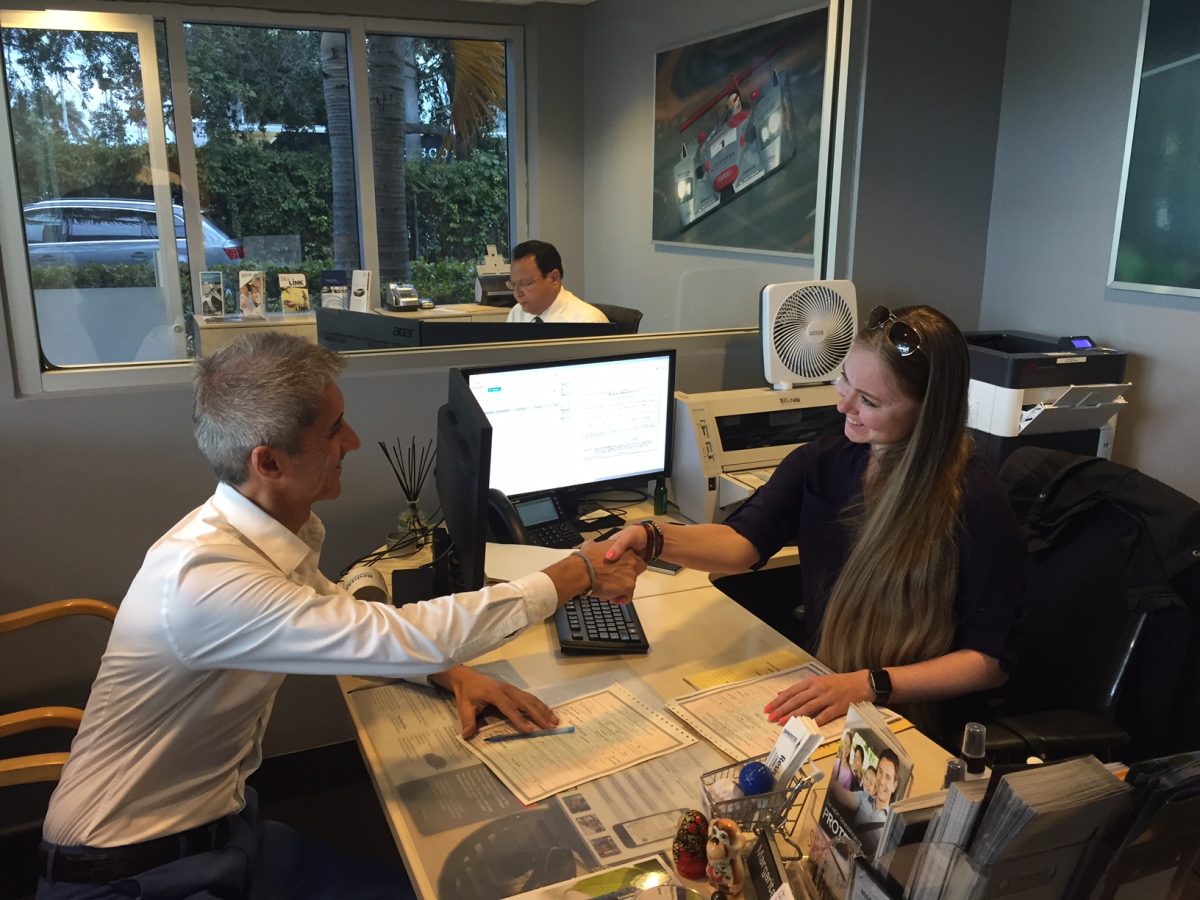
A dealership sales and finance office; Florida law requires dealers to give new-car buyers a written statement of their Lemon Law rights (file photo). Photo: Pro-five-oh / Wikimedia Commons (CC BY-SA 4.0)
JACKSONVILLE, Fla. - A new car that keeps going back to the dealer for the same problem may qualify as a "lemon" under Florida law. The state's Lemon Law, Chapter 681 of the Florida Statutes, can require a manufacturer to buy back or replace a defective new vehicle. The law runs on strict clocks, though, and Northeast Florida drivers who miss a notice or a filing deadline can lose the claim.
The protections apply statewide, so the same rules cover a car bought in Jacksonville, Orange Park, St. Augustine, Fernandina Beach or Macclenny. Claims go through the Florida Attorney General's office, which runs the Florida New Motor Vehicle Arbitration Board. The steps below are drawn from the statute and from a consumer guide published by The Florida Bar.
The 24-month window
Everything starts with what the law calls the "Lemon Law rights period." Under Section 681.102, it is "the period ending 24 months after the date of the original delivery of a motor vehicle to a consumer." A problem must be reported to the manufacturer or its authorized dealer during that window to count.
The window follows the car, not the first buyer. The statute's definition of consumer includes anyone to whom the vehicle is transferred for personal, family or household use during the rights period. The Florida Bar notes that a later owner of a used vehicle may still qualify if the defects appear and are reported within 24 months of the vehicle's first delivery.
What vehicles are covered
The law covers new vehicles sold in Florida to carry people or property, including demonstrators and vehicles leased for at least a year when the lessee is responsible for repairs. It also covers recreational vehicles, but only the vehicle portion, not the "living facilities" such as plumbing, roof air conditioners, generators and most windows. Several types of vehicles are excluded altogether.
| Covered | Not covered |
|---|---|
| New cars, SUVs and pickups sold in Florida | Motorcycles and mopeds |
| Demonstrator vehicles sold with a manufacturer's warranty | Trucks over 10,000 pounds gross vehicle weight |
| Vehicles leased for a year or more when the lessee pays for repairs | Off-road vehicles and electric bicycles |
| The driving portion of recreational vehicles | RV living quarters, including plumbing, furnaces and generators |
The defect has to matter. The law defines a "nonconformity" as a defect or condition that "substantially impairs the use, value, or safety" of the vehicle. Problems caused by an accident, abuse, neglect or modifications by someone other than the manufacturer or its authorized service agent do not count.
Step 1: Keep every repair order
Florida law requires the dealer to hand over a fully itemized repair order each time the vehicle is examined or repaired under warranty. That document must list the problem reported, any diagnosis, all work done, the test drive, the dates and the odometer reading. Those records are the backbone of any claim, so owners should keep every copy.
The Florida Bar also recommends documenting the problem with photos or video. It advises keeping a running count of repair visits and of days the vehicle sits in the shop. Routine maintenance listed in the owner's manual does not count toward the out-of-service total.
Step 2: Send written notice to the manufacturer
The law sets two triggers for a written notice, and both require registered or express mail sent to the manufacturer, not the dealer. The first is after three repair attempts for the same problem. The second is when the vehicle has been out of service for repairs for a cumulative 15 or more days.
The Florida Bar says owners should use the Motor Vehicle Defect Notification form for this notice. The form is in the state's "Consumer Guide to the Florida Lemon Law," which dealers must provide when a vehicle is bought or leased, and owners can also request the guide from the Attorney General's Lemon Law hotline. Section 681.103 requires manufacturers to list the address of their Florida regional office in the warranty or owner's manual.
Step 3: Give the manufacturer a final repair attempt
After receiving notice of three failed repairs, the manufacturer has 10 days to respond and direct the owner to a reasonably accessible repair facility, according to Section 681.104. Once the vehicle is delivered there, the manufacturer gets 10 more days to fix it, or 45 days for a recreational vehicle. If the manufacturer does not respond or does not finish within those limits, the final-attempt requirement no longer applies.
The law presumes a manufacturer has had a reasonable number of tries in either of two situations. The first is three repairs of the same defect plus the final attempt, with the problem still there. The second is a cumulative 30 or more days out of service for repairs, or 60 days for an RV, as long as the manufacturer had at least one chance to inspect or repair the vehicle after the 15-day notice.
Step 4: Use the manufacturer's program or go straight to the state
Some manufacturers run a state-certified dispute program, and the manufacturer must tell buyers in writing at the time of purchase how and where to file a claim with it. If one exists, a claim must be filed with that program no later than 60 days after the 24-month rights period ends, under Section 681.109. If the program does not decide within 40 days, or the owner is unhappy with the result, the owner can ask the Attorney General's office to send the case to the state board.
If the manufacturer has no certified program, owners apply directly to the Attorney General's office. The deadline is 60 days after the rights period expires or 30 days after the manufacturer program's final action, whichever is later. The department screens each request on its own form and can reject disputes it finds fraudulent, outside the board's authority or clearly lacking evidence.
Step 5: The arbitration hearing
Under Section 681.1095, the board must hear an approved dispute within 40 days and decide it within 60 days. Hearings are held around the state before three-member panels, at least one board member in each region must have expertise in auto mechanics, and the proceedings are open to the public. Owners can present testimony, witnesses and evidence, and the Florida Bar notes that a lawyer is not required.
Owners generally cannot skip this step. Section 681.1095 says a consumer must first submit the dispute to the department, and to the board if it is eligible, before filing a civil lawsuit. If the department rejects a dispute, the owner may then file a lawsuit under the Lemon Law.
What a win looks like
If the board rules for the owner, the manufacturer must comply within 40 days of receiving the decision. The remedy is either a refund of the full purchase price or a replacement vehicle acceptable to the owner, and the law gives the owner "an unconditional right to choose a refund rather than a replacement." Refunds and replacements must include collateral charges such as sales tax, title charges and earned finance charges, plus reasonable incidental costs caused by the defect.
The manufacturer can subtract a "reasonable offset for use." The law sets a formula for it: the miles the owner put on the vehicle, multiplied by the base selling price, divided by 120,000, or by 60,000 for an RV. For example, an owner who drove 12,000 miles in a $40,000 car would face a $4,000 offset under that formula.
Either side can appeal to circuit court within 30 days of receiving the decision. The petition is filed in the county where the owner lives, where the vehicle was bought or where the hearing was held, so a Duval County owner's appeal could land in the Duval County Courthouse. If a court upholds a decision for the owner, the law adds attorney's fees and costs plus $25 a day for each day past the 40-day compliance period, and a court that finds the manufacturer appealed in bad faith must double the award and may triple it.
Where to find more information
The Attorney General's Lemon Law hotline is 1-800-321-5366, according to The Florida Bar's consumer guide to the Lemon Law. The full text of the law, including definitions, deadlines and the arbitration process, is in Chapter 681 of the Florida Statutes. The Attorney General's office posts Lemon Law forms and information at myfloridalegal.com.
Sources: Florida Statutes ch. 681 (2026); The Florida Bar consumer guide to the Lemon Law
News organizations may republish this story with credit. See our guidelines.
Know someone who'd want to read this? Email it to a friend.
Own a Jacksonville business? Introductory ad rates from $125/month. See ad options Follow Jax Times on FacebookLocal news, events and people, in your feed every day.Most read this week
- Florida's 3 Constitutional Amendments on the Nov. 3 Ballot, Explained in Plain English
- Clay County Voter Guide: 7 Early Voting Sites, Key Races and What to Know Before Nov. 3
- Early Voting in Jacksonville Starts Tuesday: All 24 Sites, the Hours, What to Bring and What's on Your Ballot
- Jacksonville Fair 2026 Guide: Dates, Gate Times, Ticket Prices, Free Days and Every Concert (Nov. 5-15)
- The Cummer Museum by the Numbers: 5,000 Works, a 400-Year-Old Oak and a $1.3 Million Garden Rescue
More stories
 Local JTA Interim CEO Withdraws From Permanent Job Search as Board Seeks Outside Review of $39 Million Shortfall
 Local Green Cove Springs by the Numbers: 2,200 Gallons a Minute, 9,786 People and a Town Since 1874
 Local Fort George Island by the Numbers: A 3600 B.C. Shell Ring, a 1928 Club and Mount Cornelia
 Local Amelia Island Lighthouse by the Numbers: 188 Years, 64 Feet and $10 Tours Twice a Month
Comments
Be respectful. No personal attacks, hate speech, spam or anyone's private information. Every comment is reviewed before it appears. Comment rules
No comments yet. Be the first to share your thoughts.