St. Augustine's Oldest House by the Numbers: A 1723 Coquina First Floor, Owners From Spain, Britain and America, and a $12.95 Ticket
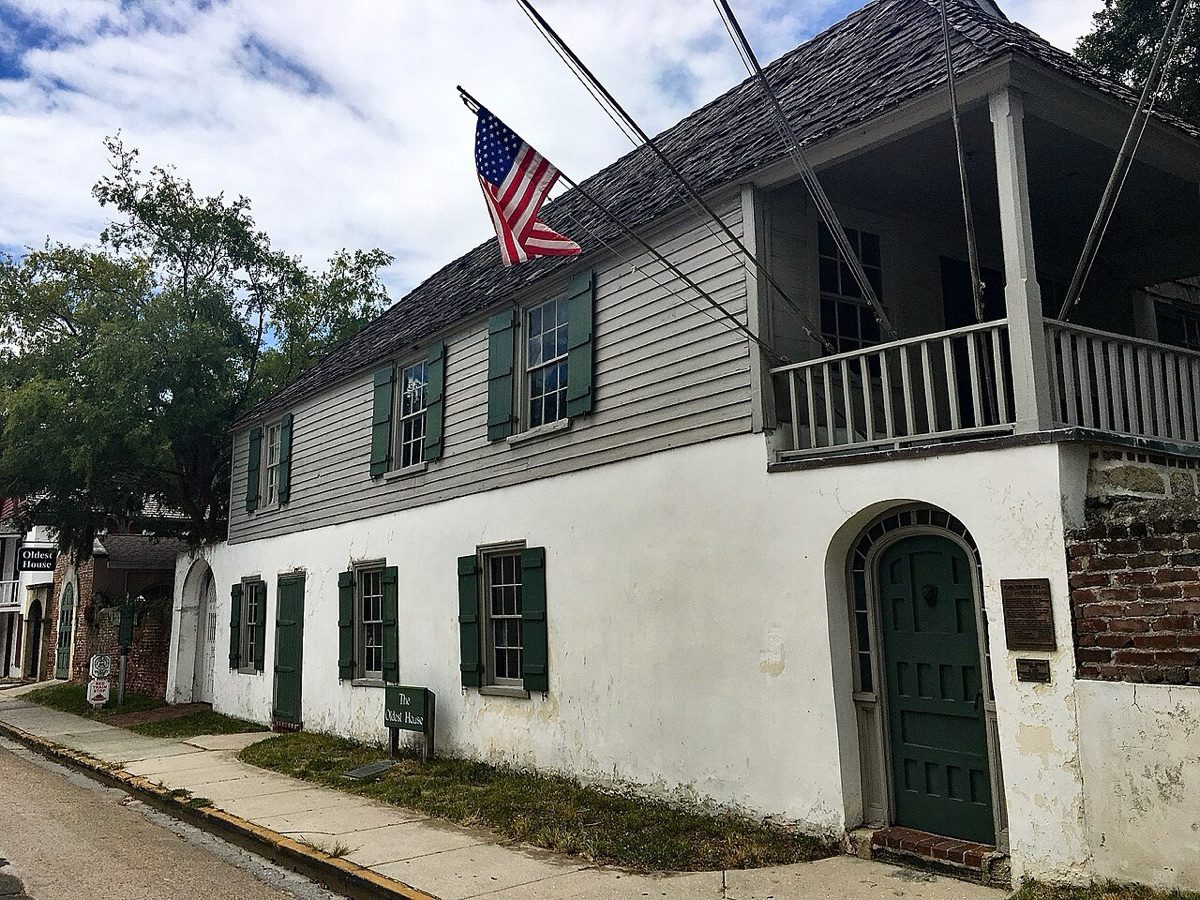
The González-Alvarez House, the Oldest House, in St. Augustine. Photo: Bwickliffe / Wikimedia Commons (CC BY-SA 4.0)
ST. AUGUSTINE, Fla. - The González-Alvarez House at 14 St. Francis St., known to visitors as the Oldest House, is described as the oldest surviving Spanish colonial residence in Florida. Its coquina first floor dates to about 1723, according to the summary of its historic-register record, and the house has been open to visitors since 1893. The St. Augustine Historical Society owns and operates it as part of the Oldest House Museum Complex, which sits on about 2 acres.
The house has passed through Spanish, British and American hands, and it has been altered several times along the way. These are the numbers and dates behind it, based on published historical summaries and the museum's visitor listing.
The House by the Numbers
| Detail | Number or fact |
|---|---|
| Address | 14 St. Francis St., St. Augustine |
| First floor built | About 1723 |
| Later construction | About 1775-1786 and 1790 |
| Open to visitors | Since 1893 |
| Owned by Historical Society | Since 1918 |
| Restored | 1959-1960 |
| National Historic Landmark | April 15, 1970 |
| Museum complex size | About 2 acres |
How It Was Built
The first floor is built of coquina, a limestone made of compacted shell that was used in many early St. Augustine buildings. The upper level is wood-framed with clapboard siding under a hip roof of wooden shingles. An open loggia on the east side helps cool the house, and the interior floors are tabby concrete.
The summary of the register record says a building is documented on the site in the 17th century, and that the surviving first floor dates to about 1723. Later work is dated to roughly 1775-1786 and 1790. The house is part of the St. Augustine Town Plan Historic District, and its style is listed as stone vernacular.
Who Lived Here
Ownership changed with the flags that flew over the city. The summary lists a González family, headed by Tomás González y Hernández, an artilleryman at the Castillo de San Marcos, as owners until 1763, when the British took over Florida and the family left for Cuba. The same summary gives the start of the family's ownership as 1625, which is earlier than the 1723 date for the surviving first floor.
Major Joseph Peavett, an Englishman, bought the house in 1774, according to the summary, and he added the wood-frame second story and installed glass windows. From 1790 to 1882 the house belonged to the family of Gerónimo Álvarez and Antonia Vens, and Álvarez added a two-story coquina wing. Several owners followed, including the William B. Duke family from 1882 to 1884, Mary and Dr. Charles P. Carver from 1884 to 1898, and the James W. Henderson family from 1898 to 1911.
The last private owner listed is George T. Reddington, who is listed with the South Beach Alligator Farm for 1911 to 1918. The St. Augustine Historical Society took over the house in 1918 and still owns it. The society restored the house in 1959-1960 to a late 19th-century appearance, reversing several later alterations.
National Landmark Status
The house was added to the National Register of Historic Places and designated a National Historic Landmark on April 15, 1970. The summary describes it as "believed to be the oldest surviving house in St. Augustine." Sources differ on construction dates, which is common for buildings that were altered over three centuries, so the dates here are approximate.
What Visitors See
According to Visit St. Augustine, the complex includes docent-led tours of the main house, a museum of five centuries of Florida coastal maps, a museum of St. Augustine history from its founding through the 20th century, and the St. Augustine Surf Culture and History Museum. The grounds hold a replica colonial kitchen, a detached summer kitchen and an ornamental garden planted with native Muscadine grape. Rotating exhibits cover topics such as photography, furniture and clothing.
Wikipedia lists the Manucy Museum, named for historian Albert Manucy, and the Edwards Gallery as parts of the complex. The listings name the museums differently, so visitors should confirm what is included in a ticket.
Hours and Tickets
Visit St. Augustine lists daily hours of 10 a.m. to 5 p.m., with guided tours beginning every half hour. Admission is listed at $12.95 for adults and $9.95 for seniors 55 and older and for military with ID. Students with ID and children ages 4 to 17 pay $4.95, children under 4 are free, a family ticket for two adults and children under 18 is $25.95, and St. Johns County residents with ID pay half price.
The listing was not dated, so confirm hours and prices before visiting. The Oldest House's phone number is (904) 824-2872. The listing also notes discounted rates for groups of 15 or more.
Sources: Wikipedia summary of the González-Alvarez House (National Register and National Historic Landmark data); Wikipedia entry on the Oldest House Museum; Visit St. Augustine listing for the Oldest House Museum Complex

News organizations may republish this story with credit. See our guidelines.
Know someone who'd want to read this? Email it to a friend.
Know which restaurants passed inspection
Get the week's restaurant inspection results every Sunday, This Weekend in Jacksonville every Thursday and each evening's local stories. Free, and you can unsubscribe anytime.
By signing up you agree to get the Jax Times email newsletter. Unsubscribe anytime with one click.
Most read this week
More stories
 Local St. Johns County Approves a Data Center Moratorium Through Oct. 31, 2027, Joining…
 Arts & Culture 2027 Isle of Eight Flags Shrimp Festival Seeks Artists, Crafters and Volunteers
 Business St. Johns County Grocery Plan Grows to 74,000 Square Feet
 Real Estate Habitat Homes in St. Augustine for $248,000 and $278,000