St. Johns County Contractor Arrested on Grand Theft Charge After Homeowner Paid $36,875: 5 Florida Rules Before You Hire One
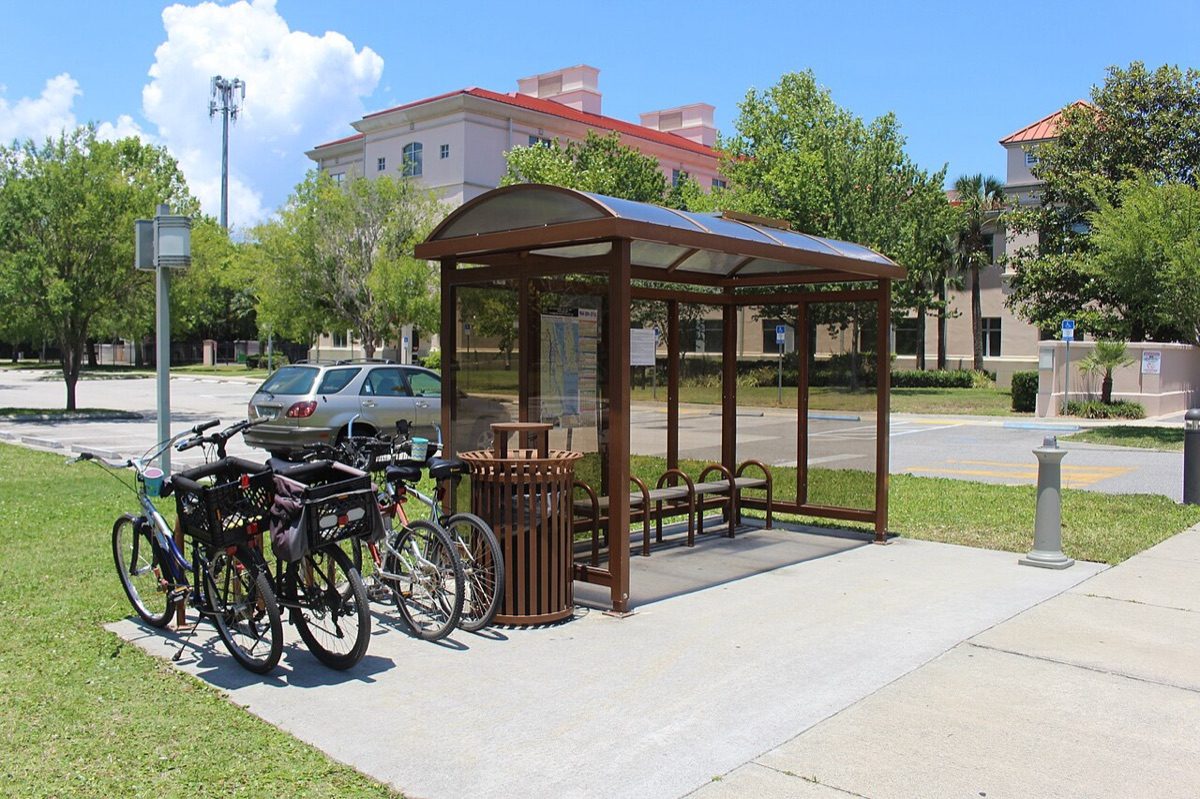
A bus stop at the St. Johns County Courthouse in St. Augustine. Photo: Michael Rivera / Wikimedia Commons (CC BY-SA 4.0)
JACKSONVILLE, Fla. - The St. Johns County Sheriff's Office says a contractor was arrested on charges of grand theft and misappropriating construction funds after a homeowner paid him $36,875 for a renovation that was never finished. The suspect, Steven Rounds, 40, owns Incredible Kitchen and Bath, according to News4JAX's report on the sheriff's office announcement. An arrest is an accusation, not a finding of guilt, and the report did not include a response from Rounds or an attorney for him.
The Jacksonville Sheriff's Office located and arrested Rounds on Oct. 27, 2026, following an investigation by the St. Johns County Sheriff's Office, according to the report. Detectives are asking anyone else who hired or paid Rounds or Incredible Kitchen and Bath for work to come forward. The case is a useful reminder of what Florida law says about deposits and unfinished work, and how homeowners can check a contractor before signing.
What investigators say happened
According to the sheriff's office, the victim signed a renovation contract with the company in April 2026 and contacted investigators on Oct. 2, 2026. The homeowner made multiple payments totaling $36,875. The sheriff's office says construction was repeatedly delayed, the company did not respond to repeated attempts to reach it, subcontractors went unpaid and the job site was abandoned.
Property crimes detectives with the sheriff's office believe Rounds knowingly obtained the money under false pretenses and did not use it for labor and materials, according to the report. The charges are grand theft and misappropriating construction funds. The report did not include court dates or bond information.
Who to contact
Detectives ask anyone who hired or paid Rounds or Incredible Kitchen and Bath to contact Detective Maloney at [email protected], according to the report. The investigation is ongoing. Anyone who believes they were a victim should send details such as the contract, payment records and dates, since those are the records investigators are likely to need.
Florida's 10% deposit rule
Florida Statute 489.126 sets rules for contractors who take money up front on residential work. If a contractor receives an initial payment of more than 10 percent of the contract price for residential repair, restoration, improvement or construction, the contractor must apply for the required permits within 30 days of payment. Work must then start within 90 days after all necessary permits are issued, unless the homeowner agreed in writing to a longer period or the work does not need a permit.
The statute also covers contractors who take more than the value of the work performed and then stop working. A contractor may not fail or refuse to perform any work for a 90-day period when the money received exceeds the value of the work done, unless the contractor has just cause. If the contractor does not perform the work or refund the excess within 30 days after a written demand, state law allows that failure to be treated as evidence of intent to deprive the homeowner of the money.
5 steps before you hire
The state's rules and the statute point to a short checklist for homeowners. Each item below comes from Florida law or the state licensing agency. Homeowners should still check a contractor's license themselves before paying.
- Verify the license. Use the Verify a License search on MyFloridaLicense.com, run by the Florida Department of Business and Professional Regulation, to search by name or license number. The DBPR Customer Contact Center can be reached at (850) 487-1395.
- Get a written contract. Put the scope of work, start and finish dates, total price and payment schedule on paper before any money changes hands.
- Watch the deposit. Be cautious about any request for more than 10 percent up front, and note the 30-day permit and 90-day start deadlines that apply when one is made.
- Match payments to progress. The statute's focus on payments in excess of the value of work performed is a signal to tie each payment to finished work.
- Demand in writing. If work stops, send a written demand to perform or refund. The 30-day clock in the statute runs from a written demand.
How serious the penalties can be
The statute grades the offense by the amount involved. Under its penalty subsections, the level runs from a first-degree misdemeanor for amounts under $1,000 up to a first-degree felony for $200,000 or more. In the Rounds case, the sheriff's office listed grand theft and misappropriating construction funds, and any final charges would be decided by prosecutors and the courts.
Florida also has a Homeowners' Construction Recovery Fund, administered by the Construction Industry Licensing Board within the Department of Business and Professional Regulation, for certain claims against licensed contractors. Eligibility rules and payout limits are set by state law and can change, so homeowners should check the department's current claim form and rules before relying on it. This story does not list payout limits because they could not be confirmed.
What to do if you are a victim
Gather the contract, receipts, bank records, photos of the work and any messages with the contractor. Report the problem to your county sheriff's office, and file a complaint with the Department of Business and Professional Regulation if the contractor holds a state license or appears to be working without one. Keep copies of everything you send, including any written demand for a refund.
Sources: News4JAX report citing the St. Johns County Sheriff's Office (Nov. 2, 2026); Florida Statutes s. 489.126; Florida Department of Business and Professional Regulation (myfloridalicense.com)

News organizations may republish this story with credit. See our guidelines.
Know someone who'd want to read this? Email it to a friend.
Know which restaurants passed inspection
Get the week's restaurant inspection results every Sunday, This Weekend in Jacksonville every Thursday and each evening's local stories. Free, and you can unsubscribe anytime.
By signing up you agree to get the Jax Times email newsletter. Unsubscribe anytime with one click.