Jacksonville Building Permits in 7 Steps: When You Need One, Fence Height Limits and the $250 Fine for Skipping It
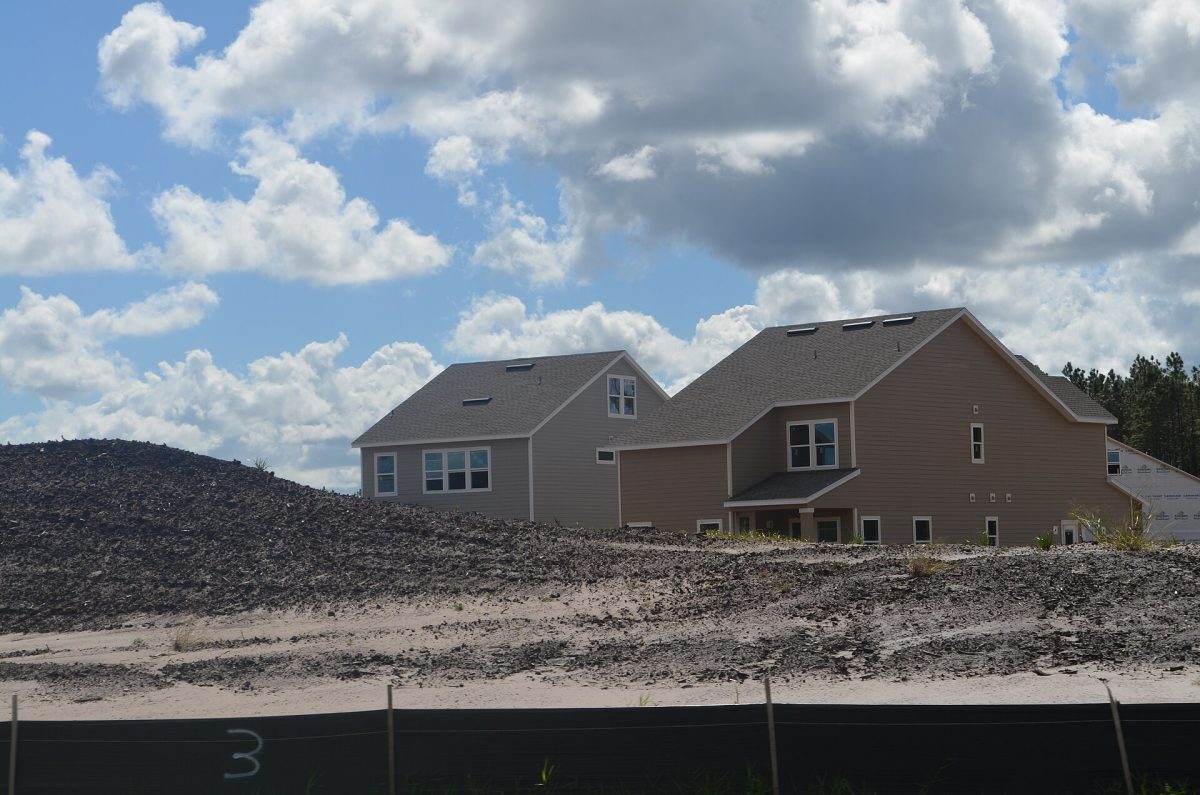
New houses under construction near Jacksonville in 2016 (file photo). Photo: B137 / Wikimedia Commons (CC0)
JACKSONVILLE, Fla. - Before a Jacksonville homeowner puts up a backyard shed, replaces a roof or swaps out a water heater, the city's Building Inspection Division probably wants to issue a permit first. Starting covered work without one is "punishable by a fine of $250," according to the division's residential permits page. Skipping required inspections can also lead to what the city calls a property lockdown, which blocks future permits at the address until the problem is cleared up.
The rules below come from the City of Jacksonville's Building Inspection Division and Zoning Section pages and from Florida law. They apply to property in the consolidated City of Jacksonville. Atlantic Beach, Neptune Beach, Jacksonville Beach and the Town of Baldwin administer their own zoning, and homeowners in St. Johns, Clay, Nassau and Baker counties deal with their own county or city building departments.
Step 1: Figure out whether your project needs a permit
The city's short answer is that most physical changes do. "A building permit is required for any construction that physically changes or adds structures to your property," the Building Inspection Division's FAQ says. Under Section 105.1 of the Florida Building Code, which the city cites, a permit is needed to build, enlarge, alter, repair, move or demolish a structure, or to install, alter or replace electrical, gas, mechanical or plumbing systems.
The division lists re-roofs, garage conversions and exterior stucco as alterations that need permits. Replacing a water heater needs a permit, and so does work on air-conditioning units, though replacing a single part inside one piece of equipment does not. The city's list of work that does not need a permit is shorter.
| Usually no permit needed | Permit needed |
|---|---|
| Patio slabs | Sheds and other accessory buildings |
| Replacing faucets after the stop valve | Water heater replacement |
| Stopping leaks and clearing drain stoppages without replacing pipes, valves or fixtures | Re-roofing |
| Replacing a part within a single piece of equipment | Air-conditioning unit repairs and replacement |
| Connecting portable heaters, ventilation and cooling units and evaporative coolers | Garage conversions, additions and exterior stucco |
| Self-contained refrigeration units with 10 pounds or less of refrigerant and motors of 1 horsepower or less | New electrical, gas, mechanical and plumbing systems |
Step 2: Check zoning before you build a fence or shed
Fences are governed mainly by the zoning code. According to the city's Zoning FAQ, "the maximum height of a fence is 4-feet within the front yard setback," and fences farther back toward the rear of the lot can be up to 8 feet tall. Corner lots have an exception, a visibility triangle must be kept clear for traffic safety, and heights outside those limits require an administrative deviation under Section 656.402 of the Zoning Code.
The city recommends a survey before building on or near a property line. Fences may sit on the property line or elsewhere on the lot depending on the zoning district. Jacksonville's Municipal Code Compliance division lists fencing taller than 4 feet in the required front yard of residential property among its common zoning violations.
Sheds and other detached accessory buildings follow separate setback rules. The Zoning FAQ says pools and other accessory structures generally have smaller setbacks than a house, as long as they are at least 5 feet from the home. They can go only in rear or side yards, not in the required front yard, and owners can look up a property's zoning by address or 10-digit real estate number on the city's JaxGIS map.
Historic districts add another layer. The city's fencing and wall guidelines for historic districts say horizontal fencing cannot be approved administratively and must go to the Jacksonville Historic Preservation Commission. Shed applicants in historic areas may also need review from Historic Preservation staff before a permit is issued.
Step 3: Decide whether to hire a contractor or act as your own
Florida law lets property owners pull permits as owner-builders on a one- or two-family home for their own use, under Section 489.103(7) of the Florida Statutes. The owner "must personally appear and sign the building permit application," must directly supervise all work not done by licensed contractors and may not hand that responsibility to anyone else. Selling or leasing the home within one year after the work is finished creates a legal presumption that the job was done for sale or lease, which the exemption does not allow.
Owner-builders also sign a state disclosure statement before the permit is issued. It warns that the owner is the responsible party of record, that the owner "may not hire an unlicensed person to act as my contractor" and that any unlicensed helpers must be treated as employees with payroll tax withholding and workers' compensation coverage. The statement also notes that homeowner's insurance may not cover injuries to unlicensed workers.
Homeowners who hire a contractor can check a license through the city's contractor license and complaint search. The state disclosure statement notes that hiring a licensed contractor and having the permit filed in the contractor's name can reduce the owner's financial risk. The search tool is linked from the Building Inspection Division's website, and the division's main phone line is (904) 255-8500.
Step 4: Gather documents and apply
The Building Inspection Division says online permit submission through the city's JaxEPICS system "is now required for all permit types," and applicants must have a JaxEPICS account. The division's office is in the Ed Ball Building at 214 N. Hogan St. downtown and is open 7 a.m. to 4 p.m. Monday through Friday. Its residential shed page also describes an in-person process in which a permit assistant creates a trackable JaxEPICS permit number, so homeowners should call (904) 255-8500 to confirm the current procedure for their project.
For a shed, the city asks for a photo ID, proof of ownership if the Duval County Property Appraiser's site does not list the applicant, a permit application and a property owner disclosure statement. Applicants also need a scalable certified survey showing the shed's size, its distance from at least two adjacent property lines, all other structures, any wells and septic systems and the shed's height from grade to roof peak. Properties on a well or septic system need Health Department approval as well.
Size and cost change the process. Sheds under 150 square feet with a job cost under $5,000 can be issued during the visit, according to the city. Sheds of 150 square feet or more, or jobs over $5,000, go to plan review, and larger sheds need structural drawings signed and sealed by a Florida-licensed design professional plus product approval information.
Step 5: Record a Notice of Commencement for larger jobs
A Notice of Commencement is a recorded document that tells the public, including suppliers and subcontractors, that work has started on a property. The city requires one when improvements exceed $5,000, or $15,000 for mechanical work such as air conditioning. The Duval County Clerk of Courts has a satellite office in the Ed Ball Building lobby that can record it, according to the shed permit page.
Step 6: Pay the fee and post the permit
Permit fees are paid at the Duval County Tax Collector's office inside the Ed Ball Building, the city says. Fees are based on the project, with building permit fees tied to gross outside floor area and electrical, plumbing and mechanical permits charged separately. The city's FAQ says permits are valid for 180 days.
Before any inspection, the permit and the filed Notice of Commencement must be posted on the job site. Construction documents must be kept on site in a weatherproof container. A filed copy of the Notice of Commencement showing the permit number must also be sent to the division before inspections are requested.
Step 7: Schedule inspections
Inspections can be requested by phone at (904) 255-8500, option 4, from 7 a.m. to 4 p.m. weekdays, or online through the city's building inspections site. A shed that needs a slab inspection must be inspected before concrete is poured, while sheds under 150 square feet often need no inspection at all. Owners can track scheduled inspections on JaxEPICS by permit number, confirmation number or address.
Failing an inspection costs extra. "If you fail an inspection, a $45 reinspection fee must be paid," the division says. All fees must be paid before a final inspection is requested and before a certificate of occupancy or completion is issued.
Where to find more information
The Building Inspection Division has forms, checklists and the JaxEPICS link and can be reached at (904) 255-8500. Fence and setback questions go to the Zoning Section at (904) 255-8300, and the city's Zoning FAQ) covers common questions. Florida's owner-builder rules are in Section 489.103 of the Florida Statutes.
Sources: City of Jacksonville Building Inspection Division; City of Jacksonville Zoning Section; Jacksonville Municipal Code Compliance; Florida Statutes s. 489.103 (2026)
News organizations may republish this story with credit. See our guidelines.
Know someone who'd want to read this? Email it to a friend.
Own a Jacksonville business? Introductory ad rates from $125/month. See ad options Follow Jax Times on FacebookLocal news, events and people, in your feed every day.Most read this week
- Florida's 3 Constitutional Amendments on the Nov. 3 Ballot, Explained in Plain English
- Clay County Voter Guide: 7 Early Voting Sites, Key Races and What to Know Before Nov. 3
- Early Voting in Jacksonville Starts Tuesday: All 24 Sites, the Hours, What to Bring and What's on Your Ballot
- Jacksonville Fair 2026 Guide: Dates, Gate Times, Ticket Prices, Free Days and Every Concert (Nov. 5-15)
- The Cummer Museum by the Numbers: 5,000 Works, a 400-Year-Old Oak and a $1.3 Million Garden Rescue
More stories
 Real Estate Duval vs. St. Johns, Clay, Nassau and Baker Counties: Pay, Home Prices, Rent and Growth Compared
 Real Estate 59 Jacksonville-Area ZIP Codes Ranked by Home Value: Prices, Gains and Declines in 2026
 Real Estate Duval vs. St. Johns County: Homes Cost $185,700 More South of the Line, and Incomes Are $38,500 Higher. 13 Questions, Answered
 Real Estate Rent in Jacksonville and St. Johns County by ZIP Code: From $1,216 to $2,897 a Month
Comments
Be respectful. No personal attacks, hate speech, spam or anyone's private information. Every comment is reviewed before it appears. Comment rules
No comments yet. Be the first to share your thoughts.