Inside the Polling Place on Nov. 3: Polls Open 7 a.m. to 7 p.m., the 150-Foot Zone, the Photo Rule and Provisional Ballots
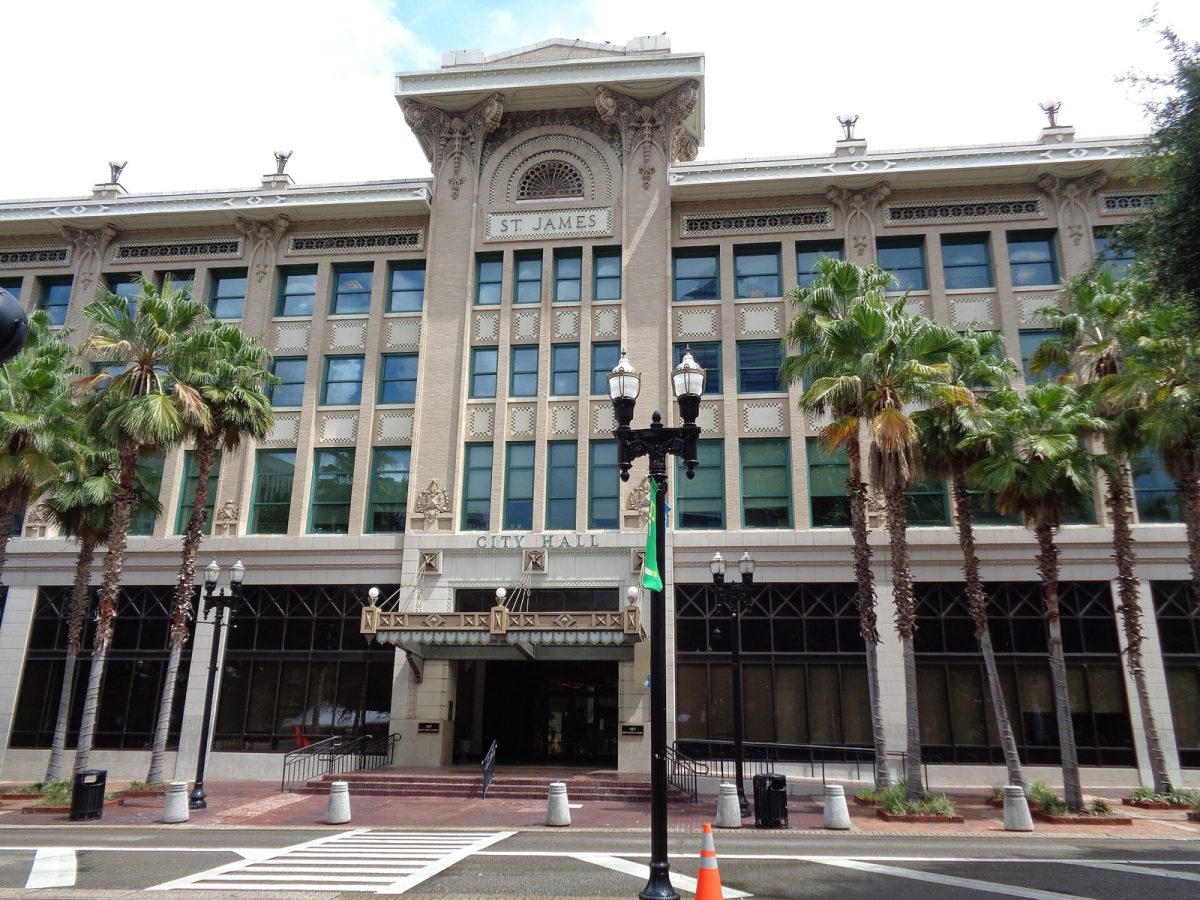
Florida polls are open from 7 a.m. to 7 p.m. on Election Day, Nov. 3. Shown: Jacksonville City Hall (file photo). Photo: Michael Rivera / Wikimedia Commons (CC BY-SA 4.0)
JACKSONVILLE, Fla. - Polling places across Duval, St. Johns, Clay and Nassau counties will operate from 7 a.m. to 7 p.m. Tuesday, Nov. 3, 2026, under Florida law. State statutes establish rules governing who may enter polling rooms, what activities are prohibited within 150 feet of polling place entrances, when photography is permitted and how voters can receive assistance. Florida law also provides for provisional ballots when a person's eligibility cannot be determined at the precinct, with a deadline for submitting supporting evidence.
Florida Statutes Section 100.011 establishes the statewide voting hours, while Sections 101.031, 101.048, 101.051 and 102.031 address procedures and conduct at polling places. The rules include restrictions on soliciting voters, limits on who may enter voting areas and procedures for challenging or determining eligibility. They also establish responsibilities for election officials, law enforcement personnel and people assisting voters.
1. What time do polling places open and close Nov. 3?
Florida polling places open at 7 a.m. and close at 7 p.m. on Election Day, according to Florida Statutes Section 100.011(1). The same statewide hours apply to the Nov. 3, 2026, general election in Duval, St. Johns, Clay and Nassau counties. The statute also addresses voters who are waiting in line when the official closing time arrives.
Under Section 100.011(1), an elector who is in line at the official closing time may still vote. That provision applies even though the statutory closing time is 7 p.m. The rule is based on whether the elector is in line when voting officially closes.
The Clay County Supervisor of Elections also identifies Tuesday, Nov. 3, 2026, as the date of the general election. Its website provides information about precinct locations and election procedures. The office maintains a Precinct Finder for county-specific polling place information.
2. Who is allowed inside the polling room?
Florida law restricts entry into polling rooms to specified people, according to Section 102.031(3)(a). The permitted groups include voters, election inspectors, election clerks and official poll watchers. People assisting voters are also included among those authorized to enter.
The same statute allows certain law enforcement and emergency personnel to enter with permission from the election clerk or a majority of the inspectors. Their access is specifically addressed in the law rather than treated as unrestricted entry. Section 102.031(3)(a) establishes the categories of people authorized to be present.
Florida law separately governs circumstances in which another person may enter a voting booth with a voter. Section 101.051(2) restricts that access except when assistance is permitted under the law. A violation of the booth-access restriction is classified as a first-degree misdemeanor.
These provisions distinguish between entering the polling room and entering an individual voting booth. Section 102.031 identifies the people permitted in the polling room, while Section 101.051 addresses voter assistance and booth access. Both sections establish limits on the presence of other people during the voting process.
3. What is the 150-foot zone outside polling places?
Florida Statutes Section 102.031(4)(a)-(b) prohibits soliciting within 150 feet of a polling place entrance or secure ballot intake station. The law includes distributing political or campaign materials and seeking signatures on petitions within its definition of soliciting. The restriction applies to the designated area surrounding those locations.
The election clerk or supervisor is responsible for marking the boundary, according to Section 102.031(4). The marked area identifies where the statutory restrictions apply. The law establishes the distance as 150 feet from the specified polling place entrance or secure ballot intake station.
Florida Statutes Section 101.051(2) also prohibits soliciting a voter to offer voting assistance within 150 feet. That provision concerns offers of assistance rather than the distribution of political materials or petitions. The two statutes address different forms of conduct within the restricted area.
The 150-foot restrictions are separate from the limitations governing who can enter a polling room. Section 102.031 establishes both the solicitation restrictions and polling room access rules. Together, the provisions define conduct in the surrounding area and access to the room itself.
4. What role do sheriff's deputies have at polling places?
Florida Statutes Section 102.031(2) requires a deputy sheriff to be assigned to each polling place and early voting site. The requirement is part of the state's statutory election procedures. It applies to the locations identified in that section.
The law also provides for the removal of disruptive people under Section 102.031(4)(c). Law enforcement may remove disruptive individuals from the polling room or the 150-foot zone. This authority is addressed separately from the statute's restrictions on solicitation.
Section 102.031 therefore covers several distinct aspects of polling place operations. It addresses the required assignment of sheriff's deputies, restrictions on entry and limits on solicitation near polling places. The law also provides authority for responding to disruptive conduct within the specified areas.
5. Are photographs allowed inside the polling room?
Florida Statutes Section 102.031(5) states that "No photography is permitted in the polling room or early voting area," with a specific exception. An elector may photograph his or her own ballot. The exception applies to the elector's ballot rather than establishing general permission to photograph inside the polling room.
The statute treats the polling room and early voting area as locations subject to the photography restriction. Its language identifies an exception for a voter photographing that voter's own ballot. The provision does not establish a general photography exception for other subjects within those areas.
The photography rule is one of several restrictions contained in Section 102.031. Other portions of the statute establish polling room access and the 150-foot solicitation boundary. Section 102.031(5) specifically governs photography.
6. Who can receive assistance while voting?
Florida Statutes Section 101.051(1) allows assistance for voters who need help because of blindness, disability or an inability to read or write. An eligible voter may request assistance from two election officials or from a person of the voter's choice. The law places restrictions on who may serve as the chosen assistant.
Under Section 101.051(1), the person selected to assist cannot be the voter's employer or an agent of the employer. The helper also cannot be an officer or agent of the voter's union. Those limitations apply to assistance provided under the statute.
The law allows the assistant to read office titles, candidate names and ballot issues aloud before the voter enters the booth, according to Section 101.051(1). This provision identifies information that may be read to the voter. Other parts of the section govern declarations and access to the voting booth.
Sections 101.051(4)-(6) require declarations connected with voter assistance. A helper who is not an election official must swear a "Declaration to Provide Assistance," while the voter takes a "Declaration to Secure Assistance." County supervisors of elections are responsible for providing the forms.
Florida Statutes Section 101.051(2) also limits who may be present in a voting booth with a voter. Only assistance permitted by law is allowed under that provision. The same subsection classifies unauthorized booth entry as a first-degree misdemeanor.
7. When are provisional ballots used?
Florida Statutes Section 101.048(1) provides for a provisional ballot when a person claims to be registered and eligible at the precinct but eligibility cannot be determined. The procedure also applies when an election official asserts that the person is not eligible. In those circumstances, the statute establishes a process for the ballot to be reviewed.
A voter who casts a provisional ballot may submit written evidence supporting eligibility, according to Section 101.048(1). The evidence must be provided by 5 p.m. on the second day following the election. That deadline is stated in the statute.
The county canvassing board determines whether a provisional ballot is counted, according to Section 101.048(2)(a). The statute provides that the ballot is counted unless the board finds, by a preponderance of the evidence, that the voter was not entitled to vote. This establishes the standard the board uses in reviewing eligibility.
Florida Statutes Section 101.048(7)(a) also requires each county supervisor of elections to provide a free provisional ballot status system. The system must allow a voter to determine whether the ballot was counted and, if not, the reason. That information must be available no later than 30 days after the election.
The Clay County Supervisor of Elections provides a Provisional Status Lookup on its website. The office also maintains a Precinct Finder for identifying polling locations. Both resources are listed among the election services available through the county's official website.
8. What does the Voter's Bill of Rights say?
Florida Statutes Section 101.031(2) requires the Voter's Bill of Rights and Responsibilities to be posted at each polling place. The document identifies rights related to casting a ballot and having it accurately counted. It also lists responsibilities connected with participating in the election process.
Among the stated rights is the ability to receive up to two replacement ballots before casting a ballot, according to Section 101.031(2). The law also identifies the right to request oral instructions from election officers. It includes the right to cast a provisional ballot when registration or identity is questioned.
The responsibilities listed in Section 101.031(2) include knowing the location of the polling place and bringing proper identification. These responsibilities appear alongside the rights described in the required posting. The statute directs that the information be available at each polling place.
Florida Statutes Section 101.031(4) separately addresses instructions given by election officers inside voting booths. Officers providing such instructions may not attempt to influence how a voter votes. They must then leave the booth so the voter can vote in secret.
9. Where is county-specific election information available?
The Clay County Supervisor of Elections maintains its office at 500 N. Orange Ave. in Green Cove Springs, according to the county's official election website. The office can be reached at 904-269-6350 or [email protected]. Its published office hours are Monday through Friday, 8:30 a.m. to 4:30 p.m.
The Clay County website, clayelections.gov, includes a Precinct Finder and Provisional Status Lookup. It also provides access to county election information, including results through its official election reporting system. The county identifies Nov. 3, 2026, as the general election date.
Residents seeking information specific to Duval, St. Johns or Nassau counties can consult their county supervisors of elections. Those offices are the county-level sources for polling place and election information. The statewide rules described in this article come from Florida Statutes Sections 100.011, 101.031, 101.048, 101.051 and 102.031.
The statutes establish the common framework for polling place operations on Nov. 3. They address voting hours, access to polling rooms, assistance, photography, solicitation restrictions and provisional ballot review. County supervisors provide the local election information that accompanies those statewide requirements.
Sources: Florida Statutes Sections 100.011, 101.031, 101.048, 101.051 and 102.031; Clay County Supervisor of Elections
News organizations may republish this story with credit. See our guidelines.
Know someone who'd want to read this? Email it to a friend.
Own a Jacksonville business? Introductory ad rates from $125/month. See ad options Follow Jax Times on FacebookLocal news, events and people, in your feed every day.Most read this week
- JSO Opens New Headquarters at 532 Riverside Ave.: 346,000 Square Feet, 11 Floors and More Than $20 Million
- Jacksonville Building Permits in 7 Steps: When You Need One, Fence Height Limits and the $250 Fine for Skipping It
- Duval's 1-Mill School Tax Renewal and 3 School Board Races on the Nov. 3 Ballot: Who Is Running and What's at Stake
- How to Register a Boat in Northeast Florida in 6 Steps: Fees From $5.50 to $189.75 and a 30-Day Deadline
- Florida's Lemon Law in 5 Steps: The 24-Month Window, 3 Repair Tries and How Drivers Get a Refund or New Car
More stories
 Politics 141,912 Duval Voters Have Cast Ballots, 21.66% Turnout, With Early Voting Open Through Sunday
 Politics 107,463 Duval Voters Have Cast Ballots as Early Voting Continues Across Northeast Florida
 Politics Nassau County Voter Guide: 5 Early Voting Sites, Key Races and What to Know Before Nov. 3
 Politics Clay County Voter Guide: 7 Early Voting Sites, Key Races and What to Know Before Nov. 3
Comments
Be respectful. No personal attacks, hate speech, spam or anyone's private information. Every comment is reviewed before it appears. Comment rules
No comments yet. Be the first to share your thoughts.