Palatka's Steamboat Days: 7 Lines, Up to 30 Boats at the Docks and Greg Leonard's Picture History of the 'Gem City of the St. Johns'
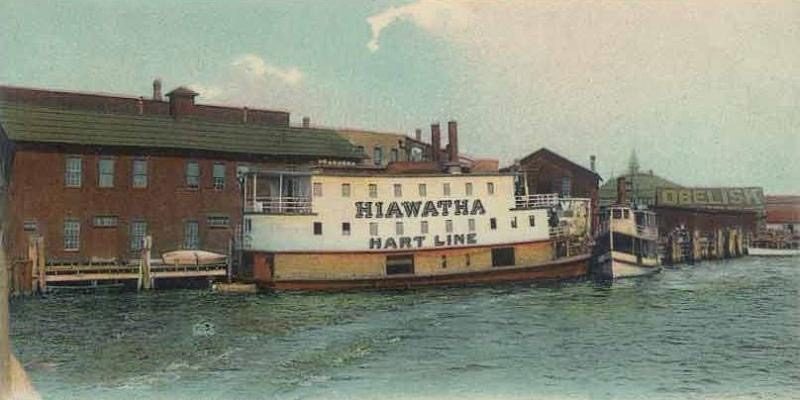
PALATKA, Fla. - On Thursday evenings in Palatka's heyday, as many as 25 to 30 steamboats could be seen at the city's docks. That was the night oceangoing vessels arrived from Charleston and Savannah, according to the Putnam County Historical Society. The society brought that era back into view on Nov. 21, when author Greg Leonard spoke about his Arcadia Publishing book "Images of America: Palatka" at the society's November membership meeting at the Bronson-Mulholland House.
The 'Gem City of the St. Johns'
Leonard's book was created to bring Palatka's history to life, a story rivaling that of its famous neighbor St. Augustine, 30 miles to the east, the society said in its announcement of the program. The book covers the Spanish and British colonial periods, the U.S. territorial years and statehood, the Civil War and the golden age that followed, and the challenges and opportunities of the 20th century. Leonard is well versed in the history of Northeast Florida and has developed and presented numerous visual histories of its communities, according to the society.
Palatka's golden age was a time when the "Gem City of the St. Johns" was the most important port city on the river and a thriving tourist center, the society said. It was described nationally in such glowing terms that leading figures of the day, including presidents, business tycoons and intellectuals, flocked to its hotels. In the mid-1880s, seven steamboat lines operated out of Palatka, and four major railroads arrived in the 1880s to strengthen the city's position even further, according to the society.
Steamboats, hotels and a great fire
The society's online history of Palatka dates the city's golden age from 1865 to 1895, when Palatka rivaled Jacksonville as the major port on the St. Johns River. By 1885, the steamboat lines operating there included Hubbard Hart's Ocklawaha River Line and the Charleston, Savannah Line of Ocean Steamers, the history says. By the late 1870s, the wharves stretched across the entire riverfront, with as many as 40 ships waiting in the harbor to load or unload.


A great fire on Nov. 7, 1884, virtually wiped out the entire business district, according to the society. Brick buildings replaced the wood-frame structures that burned, and Palatka emerged as a more refined city. By 1890 it had eight first-class hotels, the largest of them the 500-room Putnam House, and winter visitors included President Grover Cleveland, the history says.
The good times did not last. The society says the railroad could no longer compete with Jacksonville in the 1890s, and steamships were cut back to running only during the tourist season. The "Great Freezes" of 1894 and 1895 then virtually wiped out Palatka's citrus industry, and the city turned to wood industries such as the Wilson Cypress Co., which the society calls the largest cypress mill in the world.
Older roots
Palatka's name is a contraction of a Native American word meaning "cow crossing" or "cow ford," according to the society. As early as 1655, the Spanish were developing the area as one of Florida's three main ranching areas, and Palatka became the main crossing point for cattle headed across the St. Johns to slaughterhouses near St. Augustine. The city was chartered by the state on Jan. 8, 1853, and the spelling "Palatka" did not become official with the U.S. Post Office until May 24, 1875, the history says.
Seminoles attacked and burned Palatka in December 1835, and the settlers in the St. Johns River valley fled to St. Augustine, according to the society. In the early 1840s the Army built Fort Shannon in Palatka as a supply depot and staging area. The building at 110 Madison St., which served as the fort's officers' quarters, is the oldest building in Palatka, the society says.
The Bronson-Mulholland House
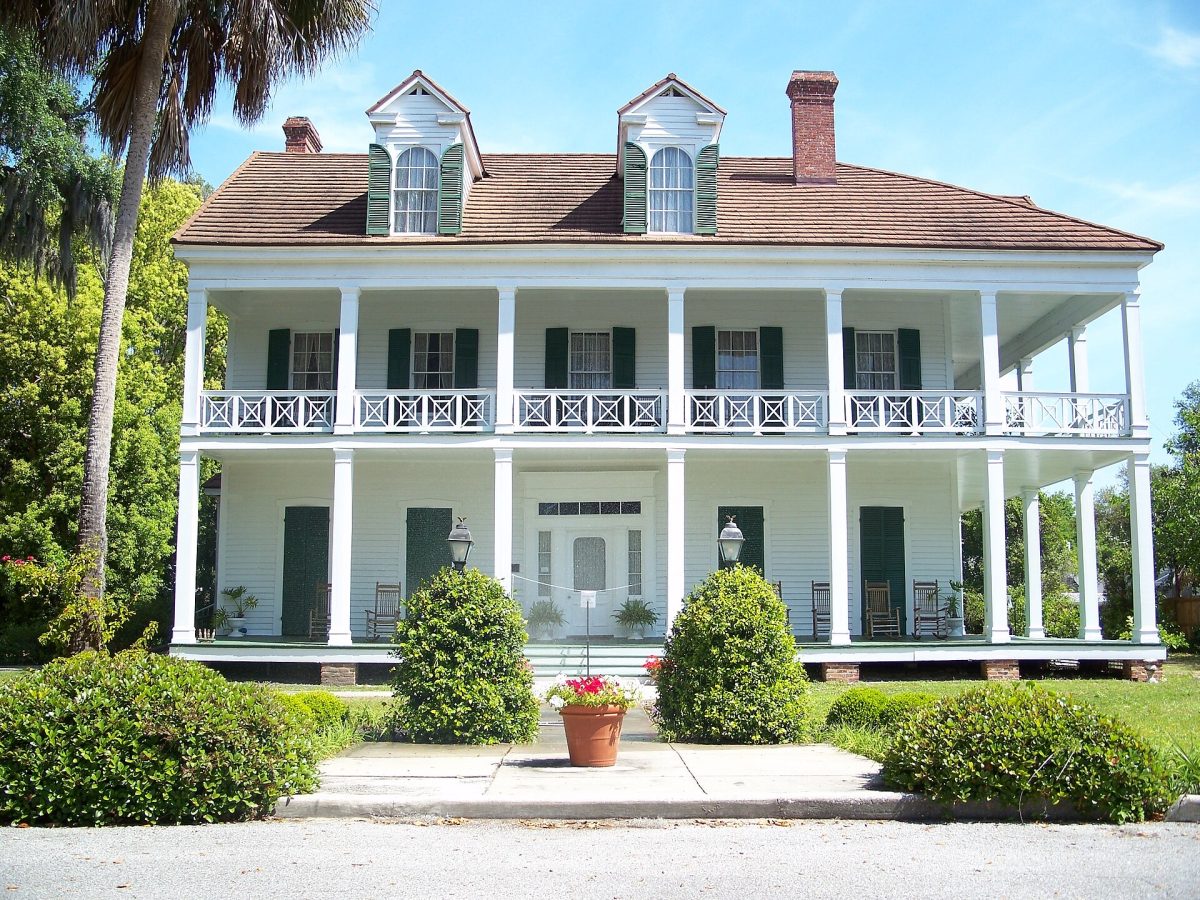
The house where Leonard spoke was built in 1854 by Judge Isaac H. Bronson, a lawyer, U.S. congressman and federal judge who prepared and sponsored Palatka's original charter, according to the society. Known as Sunny Point, the 7,199-square-foot home has served as a family residence, a Civil War lookout, a school for freed slaves, a private school and apartments. Today it is a museum listed on the National Register of Historic Places.
The Bronson-Mulholland House at 100 Madison St. is open Saturdays from 1 to 4 p.m. and on the first Sunday of each month from 1 to 4 p.m., the society says. The Putnam Historic Museum is also open on the first Sunday of the month from 1 to 4 p.m. Admission to both is free, though donations are accepted.
How to join or volunteer
The Putnam County Historical Society was incorporated in June 1966 to aid in the discovery and preservation of historical objects and events and to promote interest in the history of the area, particularly Putnam County, according to its articles of incorporation as quoted on its website. Membership information is posted on the "Join the Society" page at putnam-fl-historical-society.org. The society, led by President Nicole Grace, can also be reached by email at [email protected] or by mail at P.O. Box 35, Palatka, FL 32178-0035.
The society keeps the Bronson-Mulholland House running with volunteers, according to its website. Volunteers can do everything from pulling weeds to polishing silver, and the society is also looking for museum docents. The society posts its latest programs, photos and news on its Facebook page.
Sources: Putnam County Historical Society (Nov. 15, 2026); putnam-fl-historical-society.org
News organizations may republish this story with credit. See our guidelines.
Know someone who'd want to read this? Email it to a friend.
Know which restaurants passed inspection
Get the week's restaurant inspection results every Sunday, This Weekend in Jacksonville every Thursday and each evening's local stories. Free, and you can unsubscribe anytime.
By signing up you agree to get the Jax Times email newsletter. Unsubscribe anytime with one click.
Most read this week
More stories
 Arts & Culture Painter Dara Dodson Preserves Florida's "Cracker" Cowboy Heritage in Oils
 Arts & Culture Jacksonville Symphony Plays Mahler's Ninth Nov. 6 and 7 at Jacoby Symphony Hall
 Community Jacksonville's 40th MLK Jr. Breakfast
 Local Council Delays Plan for HUD Manufactured Homes on 17-Acre Boobie Clark Park