Nassau County Property Taxes 2026: Millage Rates, Homestead Savings and How to Pay
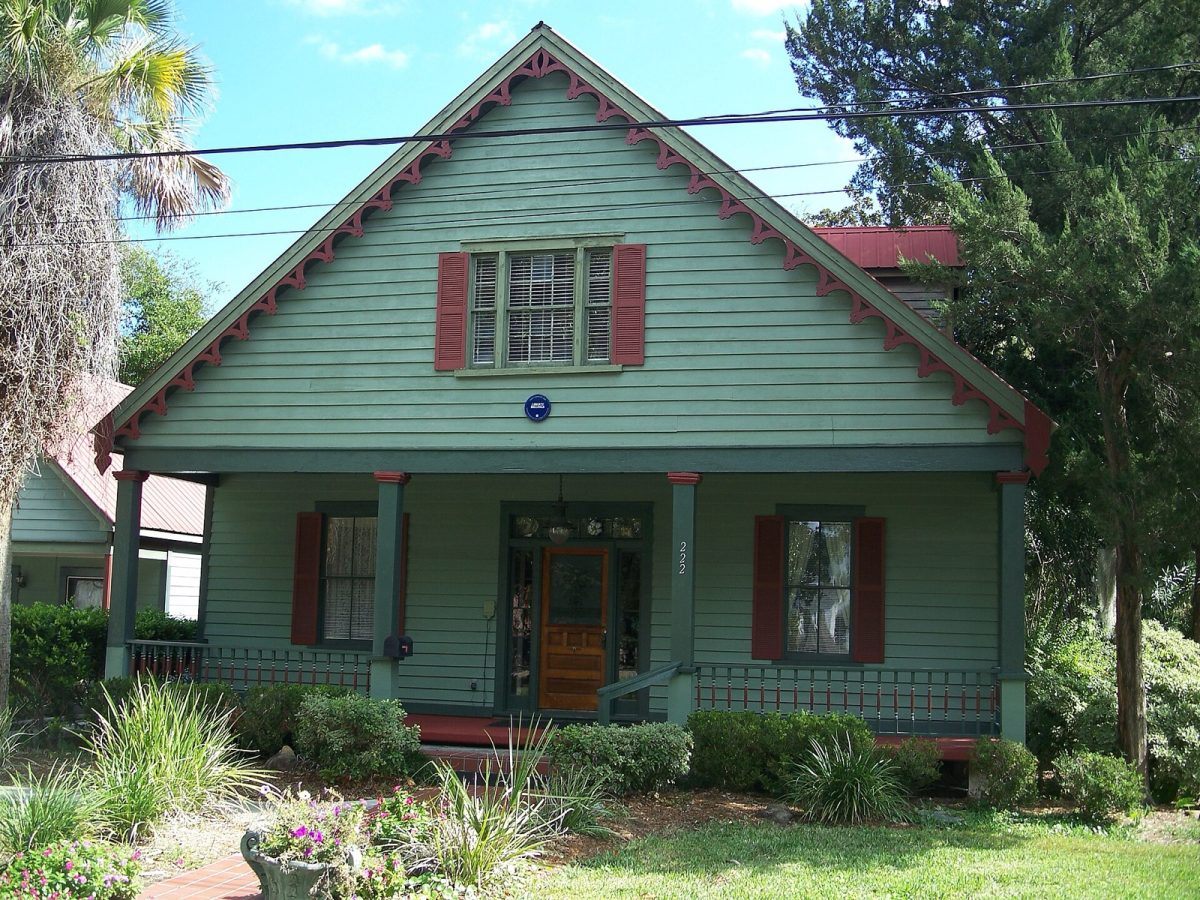
Nassau County property tax rates differ by tax district. Shown: the Liberty Billings house in the Fernandina Beach Historic District. Photo: Ebyabe / Wikimedia Commons (CC BY-SA 3.0)
NASSAU COUNTY, Fla. - Nassau County property owners can save 4 percent on their 2026 property tax bills by paying in November, and homeowners with homestead exemptions may save hundreds of dollars more through reductions in taxable value. The county's eight tax districts have final 2026 millage rates ranging from 14.4703 mills in Callahan to 17.9525 mills in Fernandina Beach. Those rates, combined with exemptions, assessments and special charges, determine what property owners owe.
The Nassau County Property Appraiser published the final millage rates for 2026, while the Nassau County Tax Collector handles billing and collection. Residents of Fernandina Beach, Yulee, Callahan, Hilliard and Amelia Island can use the official rates to understand their bills, but should verify which tax district applies to their property. The first step is to compare the property's taxable values and district code with the amounts listed on its tax bill.
2026 property tax deadlines and payment discounts
The Nassau County Tax Collector begins collecting property taxes Nov. 1, with bills normally mailed on or before that date. Owners who do not receive a bill can print one through the online tax system or request a copy from the Tax Collector. The mailing schedule does not change the importance of checking the amount due and paying before the delinquency deadline.
Florida's payment discount schedule rewards property owners who pay earlier in the collection period. November provides the largest discount, followed by smaller discounts through February. March payments receive no discount, and unpaid taxes become delinquent April 1.
| Payment month | Discount | Payment status |
|---|---|---|
| November 2026 | 4% | Largest discount |
| December 2026 | 3% | Discount available |
| January 2027 | 2% | Discount available |
| February 2027 | 1% | Final discount month |
| March 2027 | 0% | Full amount due by March 31 |
| April 1, 2027 | None | Unpaid taxes delinquent |
For example, a calculated property tax of $3,906.63 would fall to $3,750.37 with the November discount. That represents a savings of approximately $156.27 compared with paying the full March amount, based on the rounded figures in the example. The actual discount depends on the total taxes and assessments shown on the individual bill.
How to read your property tax bill and TRIM notice
Nassau County property owners receive a Truth in Millage notice, commonly called a TRIM notice, before their annual tax bills. The Property Appraiser reported that 2026 TRIM notices were mailed Aug. 17, while tax bills are handled separately by the Tax Collector. A TRIM notice is not a bill and should not be used as a substitute for the final payment statement.
The TRIM notice provides information about property values and proposed taxes, while the final bill reflects the taxes being collected. Owners should compare the property's assessed value, taxable value, exemptions and applicable taxing authorities when reviewing the documents. Differences between a home's market-related value and its taxable value can be especially important when homestead protections apply.
The Property Appraiser determines property values and exemptions, but taxing authorities establish millage rates. Property owners who identify discrepancies should contact the Property Appraiser promptly, with the office's TRIM guidance identifying a 25-day period following mailing for addressing discrepancies. The Value Adjustment Board petition deadline for 2026 was Sept. 11 and has already passed.
Nassau County's total taxable property value was approximately $19.7 billion for 2026, up 8.4 percent from the prior year, according to the Property Appraiser's Aug. 4 announcement. That countywide increase does not establish how much any individual property owner's bill will rise. The actual amount depends on the property's taxable value, exemptions, district rates and other applicable assessments.
Nassau County's eight tax districts and 2026 millage rates
A mill represents $1 in property taxes for every $1,000 of taxable value. Nassau County uses eight millage area codes, with different totals based on municipal taxes and other taxing authorities. The official 2026 Final Millage Rates chart identifies the following districts.
| Code | Official district name | 2025 mills | 2026 mills |
|---|---|---|---|
| 001 | Callahan | 14.8119 | 14.4703 |
| 002 | Fernandina | 18.0222 | 17.9525 |
| 003 | Hilliard | 16.6430 | 16.4101 |
| 004 | Unincorporated County | 15.3517 | 15.0580 |
| 005 | Unincorporated Island-South | 15.4500 | 15.1514 |
| 006 | Drainage District | 15.3517 | 15.0580 |
| 007 | Piney Island | 15.4500 | 15.1514 |
| 008 | Unincorporated Mid-Island | 15.5460 | 15.2474 |
All eight districts show lower final millage totals in 2026 than in 2025. Callahan's rate declined by 0.3416 mills, while Fernandina's declined by 0.0697 mills and Hilliard's declined by 0.2329 mills. The five remaining district rates also declined, although a lower millage rate does not necessarily guarantee a lower bill when taxable values change.
The chart does not establish which district applies to every Yulee neighborhood or individual Amelia Island property. Homeowners should not select a district simply because its geographic label appears to describe their neighborhood. They can check their TRIM notice, search their parcel through the Nassau County Property Appraiser or call 904-491-7300 for confirmation.
What makes up the millage rate?
The Nassau County general tax rate is 6.5178 mills across all eight districts. School taxes add another 6.1860 mills, consisting of 2.9880 mills for the state school component and 3.1980 mills for the local school component. Together, those county and school components account for 12.7038 mills before other authorities are included.
Two additional levies apply throughout the county: 0.1793 mills for the St. Johns River Water Management District and 0.0270 mills for the Florida Inland Navigation District. Unincorporated districts also have a 2.1479-mill Municipal Service Fund levy. These components help explain why properties in different tax districts can have different rates even when their assessed values are identical.
Municipal rates add 1.5602 mills in Callahan, 4.8530 mills in Fernandina Beach and 3.5000 mills in Hilliard. The Amelia Island Beach Renourishment MSTU adds 0.0960 mills in districts 002 and 008, while Amelia Island Mosquito Control adds 0.0934 mills in districts 002, 005, 007 and 008. Fernandina Beach's voter-approved debt levy is listed at 0.0000 mills in the official chart.
For example, district 004 combines the county general rate, Municipal Service Fund, school taxes and the two regional district levies for a total of 15.0580 mills. District 008 includes those components plus the beach renourishment and mosquito control levies, bringing its total to 15.2474 mills. The tax district determines which combination applies, so homeowners should rely on the official designation attached to their property.
How homestead exemptions reduce property taxes in 2026
Nassau County homeowners who qualify for homestead exemption can reduce the value on which property taxes are calculated. For 2026, the first $25,000 of homestead exemption applies to all property taxes, including school taxes. An additional $26,411 exemption applies to eligible assessed value above $50,000, but only for non-school taxes.
That means homeowners do not simply subtract $51,411 from their property value for every taxing authority. Instead, the school taxable value and non-school taxable value must be calculated separately. Florida's additional exemption amount was adjusted to $26,411 for 2026, compared with $25,722 in 2025.
Consider a qualifying property with a $300,000 assessed value, equal to its just value, and a first-year homestead exemption. This illustration assumes no Save Our Homes assessment limitation, no senior exemption and no non-ad valorem assessments. The same taxable-value calculation is used for every district in the following examples.
School taxable value:
$300,000 - $25,000 = $275,000
Non-school taxable value:
$300,000 - $25,000 - $26,411 = $248,589
School property tax:
$275,000 x 6.1860 / 1,000 = $1,701.15
The non-school calculation requires subtracting the 6.1860 school mills from the district's total millage. The resulting rate is applied to $248,589 rather than the full $300,000 assessed value. Adding the school and non-school taxes produces the estimated ad valorem tax before any payment discount.
What a $300,000 homesteaded property would owe
The following examples show how a qualifying $300,000 property would be taxed in several Nassau County districts. The figures use the same assessed value, exemption amounts and school rate, allowing the differences in district millage to be compared directly. They exclude non-ad valorem charges and should not be treated as actual parcel bills.
| District | School tax | Non-school tax | Total tax | November payment |
|---|---|---|---|---|
| 001 Callahan | $1,701.15 | $2,059.39 | $3,760.54 | $3,610.11 |
| 002 Fernandina | $1,701.15 | $2,925.02 | $4,626.17 | $4,441.13 |
| 003 Hilliard | $1,701.15 | $2,541.60 | $4,242.75 | $4,073.04 |
| 004 Unincorporated County | $1,701.15 | $2,205.48 | $3,906.63 | $3,750.37 |
| 005 Island-South | $1,701.15 | $2,228.70 | $3,929.85 | $3,772.66 |
| 008 Mid-Island | $1,701.15 | $2,252.56 | $3,953.71 | $3,795.57 |
In district 004, the non-school rate is 15.0580 - 6.1860 = 8.8720 mills. Applying that rate to $248,589 produces $2,205.48 in non-school tax, which combines with $1,701.15 in school tax for a $3,906.63 estimated total. Paying that amount in November reduces the estimate to $3,750.37.
Without homestead exemption, the same hypothetical district 004 property's ad valorem tax would be $300,000 x 15.0580 / 1,000 = $4,517.40. With homestead, the estimated tax becomes $3,906.63, a difference of $610.77 using the displayed totals. The exemption savings calculation includes $376.45 from the first $25,000 and approximately $234.31 from the additional $26,411, with minor rounding differences.
The hypothetical homestead savings vary across the districts because non-school millage differs. The examples show $580.55 in Callahan, $759.58 in Fernandina Beach, $680.28 in Hilliard and $620.51 in the Unincorporated Mid-Island district. Actual savings depend on the specific parcel and its exemption eligibility.
Non-ad valorem assessments can add to the bill
Property owners should also look for non-ad valorem assessments on their tax bills. These charges are separate from the ordinary property-value-based millage calculation, and the Tax Collector identifies several special assessment districts and programs. The office states that its listed non-ad valorem special assessments are flat-rate charges except for SAISSA, which is value-based.
The Tax Collector's information identifies entities including Amelia National CDD, Amelia Walk CDD, Heron Isles CDD, River Glen CDD, Three Rivers CDD and the East Nassau Stewardship District. It does not provide verified typical assessment amounts for individual properties. Owners should check the assessment lines on their actual bills and contact the listed assessment authority or Tax Collector for applicable amounts.
These charges also matter when evaluating the taxes associated with a home purchase. The Property Appraiser's estimates exclude non-ad valorem assessments, and the Tax Collector cautions buyers against relying on a seller's existing tax bill. A buyer should review the specific property's current assessments rather than assuming another parcel's charges will apply.
Save Our Homes limits assessment increases
Florida's Save Our Homes provision can limit annual increases in assessed value for qualifying homesteaded property. The Nassau County Property Appraiser lists the 2026 cap at 2.7 percent, based on the lesser of 3 percent or the applicable consumer price index change. The limitation begins with the second year of a qualifying homestead.
The assessment limitation is different from the homestead exemption because it controls growth in assessed value rather than simply subtracting an exemption amount. New improvements are assessed at just value in their first year, and a change of ownership can cause the existing assessment cap protection to be lost. The Property Appraiser also identifies portability of eligible Save Our Homes benefits up to $500,000.
Some qualifying seniors may receive an additional $50,000 exemption for non-school taxes. The Nassau County Property Appraiser identifies an age requirement of 65 or older and an income limitation for that exemption. Homeowners should contact the office to confirm the current income threshold and eligibility rather than assuming the additional exemption applies automatically.
How to pay Nassau County property taxes
The Nassau County Tax Collector accepts property tax payments online, in person and by mail. The online payment portal is available at nassau.county-taxes.com/public, and the main office is at 86130 License Road, Suite 3, Fernandina Beach. Mailed payments for current taxes use the postmark date under the Tax Collector's published rules.
Payments by mail should be addressed to John M. Drew, CFC, Nassau County Tax Collector, at the main office address. Owners who have not received their bills can obtain copies through the online system or request assistance from the Tax Collector. Those paying in person should verify the relevant office hours before visiting.
Nassau County also offers an installment plan for eligible taxpayers. Applications are accepted from Nov. 1 through April 30 for the next tax year, and the first payment is made in June. The Tax Collector reports combined discounts of approximately 3.3 percent under the plan, which is not available to owners whose taxes are paid through escrow.
Homestead filing deadline is March 1, 2027
Homeowners seeking a homestead exemption for the 2027 tax year have until March 1, 2027, to apply. Applicants must own and occupy the property as their permanent residence as of Jan. 1 of the applicable tax year. The Nassau County Property Appraiser has opened applications for 2027 and provides an online filing portal through ncpafl.com.
The filing deadline for the 2026 tax year was March 2, 2026, and those applications are closed. Property owners who qualify for 2027 should review their exemption status rather than assume an application for the new tax year has already been accepted. The Property Appraiser can answer questions about homestead qualifications, senior exemptions and Save Our Homes protections.
What property owners should check before paying
Property owners can begin by confirming their district code, taxable values and homestead exemptions against the final bill. They should then review any non-ad valorem assessments separately, since those charges are not included in the millage-only examples. Comparing the final amount with the available payment discounts can show the benefit of paying earlier.
For 2026, every Nassau County tax district has a lower millage rate than the previous year, but the final bill also depends on property values and applicable assessments. The November 4 percent payment discount and existing homestead protections can reduce the amount eligible property owners pay. Residents with questions about valuations should contact the Property Appraiser, while billing and payment questions belong with the Tax Collector.
Nassau County property tax offices and contacts
| Office | Address and contact | Hours |
|---|---|---|
| Property Appraiser | ncpafl.com, 904-491-7300 | Call for assistance |
| Tax Collector main office | 86130 License Road, Suite 3, Fernandina Beach, FL 32034. 904-491-7400 | Monday-Friday, 8 a.m.-5 p.m. |
| Callahan office | 450077 State Road 200, Suite 13, Callahan, FL 32011 | 8 a.m.-5 p.m. |
| Historic Courthouse office | 416 Centre St., Fernandina Beach, FL 32034 | 8:30 a.m.-5 p.m. |
| Hilliard office | 15885 County Road 108, Hilliard, FL 32046 | Monday-Thursday, 9 a.m.-noon and 1-4 p.m.; Friday, 9 a.m.-noon and 1-5 p.m. |
Additional contacts: Tax Collector toll-free 866-815-4690; Property Appraiser TRIM information, Veronica Jarman, 904-491-7333; Tax Collector email, [email protected].
Online resources: Property Appraiser | Tax Collector | Property tax payment portal | Official 2026 millage chart
Source: Nassau County Property Appraiser and Tax Collector

News organizations may republish this story with credit. See our guidelines.
Know someone who'd want to read this? Email it to a friend.
Own a Jacksonville business? Introductory ad rates from $125/month. See ad options Follow Jax Times on FacebookLocal news, events and people, in your feed every day.Most read this week
- JSO Opens New Headquarters at 532 Riverside Ave.: 346,000 Square Feet, 11 Floors and More Than $20 Million
- Jacksonville Building Permits in 7 Steps: When You Need One, Fence Height Limits and the $250 Fine for Skipping It
- Duval's 1-Mill School Tax Renewal and 3 School Board Races on the Nov. 3 Ballot: Who Is Running and What's at Stake
- How to Register a Boat in Northeast Florida in 6 Steps: Fees From $5.50 to $189.75 and a 30-Day Deadline
- Florida's Lemon Law in 5 Steps: The 24-Month Window, 3 Repair Tries and How Drivers Get a Refund or New Car
More stories
 Local Amelia Island Lighthouse by the Numbers: 188 Years, 64 Feet and $10 Tours Twice a Month
 Real Estate How to File for Homestead in Duval County: Up to $50,000 Off, a March 1 Deadline and 6 Steps
 Politics 107,463 Duval Voters Have Cast Ballots as Early Voting Continues Across Northeast Florida
 Local Northeast Florida Coastal Flood Warning Extended to Wednesday: High Tide Times for Mayport, Fernandina and St. Augustine
Comments
Be respectful. No personal attacks, hate speech, spam or anyone's private information. Every comment is reviewed before it appears. Comment rules
No comments yet. Be the first to share your thoughts.