Duval Begins Installing Weapons Detectors at 90 Elementary Schools: About $20,000 Each Over 3 Years
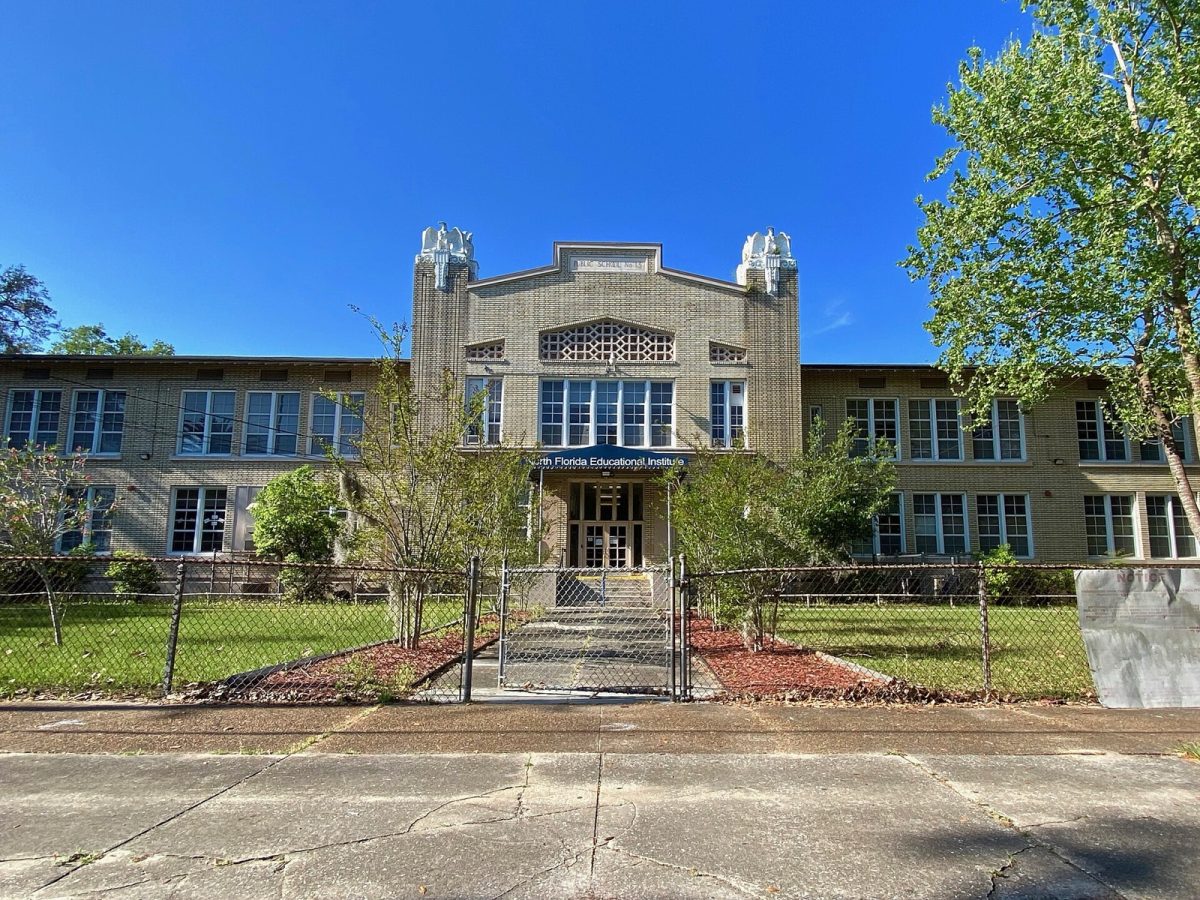
Duval County Public Schools is installing weapons detectors at its 90 elementary schools over three years. Shown: a historic school building in Jacksonville (file photo). Photo: Mathew105601 / Wikimedia Commons (CC BY-SA 4.0)
JACKSONVILLE, Fla. - Duval County Public Schools has begun installing weapons detection systems at its elementary schools, starting a three-year rollout that will eventually cover all 90 elementary schools in the district. The systems cost approximately $20,000 per school, according to an Oct. 22 report by Jax Today, putting the estimated cost of equipping all 90 schools at about $1.8 million. Principals will notify families before the equipment is installed at their schools, and students will be able to walk through the detectors with their backpacks on.
The installation began during the week of Oct. 22, according to Jax Today, extending a security program already implemented at Duval County middle and high schools. The district equipped its high schools two years ago and its middle schools last year. Elementary schools are the latest group to receive the technology, with installations scheduled to continue over the next three years.
What Duval County Public Schools is installing
The district is using OPENGATE weapons detection systems manufactured by CEIA USA, an Ohio company, according to Jax Today. The equipment consists of two free-standing columns rather than a traditional overhead arch. The portable systems are also commonly used at sporting events and theme parks.
The design allows students to pass between the columns while carrying their backpacks, according to the district's explanation reported by Jax Today. Students move through the detectors one at a time and do not have to empty their pockets. Certain belongings must be removed from backpacks because they can trigger false alarms.
Jax Today reported that Duval County Schools Police Chief Jackson Short demonstrated the equipment at John E. Ford Montessori, a PreK-8 magnet school near Downtown Jacksonville. The demonstration showed how the detection system operates as students pass through the entrance screening area. Short described the equipment as one component of the district's broader school security measures.
The school police chief said "students cannot learn if they don't feel safe," according to Jax Today. He also characterized the detectors as part of a "multi-layered approach." His comments accompanied the district's explanation of how the systems will be used at elementary schools.
How the weapons detectors work when students enter
According to Jax Today, students pass through the OPENGATE system individually while wearing or carrying their backpacks. Unlike some screening procedures that require belongings to be emptied, the district's system allows most items to remain inside. Students also do not need to remove everything from their pockets before entering.
The equipment uses two portable columns positioned to create a passage for students, according to Jax Today's description of the technology. There is no overhead arch connecting the columns. The district selected a system that allows students to move through with their backpacks while identifying items that may require additional screening.
When the system signals an alarm, the student is directed to a secondary screening area, according to Jax Today. A staff member then works to identify what caused the alert. The process can involve a handheld detector or identifying the source through a process of elimination.
School police officers will be stationed nearby during screening, Jax Today reported. Their presence is part of the procedure described by district officials for handling alerts. The screening process distinguishes between the initial detection and the additional examination that follows an alarm.
The BLUE list: Four things students must remove from backpacks
Duval County Public Schools has established a list of belongings that students must remove from their backpacks before passing through the detectors, according to Jax Today. The district uses the acronym BLUE to help families and students identify those items. The four categories frequently trigger false alarms when left inside backpacks during screening.
| Letter | Item |
|---|---|
| B | Binders |
| L | Laptops |
| U | Umbrellas |
| E | Eyeglass cases |
The district's BLUE guidance is intended to reduce alerts caused by common school belongings, according to Jax Today. Students can otherwise pass through the equipment with their backpacks on. The listed items are removed because officials identified them as frequent causes of false alarms.
The screening procedure also allows students to leave items in their pockets, according to the district's explanation. The distinction between pocket contents and the BLUE backpack items is part of the process described by Jax Today. Students are not required to empty their pockets as a routine part of passing through the detectors.
The district's instructions focus on removing the specific items associated with false alerts. Binders, laptops, umbrellas and eyeglass cases make up the complete BLUE acronym reported by Jax Today. Those are the four categories families will encounter in the district's explanation of what students should take out before screening.
What happens when a detector signals an alarm
An alarm does not end the screening process, according to district officials quoted by Jax Today. Instead, the student moves to a secondary screening line where a staff member determines the source of the alert. This additional step is part of the procedure established for the OPENGATE systems.
Duval County Public Schools spokesperson Sonya Duke-Bolden explained the secondary screening process in the Jax Today report. Staff members may use handheld detection equipment to identify what triggered the system. They may also use a process of elimination to determine which item caused the alarm.
School police will be stationed nearby, according to Jax Today. The report described their presence alongside the staff members conducting secondary screenings. The procedure places the initial detector alert and the follow-up examination within the district's broader security process.
The district's instructions concerning BLUE items are directly related to the possibility of false alarms. By identifying belongings that frequently trigger the equipment, the school system has outlined what students must remove from backpacks before entering. The secondary screening process provides another means of identifying an item when an alert occurs.
Three-year rollout follows installations at middle and high schools
Elementary schools are the final school level in the rollout sequence described by Jax Today. Duval County's high schools received the detection systems two years ago, followed by its middle schools last year. The district began installing them at elementary schools during the week of Oct. 22, 2026.
The current phase will cover all 90 elementary schools over three years, according to Jax Today. Principals will notify families before installations take place at individual schools. That notification process is part of the district's approach to introducing the equipment at each campus.
The district already has experience using the systems at its older grade levels, according to Jax Today. The report noted that the equipment detected a gun at a Duval County high school last year. That incident was cited as an example of the technology identifying a weapon at a school where the systems had already been installed.
Chief Jackson Short discussed the elementary rollout during the demonstration at John E. Ford Montessori, according to Jax Today. He described the equipment as part of the district's "multi-layered approach" to security. The installation program now extends the technology from high and middle schools to elementary campuses.
How much the detectors cost across 90 elementary schools
The weapons detection systems cost approximately $20,000 per school, according to Jax Today. Applying that reported per-school figure to the district's 90 elementary schools produces an estimated combined cost of about $1.8 million. That amount is a mathematical estimate based on the reported figures, not an announced district budget total.
| Cost measure | Amount |
|---|---|
| Elementary schools in the rollout | 90 |
| Approximate cost per school | $20,000 |
| Installation period | 3 years |
| Estimated combined cost | $1.8 million |
The estimate is calculated by multiplying 90 schools by approximately $20,000 per school. Because Jax Today described the individual school cost as approximate, the resulting $1.8 million figure is also approximate. The calculation provides a districtwide estimate using only the reported school count and per-school amount.
The installation will occur over three years rather than all at once, according to Jax Today. The district's principals will notify families before their schools receive the systems. Those notifications will accompany the continuing expansion of a program already in place at the district's middle and high schools.
What parents and students can expect
Families will receive notice from their school principal before the weapons detection system is installed, according to Jax Today. Once the equipment is in use, students will pass through the two-column screening area one at a time. They will be able to carry their backpacks but must remove the items identified in the district's BLUE guidance.
The procedures also address what happens when the equipment produces an alert. District spokesperson Sonya Duke-Bolden explained that staff members will conduct secondary screenings to identify the source, using handheld detectors or a process of elimination when appropriate. School police officers will be stationed nearby.
The elementary school expansion follows installations at Duval County high schools and middle schools, according to Jax Today. The equipment detected a gun at a high school last year, and district officials now plan to extend the same technology to all 90 elementary schools. Chief Jackson Short has described the systems as part of the district's broader security approach.
The installation program began during the week of Oct. 22 and is scheduled to continue over three years, according to Jax Today. Families will learn about the installation at their individual schools through notifications from principals. The district's stated procedures include individual screening, the BLUE backpack-item list and secondary examinations when the detectors signal an alarm.
Tighten repeated explanationsLead with parent instructions
Source: Duval County Public Schools, Duval Schools Police Department, Jax Today (Oct. 22, 2026)
News organizations may republish this story with credit. See our guidelines.
Know someone who'd want to read this? Email it to a friend.
Own a Jacksonville business? Introductory ad rates from $125/month. See ad options Follow Jax Times on FacebookLocal news, events and people, in your feed every day.Most read this week
- JSO Opens New Headquarters at 532 Riverside Ave.: 346,000 Square Feet, 11 Floors and More Than $20 Million
- Jacksonville Building Permits in 7 Steps: When You Need One, Fence Height Limits and the $250 Fine for Skipping It
- Duval's 1-Mill School Tax Renewal and 3 School Board Races on the Nov. 3 Ballot: Who Is Running and What's at Stake
- How to Register a Boat in Northeast Florida in 6 Steps: Fees From $5.50 to $189.75 and a 30-Day Deadline
- Florida's Lemon Law in 5 Steps: The 24-Month Window, 3 Repair Tries and How Drivers Get a Refund or New Car
More stories
 Business Downtown Investment Authority Votes 7-0 for $49.27 Million Incentive for $372 Million Fleet Landing Tower
 Local Clay County's Cereal Box Scam Cost Victims Nearly $70,000 in Two Weeks: How It Works and 6 Ways to Protect Your Family
 Politics Inside the Polling Place on Nov. 3: Polls Open 7 a.m. to 7 p.m., the 150-Foot Zone, the Photo Rule and Provisional Ballots
 Real Estate Nassau County Property Taxes 2026: Millage Rates, Homestead Savings and How to Pay
Comments
Be respectful. No personal attacks, hate speech, spam or anyone's private information. Every comment is reviewed before it appears. Comment rules
No comments yet. Be the first to share your thoughts.