Clay County Homestead Exemption: 11 Answers Before the March 1, 2027 Deadline
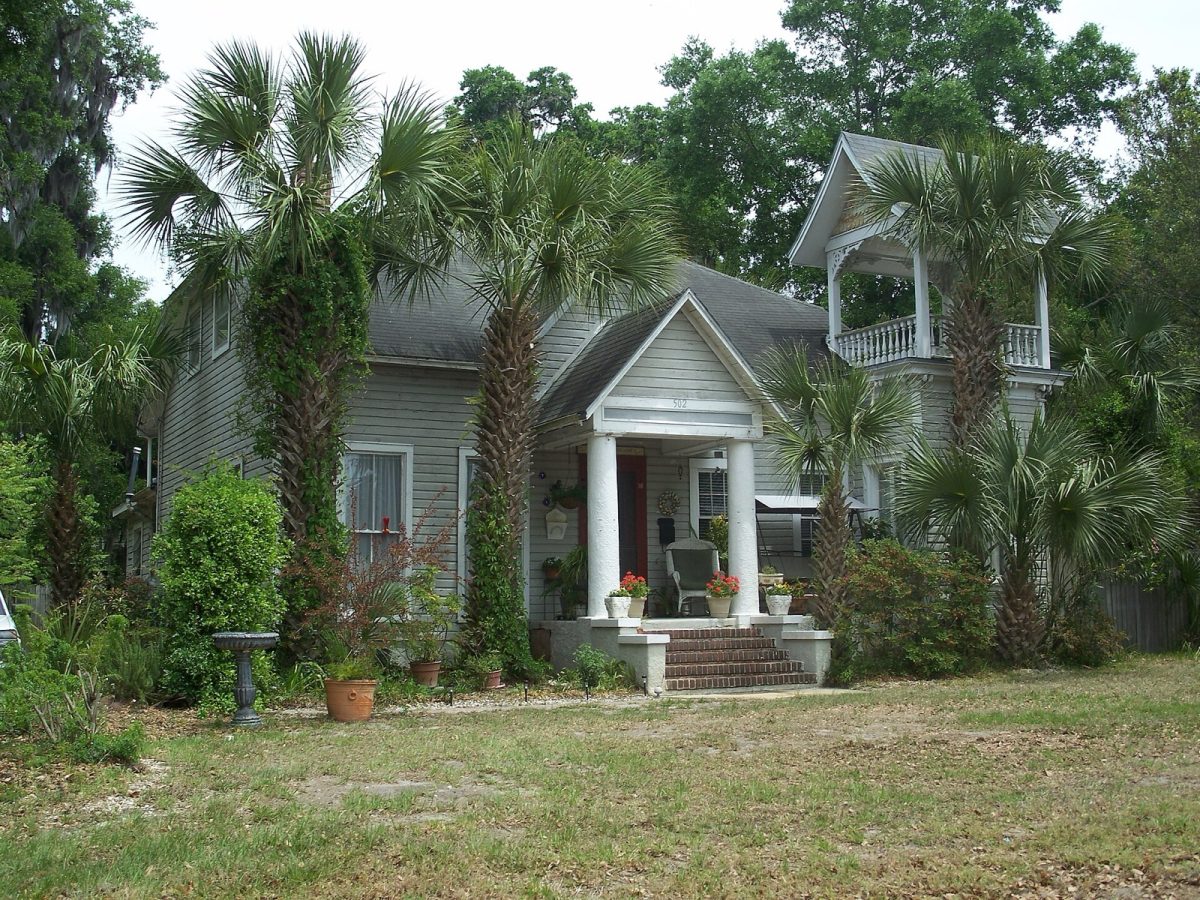
The Borden House in the Green Cove Springs historic district (file photo). Photo: Ebyabe / Wikimedia Commons (CC BY-SA 3.0)
GREEN COVE SPRINGS, Fla. - Clay County homeowners seeking a homestead exemption for the 2027 property tax year must own and occupy their qualifying home by Jan. 1, 2027, and apply by March 1, 2027. The exemption can reduce the property's taxable value, while Florida's Save Our Homes benefit can limit future increases in assessed value. The Clay County Property Appraiser is accepting 2027 applications online, by mail and in person, with additional exemptions available for qualifying seniors, veterans and other homeowners.
1. Who qualifies for a Clay County homestead exemption?
Under Florida law, an applicant must hold legal or beneficial title to the property and make it a permanent residence in good faith. The home may also qualify when it serves as the permanent residence of the owner's legal or natural dependent. Those conditions must be satisfied as of Jan. 1 of the tax year for which the exemption is requested.
For the 2027 tax year, that means a homeowner must meet the ownership and residency requirements by Jan. 1, 2027. Buying a property does not automatically establish a homestead exemption. The homeowner must submit an application to the Clay County Property Appraiser.
2. What is the March 1, 2027, filing deadline?
The application deadline for the 2027 tax year is March 1, 2027. Homeowners must complete and submit Form DR-501, the Original Application for Homestead and Related Tax Exemptions, by that date. The Clay County Property Appraiser confirms that applications for 2027 are already being accepted.
The office says timely 2027 applications will be processed on or before July 1, 2027. Denial notices will be sent by certified mail by that date. Approved exemptions will appear on the 2027 Annual Notice of Proposed Property Taxes mailed in August.
3. How do I apply for the exemption?
Clay County accepts homestead applications online, by mail or in person during business hours. Homeowners can begin an online application through the Property Appraiser's portal at https://exemption.ccpao.com/Homestead/. Applicants should complete the required information and provide supporting documentation requested by the office.
The application uses Form DR-501 and requires information about ownership and permanent residency. Applicants must identify whether they or their dependents occupied the residence on Jan. 1 and whether they claim residency elsewhere. The deed or other ownership instrument must be recorded in the county's official records before the exemption can be granted.
4. Where is the Clay County Property Appraiser's office?
The Clay County Property Appraiser, Tracy Scott Drake, has an office at 477 Houston Street, Green Cove Springs, FL 32043. The listed mailing address is P.O. Box 38, Green Cove Springs, FL 32043. Office hours are Monday through Friday, 8 a.m. to 4:30 p.m.
Homeowners can call (904) 284-6305 with questions about applications, documentation and eligibility. Appointments are not required for an office visit. The office also provides application instructions through its website at https://www.ccpao.com/file-my-homestead/.
5. What documents and information do I need?
First-time applicants must provide identifying information, including Social Security numbers for the applicant and spouse where required. The Property Appraiser may request a Florida driver's license or identification number, vehicle registration information, voter registration information, or evidence that residency in another state ended. Other possible documentation includes a declaration of domicile, utility payments, bank statements and the address on the applicant's most recent federal tax return.
The office may also ask about employment information and the schools attended by dependent children. A timely application missing a required Social Security number is incomplete, although Florida law provides an opportunity to submit a complete application by April 1 after notification. Homeowners should contact the Property Appraiser to confirm which documents are needed for their circumstances.
6. How much can the homestead exemption save?
Florida's standard homestead exemption removes the first $25,000 of qualifying assessed value from property taxes, including school taxes. An additional exemption applies to assessed value above $50,000 for taxes other than school district taxes. That additional portion began at $25,000 and is adjusted for inflation when the applicable consumer price index increases.
The Florida Department of Revenue provides examples showing how the exemption works. At $45,000 in assessed value, the first $25,000 is exempt and the remaining value is taxable; at $65,000, the first $25,000 is exempt from all property taxes, while another $15,000 is exempt from non-school taxes. For higher-valued homes, the additional inflation-adjusted exemption applies to the qualifying assessed-value band.
The additional exemption is adjusted for inflation each year, so its current dollar amount can differ from the original $25,000. The Clay County Property Appraiser can confirm the current amount. Actual tax savings depend on the property's assessed value and which taxes apply.
7. What is Florida's Save Our Homes assessment cap?
Save Our Homes limits annual increases in assessed value for qualifying homestead property after the initial qualifying assessment. The annual increase generally cannot exceed 3% or the percentage change in the consumer price index, whichever is lower. Assessed value also cannot exceed the property's just value.
This protection limits increases in the assessed value used for taxation, rather than guaranteeing that a homeowner's tax bill will remain unchanged. When ownership changes, the property generally is reassessed at just value as of Jan. 1 of the following year. Florida law provides exceptions for certain transfers, including transfers between spouses.
8. Can I transfer my Save Our Homes benefit when moving?
Florida allows qualifying homeowners to transfer a Save Our Homes assessment benefit to a new homestead through a process called portability. The transferable assessment difference is limited to $500,000, subject to the applicable statutory calculation. This can reduce the assessed value of a new qualifying residence.
To qualify, the new homestead must be established within three years of Jan. 1 of the year the previous homestead was abandoned. The three-year period is not simply measured from the property sale date. Homeowners seeking portability must submit Form DR-501T with their homestead application by March 1.
9. Do I have to reapply every year?
Most Clay County homestead exemptions renew automatically once approved. The Property Appraiser says renewal notices are mailed on or before Feb. 1. Homeowners should review their continued eligibility rather than assuming an exemption remains valid after their circumstances change.
Changes that can affect eligibility include renting the home, no longer using it as a permanent residence or no longer being a permanent Florida resident. Homeowners must promptly notify the Property Appraiser when eligibility changes. Applicants can also check exemption information through the office's Property Search, under Parcel Summary and Homestead and Exemption Application status.
10. What additional exemptions are available for seniors and others?
Clay County's Property Appraiser lists an additional homestead exemption of up to $50,000 for qualifying homeowners age 65 or older as of Jan. 1 whose household income falls below the Florida Department of Revenue's applicable limit. This exemption applies only to taxes levied by a local government that has adopted it by ordinance, so homeowners should ask the Property Appraiser which local governments in their area have done so. Applicants must provide Forms DR-501 and DR-501SC, proof of age and income documentation, such as a tax return or SSA-1099.
A separate senior longevity exemption has additional requirements, including at least 25 years of permanent residence on the property and a just value below $250,000. The Property Appraiser identifies the Town of Orange Park and City of Green Cove Springs as the only local governments that have adopted this exemption. Applicants also need an Affidavit of Permanent Residency for 25 years.
Under Florida law, other exemptions include a $5,000 exemption for qualifying widows, widowers, blind residents and totally and permanently disabled residents. Certain disabled veterans may qualify for a $5,000 assessed-value reduction, while qualifying veterans with total and permanent service-connected disabilities may receive a full homestead exemption. Additional provisions cover certain disabled homeowners, deployed military personnel, older veterans and eligible surviving spouses of first responders.
The Property Appraiser can confirm the applicable income limits, current exemption amounts and documentation requirements. Eligibility depends on the particular exemption and the homeowner's circumstances. Some benefits apply only to qualifying homestead property, while others have different requirements.
11. What happens if I miss March 1?
Florida law provides a late-filing process for homeowners who miss the regular homestead deadline. Applicants must act no later than the 25th day after the Property Appraiser mails the annual Notice of Proposed Property Taxes, commonly called the TRIM notice. The Property Appraiser may approve a late application when sufficient evidence shows an inability to apply on time or extenuating circumstances.
Applicants who do not receive approval may petition the county Value Adjustment Board within the same 25-day period. That late-filing petition carries a nonrefundable $15 fee, and the board must grant an exemption when the filing failure resulted from postal error. Homeowners whose applications are denied may also seek review through the Value Adjustment Board.
For questions about the 2027 deadline, filing status or additional exemptions, contact the Clay County Property Appraiser at (904) 284-6305. Property tax payment questions can be directed to the Clay County Tax Collector at (904) 269-6320. The Tax Collector also administers property tax payment discounts and a separate homestead tax deferral program.
For Duval County homeowners, see How to File for Homestead in Duval County: Up to $50,000 Off, a March 1 Deadline and 6 Steps. Tax bills and the November discount are covered in Florida Property Tax: 4% Discount in Duval, St. Johns, Clay and Nassau.

News organizations may republish this story with credit. See our guidelines.
Know someone who'd want to read this? Email it to a friend.
Own a Jacksonville business? Introductory ad rates from $125/month. See ad options Follow Jax Times on FacebookLocal news, events and people, in your feed every day.Most read this week
- JSO Opens New Headquarters at 532 Riverside Ave.: 346,000 Square Feet, 11 Floors and More Than $20 Million
- Duval's 1-Mill School Tax Renewal and 3 School Board Races on the Nov. 3 Ballot: Who Is Running and What's at Stake
- Florida's Lemon Law in 5 Steps: The 24-Month Window, 3 Repair Tries and How Drivers Get a Refund or New Car
- Jacksonville Building Permits in 7 Steps: When You Need One, Fence Height Limits and the $250 Fine for Skipping It
- How to Register a Boat in Northeast Florida in 6 Steps: Fees From $5.50 to $189.75 and a 30-Day Deadline
More stories
 Real Estate Nassau County Property Taxes 2026: Millage Rates, Homestead Savings and How to Pay
 Local Green Cove Springs by the Numbers: 2,200 Gallons a Minute, 9,786 People and a Town Since 1874
 Local Camp Blanding at 87: How a 1939 Clay County Guard Camp Trained 9 Infantry Divisions in World War II
 Real Estate How to File for Homestead in Duval County: Up to $50,000 Off, a March 1 Deadline and 6 Steps
Comments
Be respectful. No personal attacks, hate speech, spam or anyone's private information. Every comment is reviewed before it appears. Comment rules
No comments yet. Be the first to share your thoughts.