St. Johns County Homestead Exemption: How to File by March 1, 2027, and Save on Property Taxes
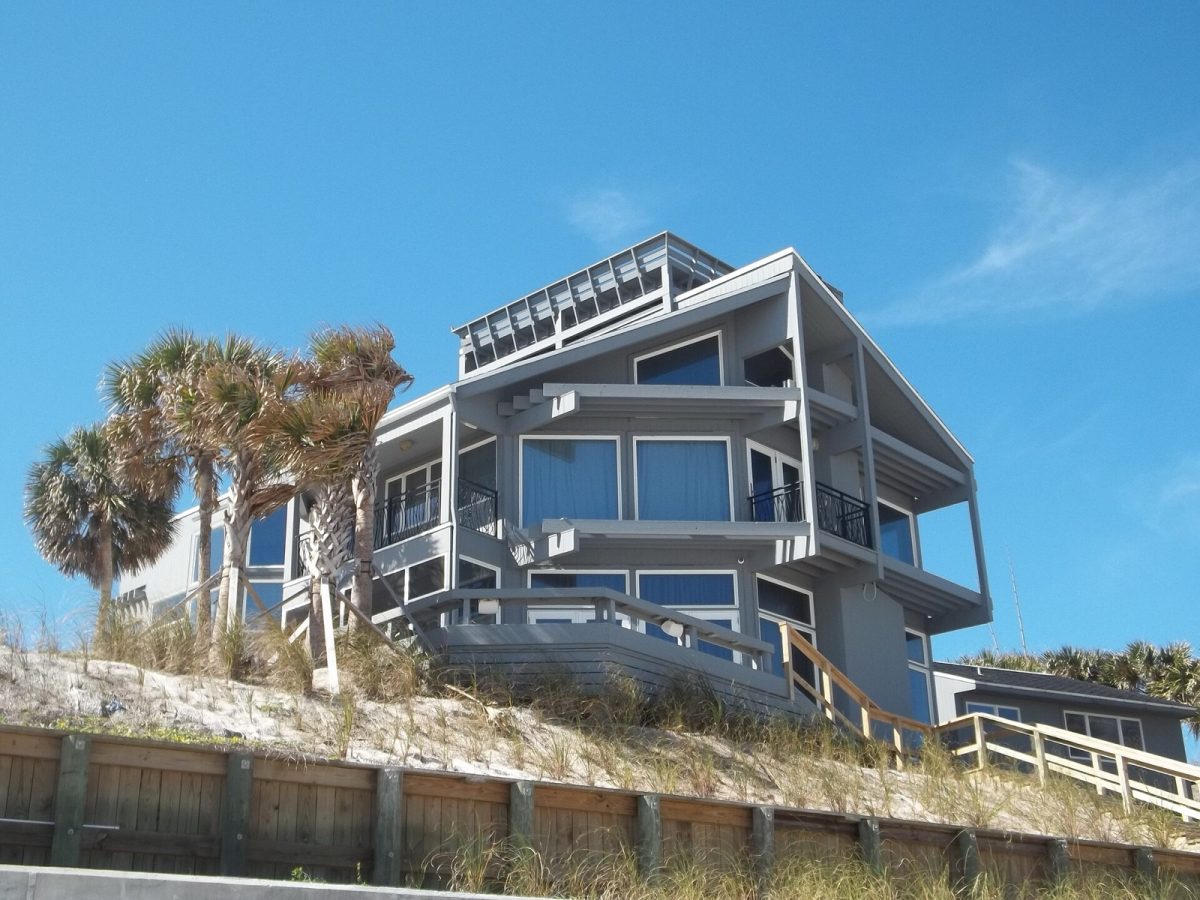
St. Johns County homeowners must apply for the 2027 homestead exemption by March 1, 2027. Shown: a home in Ponte Vedra Beach. Photo: Ebyabe / Wikimedia Commons (CC BY-SA 4.0)
ST. AUGUSTINE, Fla. - St. Johns County homeowners seeking a homestead exemption for the 2027 tax year must apply by Monday, March 1, 2027, and qualify by making the property their permanent residence as of Jan. 1. The exemption can reduce taxable property value by up to $51,411 under the published 2026 amounts, although the inflation-adjusted figure for 2027 may differ slightly.
The St. Johns County Property Appraiser accepts applications online and in person at its St. Augustine office. The exemption also provides access to Florida's Save Our Homes assessment limitation, while some homeowners may qualify for additional benefits based on age, disability, military service or other circumstances.
Here are 15 questions and answers about eligibility, filing, tax savings and what happens after approval.
1. What is the homestead exemption, and who qualifies?
Florida's homestead exemption reduces the taxable value of a qualifying primary residence. In St. Johns County, the Property Appraiser determines eligibility and administers the exemption. The benefit applies to qualifying permanent residences, not simply any property someone owns.
Applicants must have legal or beneficial title to the property and establish it as their permanent residence on or before Jan. 1 of the applicable tax year. Both ownership and permanent residency matter. A property purchased after Jan. 1 generally cannot qualify for that year's exemption.
A homeowner or spouse also cannot claim a residency-based property tax exemption in another state while claiming the Florida benefit. The Property Appraiser may request documentation to establish eligibility. Homeowners uncertain about their circumstances can call 904-827-5500 before applying.
2. What is the deadline to file for 2027, and what happens if I miss it?
The filing deadline for the 2027 homestead exemption is Monday, March 1, 2027. The Property Appraiser's general rule moves a March 1 deadline to the next business day when it falls on a weekend. Because March 1 falls on a Monday in 2027, that is the applicable deadline.
The Property Appraiser also accepts late applications for "just cause" through the end of the Truth in Millage, or TRIM, period. That period typically ends in August. A late application is not automatically approved, and applicants should not assume an extension will be granted.
Homeowners who discover they missed the deadline should contact the Property Appraiser directly at 904-827-5500. The office can explain the late-filing process and applicable requirements. Its website is sjcpa.gov.
3. Why does Jan. 1 matter if I just bought a house?
Jan. 1 establishes whether a homeowner meets the permanent-residence requirement for that tax year. To qualify for 2027, the applicant must own the property and make it a permanent residence on or before Jan. 1, 2027. Purchasing the property after that date does not establish eligibility for the 2027 exemption.
The Property Appraiser also must have the ownership change recorded in its system before an application can proceed. Its website advises allowing up to 30 days after closing for an ownership change to be processed. Someone who recently purchased a home should check that the property records reflect the transaction.
This distinction matters because the application deadline and the residency qualification date are separate requirements. March 1 is the filing deadline, but it does not replace the Jan. 1 eligibility test. Homeowners can contact the office if their recorded ownership information has not yet been updated.
4. How much does the homestead exemption reduce taxable value?
The published exemption for the 2026 tax year totals up to $51,411. It has two components that apply differently to property taxes. The 2027 amount has not yet been published and may change slightly because of annual inflation adjustments.
| 2026 exemption component | Amount | Applies to |
|---|---|---|
| First exemption | $25,000 | All property taxes, including school taxes |
| Additional exemption | $26,411 | Non-school taxes, on assessed value between $50,000 and $75,000 |
| Total potential exemption | $51,411 | Subject to the applicable tax categories |
The first $25,000 reduces taxable value for all property taxes, including school taxes. The additional $26,411 applies to qualifying assessed value for taxes other than school taxes. Because the two components affect different tax levies, a $51,411 exemption does not translate into the same dollar savings for every homeowner.
The final benefit depends on the home's assessed value and the applicable tax district. Homeowners should use the published figures as 2026 amounts rather than assuming they will be identical in 2027. The Property Appraiser's tax estimator can help calculate a property-specific estimate.
5. What is a worked-dollar example of homestead tax savings?
Consider a home with an assessed value of $350,000 in a district with a total property tax rate of 13.4559 mills. That is the lowest total district rate shown on the St. Johns County 2026 millage sheet. This example is an estimate for that lowest-total district, not a countywide average or a verified rate for any particular neighborhood.
One mill equals $1 in property taxes for every $1,000 of taxable value. The 2026 school millage totals 6.2640, leaving 7.1919 mills for non-school taxes in this example. The two exemption components produce the following estimated savings.
| Calculation | Result |
|---|---|
| School taxable value: $350,000 - $25,000 | $325,000 |
| Non-school taxable value: $350,000 - $51,411 | $298,589 |
| First exemption: 25 x 13.4559 | $336.40 |
| Additional exemption: 26.411 x 7.1919 | $189.95 |
| Estimated annual savings | $526.34 |
The calculation assumes the property has sufficient assessed value to receive both exemption components. The additional exemption's estimated savings exclude school millage, as required by the published exemption structure. Rounding produces an estimated total of approximately $526 annually.
A homeowner's actual tax district may have a higher rate, producing different savings. The county's 2026 millage sheet shows total district rates reaching 20.8502 mills. Readers can use the St. Johns County Property Appraiser's tax estimator and their own property information for a more relevant calculation.
6. What documents do I need to bring or upload?
The Property Appraiser requires a valid Florida driver license or identification card showing the homestead address. Online applicants must supply Social Security numbers for themselves and their spouses, as applicable. The office states that failing to provide the required Social Security information disqualifies an application.
Additional documentation depends on the homeowner's situation:
- A green card if the applicant is not a U.S. citizen.
- The address or parcel identification number of a previously owned Florida home, if applicable.
- A copy of a trust when the applicant is not a trustee.
- Documentation establishing that neither the applicant nor the spouse receives a residency-based exemption in another state.
The office may request additional records during its review. It also warns that Florida licenses and identification cards updated after Nov. 1, 2023, may carry new identification numbers. Applicants should use current information and make sure their ownership is reflected in county records.
7. How do I apply online or in person?
Homeowners can begin online at sjcpa.gov/exemptions and select the "Apply Now" option. That leads to the Property Appraiser's secure application system. Applicants should have their identification, Social Security information and any applicable supporting documents available.
After submitting the application online, the Property Appraiser instructs applicants to print their receipt. Keeping that receipt provides a record of the submission. Applicants should also respond if the office requests additional information.
Applications may also be submitted in person at 4030 Lewis Speedway, Suite 203, St. Augustine, FL 32084. Office hours are Monday through Friday, 8:30 a.m. to 5 p.m., excluding closures. Some additional exemption applications require an office visit, so callers should verify the correct procedure for their exemption.
8. Do I have to reapply every year?
Homeowners generally do not need to submit a new homestead exemption application every year after approval. The Property Appraiser continues the exemption unless circumstances require another review. This means a homeowner who remains eligible ordinarily keeps the benefit without repeating the original filing process.
Changes in marital status, ownership or property title may require an updated application. The Property Appraiser also may contact homeowners by letter when additional information is necessary. Those requests should not be ignored simply because an exemption was approved previously.
The important distinction is between continued eligibility and the original filing deadline. Once approved, an exemption normally continues while the qualifying circumstances remain unchanged. Homeowners who experience changes should ask the Property Appraiser whether an update is needed.
9. What is Save Our Homes, and how does the 3% cap work?
Florida's Save Our Homes provision limits annual increases in the assessed value of qualifying homestead property. The increase is limited to 3% or the change in the Consumer Price Index, whichever is less. This limitation affects assessed value rather than directly guaranteeing a particular property tax bill.
For homeowners whose property values rise, the limitation can create a difference between the property's just value and assessed value. That accumulated difference may become important when the owner moves to another qualifying Florida homestead. The transfer process is known as portability.
Non-homestead properties have a separate 10% assessment limitation that excludes School Board taxes. The Property Appraiser states that this non-homestead limitation is not portable. Homeowners should distinguish that provision from Save Our Homes when reviewing their property records.
10. What is portability, and how long do I have to transfer the benefit?
Portability allows qualifying homeowners to transfer up to $500,000 of accumulated Save Our Homes assessment benefit to another Florida homestead. The benefit represents the difference between the previous home's just value and assessed value. Portability does not transfer the previous property's entire exemption or necessarily produce the same tax bill.
The transfer must occur within three tax years of the sale, measured by calendar tax years from January through December. A sale in December counts as one of those tax years. The Property Appraiser says portability can be used an unlimited number of times, but transfers must remain within Florida.
When moving to a less expensive home, the benefit can be reduced proportionally. The Property Appraiser gives an example involving a $150,000 accumulated benefit, a previous home with a $400,000 just value and a new home with a $200,000 just value. The transferred benefit in that example is $75,000.
All owners of the previous homestead who also own the new homestead must apply together, including spouses when applicable. Applications can be made online or in person. The office identifies Form DR-501TS for certain divorce-related portability situations.
11. Is there an additional exemption for homeowners age 65 and older?
Qualifying homeowners who are at least 65 on Jan. 1 may receive an additional exemption of up to $50,000 based on household income. The Property Appraiser identifies Form DR-501SC and proof of the previous year's household adjusted gross income among the requirements. The benefit applies only to the taxing authority that grants it.
A separate long-term residency provision involves homeowners who have maintained their homestead for at least 25 years and whose property's just value is under $250,000. The Property Appraiser's senior guide says the long-term residency benefit applies to county millages only. It also states that the long-term residency application must be completed at the office.
The exact St. Johns County senior income threshold for 2026 or 2027 was not verified in the available information. Additional city-level senior exemptions also were not confirmed. Homeowners should call 904-827-5500 to verify the current income limit, available local benefits and required documentation.
12. What other exemptions are available for disability, veterans and surviving spouses?
The Property Appraiser lists several additional exemptions for homeowners with qualifying disabilities, military service or surviving-spouse status. The amounts and eligibility requirements vary. Applications generally have a March 1 deadline, and the office's additional exemptions page directs applicants to visit the office.
| Exemption category | Published benefit |
|---|---|
| Widowed homeowners | $5,000 |
| Legally blind homeowners | $5,000 |
| Totally and permanently disabled civilians | $5,000 |
| Veterans with qualifying disability of 10% or more | $5,000 |
| Qualifying quadriplegic homeowners | Total exemption |
| Certain limited-income homeowners with qualifying severe disabilities | Total exemption |
| Qualifying totally and permanently disabled service-connected veterans | Total exemption |
| Qualifying first responders disabled in the line of duty | Total exemption |
The Property Appraiser also identifies exemptions for qualifying surviving spouses of veterans who died on active duty, surviving spouses of certain disabled veterans or first responders, and veterans age 65 or older with combat-related disabilities. The qualifying combat-related veteran benefit is based on the disability percentage. Certain military personnel deployed outside the continental United States in the previous calendar year may also qualify for a separate exemption.
Required documentation can include medical certification, disability award records, military discharge papers, Department of Veterans Affairs letters or proof of household income. For the qualifying limited-income total-and-permanent-disability exemption, the published 2026 income threshold is $37,712. That figure is a disability income limit and should not be confused with the unverified senior exemption income threshold.
13. What happens if I rent out my home, move, divorce or change ownership?
Renting part of a homestead does not necessarily eliminate the entire exemption. According to the Property Appraiser, the portion that is not rented can remain eligible. Homeowners should contact Customer Service to determine how a partial rental affects their circumstances.
Different rules apply when someone rents the entire property. The Property Appraiser states that renting an entire homestead for more than 30 days in two consecutive tax years prevents retention of the exemption. Renting for more than six months in a year is presumed to be commercial use.
Ownership changes also matter. Transferring a homestead into an LLC or other business entity makes it ineligible and removes the applicable exemptions and assessment limitations. Marriage, divorce or title changes may require an updated application, while a sale followed by a move to another Florida homestead may create an opportunity to apply for portability.
For changes recorded in St. Johns County, the Property Appraiser says it sends a notice. Otherwise, the owner must notify the office. Homeowners considering a trust or another ownership arrangement should contact the Property Appraiser to confirm the applicable rules before relying on continued eligibility.
14. How can homeowners avoid problems with paid homestead filing services?
The St. Johns County Property Appraiser accepts applications directly through its website and at its office. Homeowners should make sure they are using sjcpa.gov before entering personal information, particularly Social Security numbers. The official website provides access to the homestead application and information about supporting documents.
The available Property Appraiser information did not verify a statement that filing is free or establish an official warning about paid application services. Readers should therefore call 904-827-5500 to confirm any uncertain filing charges or claims made by third-party services. The office can also explain how to submit an application directly.
The Property Appraiser's website lists a property fraud alerts resource, although its specific enrollment link was not verified. Homeowners interested in that resource can ask the office for information. The same contact number can be used to clarify an application request that appears unfamiliar.
15. Does Amendment 3 on the Nov. 3 ballot change the current homestead rules?
Current Florida property tax laws remain in effect unless and until Amendment 3 is approved by at least 60% of Florida voters. The St. Johns County Property Appraiser states that it neither supports nor opposes the proposed amendment. Its information page is sjcpa.gov/amendment3.
St. Johns County Property Appraiser - Filing Information
| Contact | Details |
|---|---|
| Address | 4030 Lewis Speedway, Suite 203, St. Augustine, FL 32084 |
| Phone | 904-827-5500 |
| Office hours | Monday-Friday, 8:30 a.m.-5 p.m. |
| Website | sjcpa.gov |
| Homestead application | sjcpa.gov/exemptions |
| [email protected] |
2027 filing deadline: Monday, March 1, 2027.
Source: St. Johns County Property Appraiser
News organizations may republish this story with credit. See our guidelines.
Know someone who'd want to read this? Email it to a friend.
Own a Jacksonville business? Introductory ad rates from $125/month. See ad options Follow Jax Times on FacebookLocal news, events and people, in your feed every day.Most read this week
- JSO Opens New Headquarters at 532 Riverside Ave.: 346,000 Square Feet, 11 Floors and More Than $20 Million
- Duval's 1-Mill School Tax Renewal and 3 School Board Races on the Nov. 3 Ballot: Who Is Running and What's at Stake
- Florida's Lemon Law in 5 Steps: The 24-Month Window, 3 Repair Tries and How Drivers Get a Refund or New Car
- Jacksonville Building Permits in 7 Steps: When You Need One, Fence Height Limits and the $250 Fine for Skipping It
- How to Register a Boat in Northeast Florida in 6 Steps: Fees From $5.50 to $189.75 and a 30-Day Deadline
More stories
 St. Johns County / Local Florida's Black History Museum in West Augustine: St. Augustine Adds $25,000 to County's $125,000, but Ground Is Not Yet Broken
 Local 3 Agricultural Enclave Requests Up for Hearing Tuesday in St. Johns County: 70.83 Acres West of State Road 16 and 143 Acres Near U.S. 1 South
 Real Estate Clay County Homestead Exemption: 11 Answers Before the March 1, 2027 Deadline
 Real Estate Nassau County Property Taxes 2026: Millage Rates, Homestead Savings and How to Pay
Comments
Be respectful. No personal attacks, hate speech, spam or anyone's private information. Every comment is reviewed before it appears. Comment rules
No comments yet. Be the first to share your thoughts.