Deer Hunting in Northeast Florida in 7 Steps: General Gun Season Opens Nov. 7, a $17 License and the Hunter Safety Rule
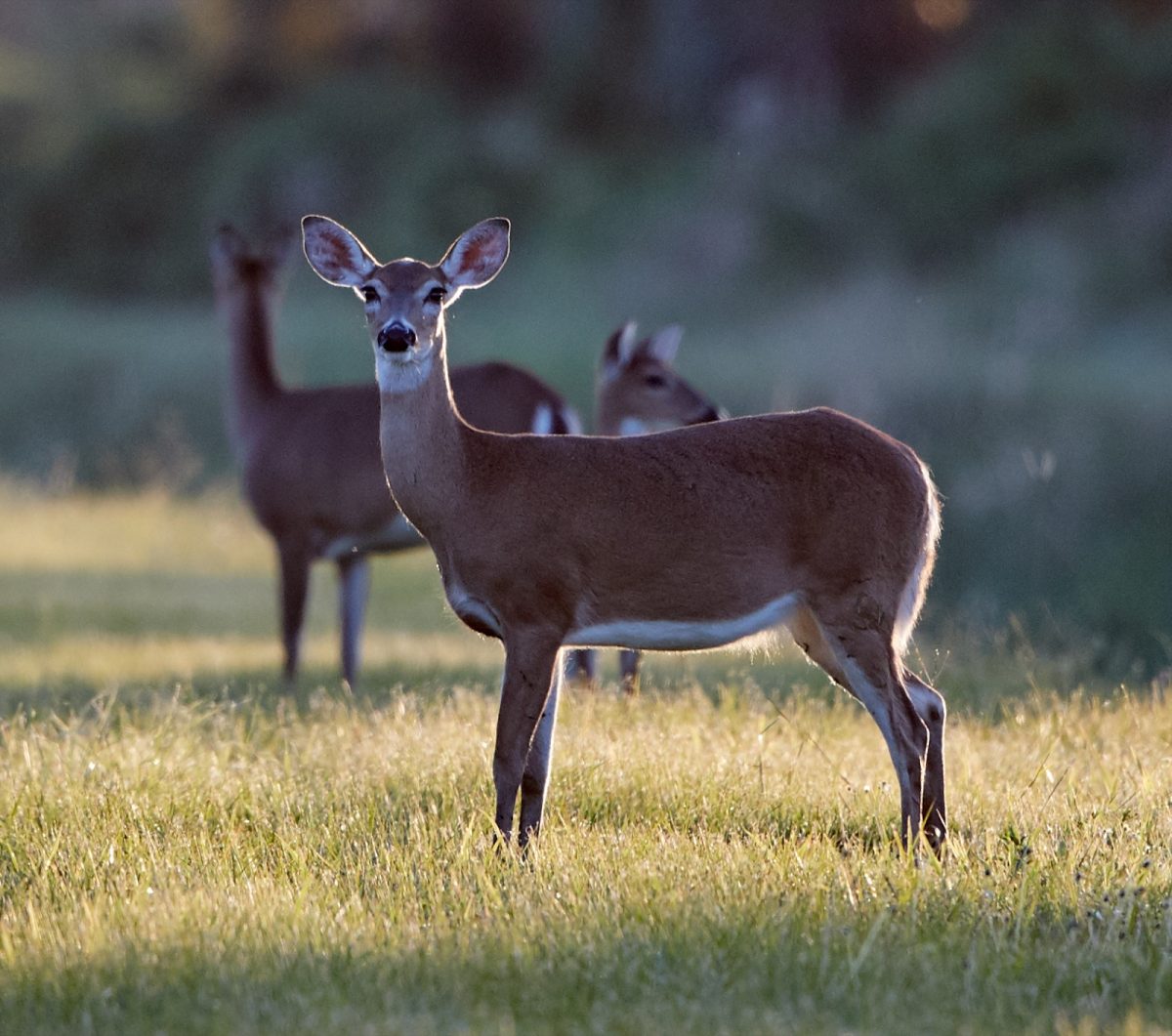
General gun season for deer opens Nov. 7 in Florida. Shown: a white-tailed deer in Florida (file photo). Photo: Henry / Wikimedia Commons (CC BY 2.0)
JACKSONVILLE, Fla. - General gun deer hunting season opens Saturday, Nov. 7, 2026, in Florida's Zone C and continues through Jan. 24, 2027, according to the Florida Fish and Wildlife Conservation Commission (FWC). An annual resident hunting license costs $17, and hunters age 16 or older who were born on or after June 1, 1975, must meet the state's hunter safety requirement before purchasing a hunting license. Duval, Clay, Nassau and St. Johns counties fall within the Zone C, Deer Management Unit C6 area based on the FWC's published boundary description, but hunters should confirm their specific location using the agency's official zone map.
Step 1: Find your hunting zone and deer management unit
Florida's deer hunting seasons are organized by hunting zones and deer management units, according to the FWC. The agency publishes zone maps and boundary descriptions that establish which hunting dates apply to different locations. For Northeast Florida hunters, identifying the correct zone is the first step in determining the applicable season.
The FWC's boundary description for Deer Management Unit C6 includes a northern boundary along the Florida-Georgia state line and an eastern boundary at the Atlantic Ocean. Its western boundary follows Interstate 75, while its southern boundary follows U.S. 441 toward Gainesville, Hawthorne Road and State Road 20 toward Palatka, and U.S. 17 through Bunnell to the coast. Based on that description, the Jacksonville-area counties of Duval, Clay, Nassau and St. Johns fall within the Zone C and C6 region.
The boundary description does not list those counties individually, so the county identification is based on the geographic boundaries published by the FWC. Hunters should confirm their specific hunting location on the agency's official zone map rather than relying only on a county name. The map and boundary information are available at myfwc.com/hunting/season-dates/zone-map/.
The distinction between zones and management units matters because some deer season dates vary within Zone C. The FWC publishes different antlerless deer dates for different management units, even when the general gun season dates are shared. The agency's season calendar identifies both the applicable hunting season and the management unit restrictions.
Step 2: Check Florida's hunter safety requirement
Florida requires certain hunters to complete hunter safety education before buying a hunting license, according to the FWC. The requirement applies to anyone born on or after June 1, 1975, who is age 16 or older. Those hunters must pass a hunter safety course before purchasing a hunting license, subject to the agency's mentoring option.
The FWC describes a mentoring option that allows a person to hunt under the supervision of a qualified hunter. The agency identifies this as an alternative pathway involving direct supervision. The details of hunter safety education and the mentoring option are provided on the FWC's official safety education page.
The agency lists several education programs and resources related to hunting safety. These include Hunter Safety Courses, Bowhunter Education and the Youth Hunting Program of Florida. The FWC also offers Think S.A.F.E., which provides safety tips but is not a certification program.
The difference between safety information and a qualifying course is important under the published requirement. Think S.A.F.E. is identified as an educational resource rather than a certification. The FWC provides its hunter safety information at myfwc.com/hunting/safety-education/.
Step 3: Choose the correct Florida hunting license
The FWC lists several hunting license options for residents and nonresidents. An annual Florida resident hunting license costs $17, while a five-year resident license costs $79. The annual nonresident hunting license costs $151.50, according to the agency's published license schedule.
| Hunting license | Published price |
|---|---|
| Annual Florida resident | $17.00 |
| Five-year Florida resident | $79.00 |
| Annual nonresident | $151.50 |
| Youth hunting license | $17.00 |
| Youth Gold Sportsman's License | $100.00 |
The FWC also lists a $17 youth hunting license for hunters ages 8 through 15 who have completed hunter safety education. A Youth Gold Sportsman's License is listed at $100. These options appear alongside the standard resident and nonresident hunting licenses on the agency's official licensing page.
The published license prices include a statutory issuance fee, according to the FWC. Vendors may add an additional 50-cent fee to transactions. The agency also states that license sales are final.
The license schedule distinguishes between the annual resident option and the five-year resident option. It also lists a separate annual price for nonresident hunters. The official hunting license information is available at myfwc.com/license/recreational/hunting/.
Step 4: Determine whether a management area permit is required
Hunting on a Florida wildlife management area, or WMA, involves additional requirements, according to the FWC. The agency lists a Management Area Permit that is required for WMA lands. The permit is separate from the standard hunting license options identified in the licensing schedule.
An annual Management Area Permit costs $26.50, according to the FWC. A five-year version costs $126.50 and is available to residents only. Those prices are included in the agency's official list of hunting license and permit fees.
| Management area permit | Published price |
|---|---|
| Annual permit | $26.50 |
| Five-year resident permit | $126.50 |
The distinction between general hunting rules and wildlife management area rules is also important. The FWC states that the regular season dates and bag limits do not apply to WMAs because those areas have their own regulations. Hunters using WMA lands must therefore consult the rules governing the specific management area rather than assuming that the statewide Zone C calendar applies.
The FWC publishes general hunting license and permit information on its licensing website. It also provides hunting regulations that explain the broader regulatory framework. Those resources distinguish management area hunting from hunting governed by the regular zone seasons and bag limits.
Step 5: Know the Zone C deer hunting season dates
The 2026-2027 Zone C general gun season for antlered deer runs from Nov. 7, 2026, through Jan. 24, 2027, according to the FWC. The general gun opening follows the muzzleloading season, which runs from Oct. 24 through Nov. 6. The agency also lists separate archery, crossbow and youth deer hunting periods.
The archery season for antlered deer began Sept. 19 and ended Oct. 18, according to the official FWC calendar. The crossbow season began Sept. 19 and continued through Oct. 23. The youth deer hunt weekend was scheduled for Oct. 31 through Nov. 1.
| Zone C season | 2026-2027 dates |
|---|---|
| Archery | Sept. 19 - Oct. 18 |
| Crossbow | Sept. 19 - Oct. 23 |
| Muzzleloading | Oct. 24 - Nov. 6 |
| Youth deer hunt weekend | Oct. 31 - Nov. 1 |
| General gun, antlered deer | Nov. 7 - Jan. 24 |
The antlerless deer calendar is different because its dates depend on the deer management unit. For Unit C5, the FWC lists an antlerless general gun season from Nov. 7 through Dec. 6. For Units C1 through C4 and C6, the antlerless general gun dates are Nov. 21 through Nov. 29.
That means the C6 antlerless general gun period does not begin on the same date as the general gun antlered deer season. The C6 antlerless dates begin Nov. 21, while the antlered general gun season begins Nov. 7. The FWC lists the dates at myfwc.com/hunting/season-dates/.
Step 6: Understand the daily, possession and annual bag limits
The FWC publishes separate daily, possession and annual deer bag limits. Under the regular rules, the daily limit is two deer and the possession limit is four. The annual limit is five deer, with no more than two antlerless deer included in that total.
| Limit | FWC rule |
|---|---|
| Daily bag limit | 2 deer |
| Possession limit | 4 deer |
| Annual bag limit | 5 deer |
| Annual antlerless limit | 2 deer |
| Annual antlerless limit in DMU D2 | 3 deer |
The FWC identifies an exception allowing three antlerless deer in Deer Management Unit D2. That exception differs from the regular annual antlerless limit of two. The published bag limits therefore include a management-unit distinction as well as the daily and possession limits.
These regular limits do not apply to wildlife management areas, according to the FWC. WMAs have their own hunting seasons and bag limits. The distinction means the regular Zone C limits should not be treated as the governing rules for every hunting location.
Step 7: Review the complete 2026-2027 hunting regulations
The FWC directs hunters to its complete 2026-2027 Florida Hunting Regulations for the full set of applicable rules. The agency makes those regulations available through eregulations.com/florida/hunting. The regulations supplement the season dates, maps, licensing information and hunter safety resources published on the FWC website.
The FWC also identifies Chapter 68A of the Florida Administrative Code as the final authority on hunting regulations. This establishes a distinction between the agency's public information pages and the rules that have legal authority. The agency explains that relationship at myfwc.com/hunting/regulations/.
Florida's deer regulations also distinguish between different geographic areas for certain restrictions. The FWC's Chronic Wasting Disease carcass rules apply in Zone D in the Panhandle rather than in the Northeast Florida Zone C area described here. The agency provides additional deer-specific information at myfwc.com/hunting/by-species/deer/.
For Northeast Florida, the upcoming calendar centers on the Nov. 7 general gun opening and the Nov. 21 start of the C6 antlerless general gun period. The FWC's zone boundaries, management unit dates and separate WMA regulations determine which rules apply to a particular hunting location. The regular Zone C antlered general gun season is scheduled to continue through Jan. 24, 2027.
News organizations may republish this story with credit. See our guidelines.
Know someone who'd want to read this? Email it to a friend.
Own a Jacksonville business? Introductory ad rates from $125/month. See ad options Follow Jax Times on FacebookLocal news, events and people, in your feed every day.Most read this week
- JSO Opens New Headquarters at 532 Riverside Ave.: 346,000 Square Feet, 11 Floors and More Than $20 Million
- Duval's 1-Mill School Tax Renewal and 3 School Board Races on the Nov. 3 Ballot: Who Is Running and What's at Stake
- Florida's Lemon Law in 5 Steps: The 24-Month Window, 3 Repair Tries and How Drivers Get a Refund or New Car
- Jacksonville Building Permits in 7 Steps: When You Need One, Fence Height Limits and the $250 Fine for Skipping It
- How to Register a Boat in Northeast Florida in 6 Steps: Fees From $5.50 to $189.75 and a 30-Day Deadline
More stories
 Finance St. Augustine Parking in 2026: 12 Questions About the $20 Garage, $3 Resident Rate and Cheaper Options
 Local Jacksonville Cruises in 2026: 2 Cruise Lines, $17 Daily Parking and 10 Steps Before You Sail
 Local Jacksonville and St. Augustine State Parks: 10 Questions About $3-$8 Admission, Annual Passes and Savings
 Local St. Augustine's 2 Spanish Stone Forts: 1672 Groundbreaking, a 1742 Watchtower and the Sieges That Shaped Florida
Comments
Be respectful. No personal attacks, hate speech, spam or anyone's private information. Every comment is reviewed before it appears. Comment rules
No comments yet. Be the first to share your thoughts.